

EARLALL dives into Clean Energy Sector Skills Challenges and Opportunities across European Regions
25/05/2026
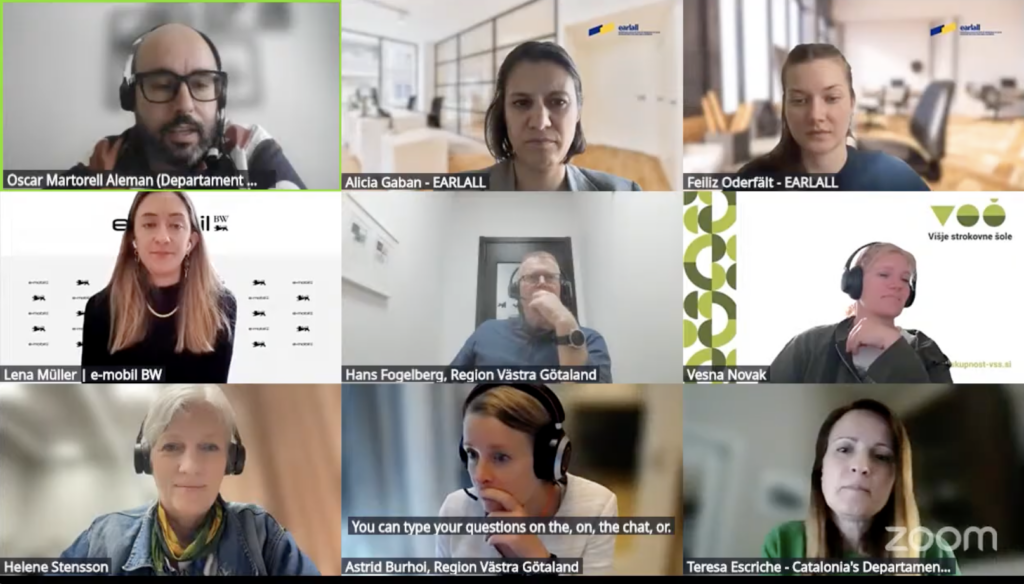
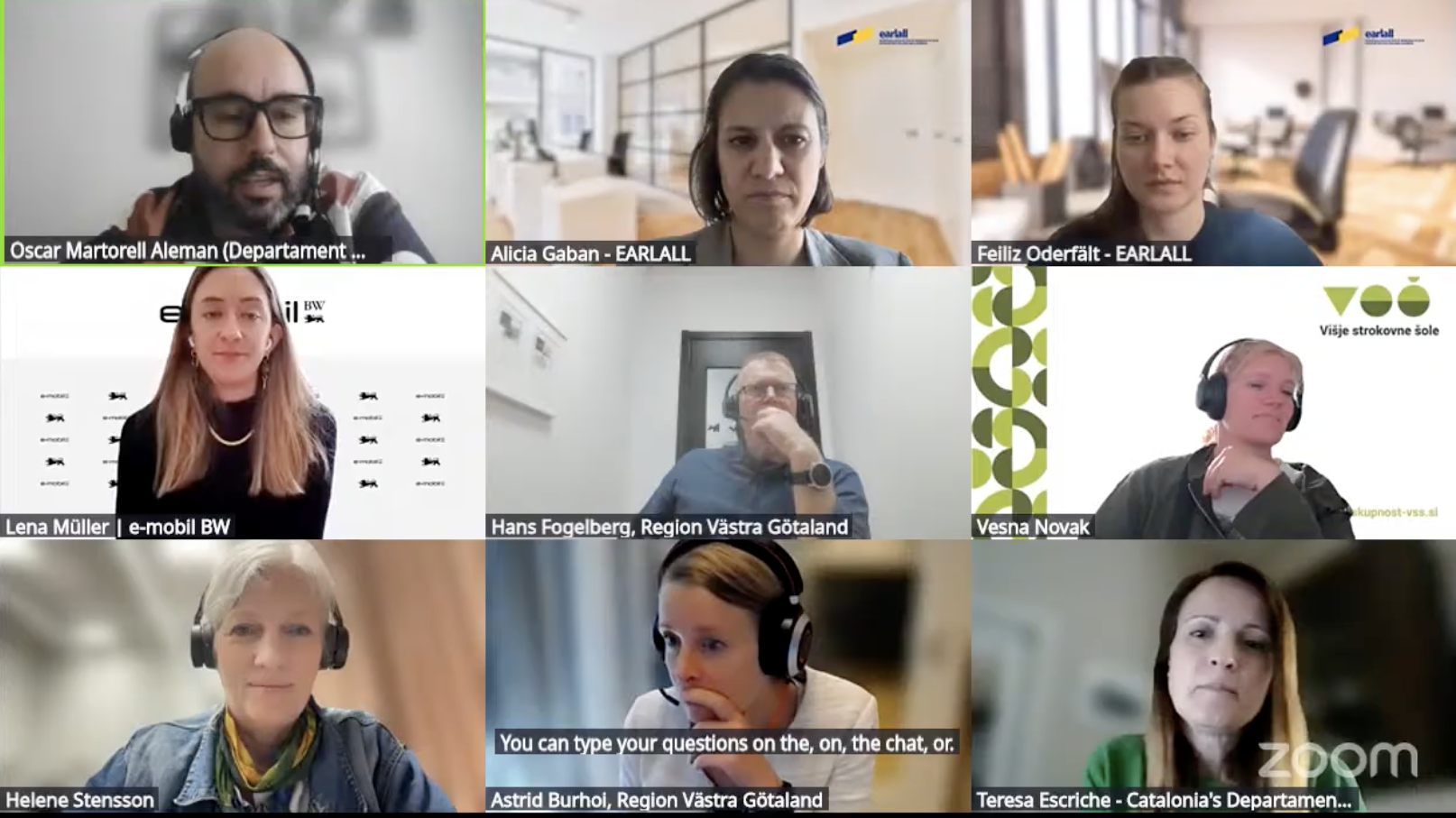
On 22 May 2026, EARLALL hosted the webinar “Clean Energy Sector Skills Analysis: Understanding Skills Challenges and Opportunities in the Clean Energy Sector across European regions”, bringing together participants from regional and local authorities, EU institutions, education and training providers, and industry stakeholders. The webinar was organised by EARLALL’s Working Group on Skills and Labour Market as part of its ongoing series exploring skills challenges and opportunities across strategic economic sectors in Europe.
Europe’s clean energy sector is at the core of the green transition, driving innovation, industrial transformation, and regional competitiveness. Renewable energy technologies, hydrogen, battery manufacturing, and energy storage systems are reshaping labour markets and creating new demands for skills development, reskilling, and workforce adaptation. Throughout the webinar, speakers explored how regions, education systems, and industries can work together to anticipate labour market needs and build resilient regional skills ecosystems.
Òscar Martorell Aleman (Head of VET Mobility, Catalonia’s Regional Ministry of Education and VET), leader of EARLALL’s Working Group on Skills and Labour Market, opened the webinar by highlighting the scale of the transformation currently taking place across Europe’s energy and industrial sectors. He underlined that the clean energy transition is not only a technological challenge, but also a skills challenge, requiring stronger cooperation between education providers, policymakers, and industry actors.
Skills intelligence and the green transition: perspectives from Cedefop
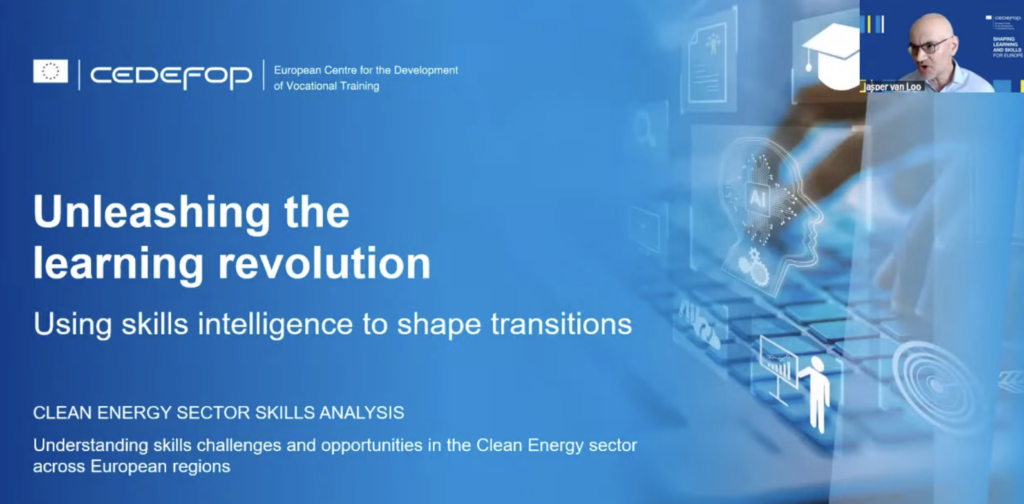
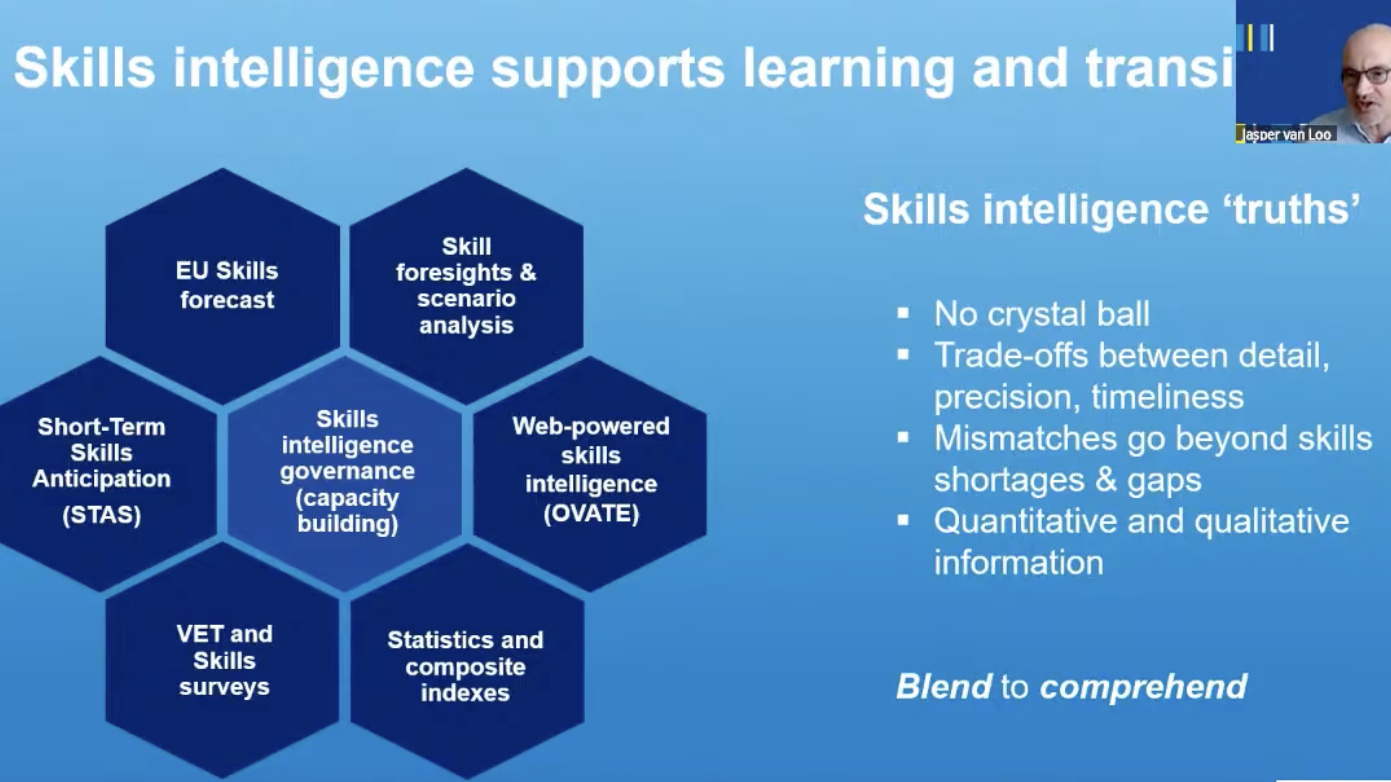
The webinar opened with a presentation from Cedefop expert Jasper Van Loo, who provided an overview of the European skills landscape in the context of the green and digital transitions.
Van Loo highlighted that by 2035, 43% of jobs in Europe are expected to require academic or high-level vocational qualifications, while around 90 million Europeans still lack adequate digital skills. He stressed that the green transition will require substantial investment in both upskilling and reskilling, particularly in clean technology sectors.
The presentation also explored how workers increasingly acquire competences through informal learning, on-the-job experience, and peer collaboration, in addition to formal education pathways. Van Loo emphasized the importance of modernising vocational education and training systems, scaling up VET opportunities linked to clean technologies, and strengthening interdisciplinary skills combining technical, digital, and sustainability competences.
Among the recommendations presented were:
- mapping skills gaps and overlaps across sectors,
- improving skills intelligence systems,
- modernising qualification frameworks,
- and strengthening cooperation between education and industry to respond more rapidly to changing labour market demands.
Regional perspectives on clean energy skills ecosystems
The second part of the webinar focused on regional initiatives and practical examples from across Europe, highlighting how local and regional actors are responding to the growing demand for clean energy skills. The regional panel gathered examples from Vestland County, Catalonia, Baden-Württemberg and Region Västra Götaland.
Hydrogen skills and the H2CoVE project
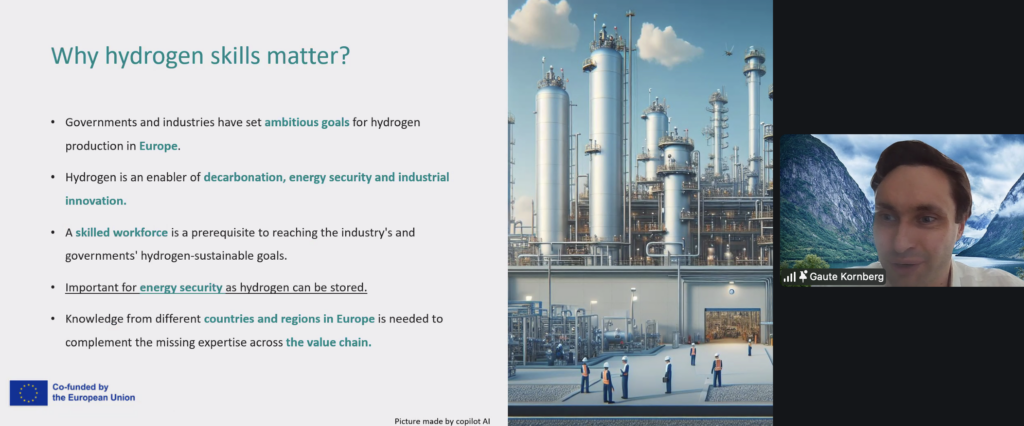
Gaute Kornberg from Vestland County Council (Norway) presented the H2CoVE project, an Erasmus+ CoVE project focused on hydrogen skills development involving partners from Norway, the Netherlands, Austria, Estonia, and Ukraine.
Kornberg explained that hydrogen technologies are becoming increasingly important for both Europe’s green transition and its energy security objectives. He highlighted the growing need for specialised competences linked to hydrogen production, transport, storage, and port operations, including applications for maritime transport.
The H2CoVE project is developing more than 25 formal courses and training models across participating regions. These range from introductory modules integrated into existing chemistry and technical subjects to more specialised vocational education and training programmes.
Particular attention is being given to reskilling workers transitioning from sectors such as coal, gas, and traditional energy industries, while also promoting inclusion by targeting immigrants and underrepresented groups in the green transition workforce.
Catalonia’s experience in hydrogen education
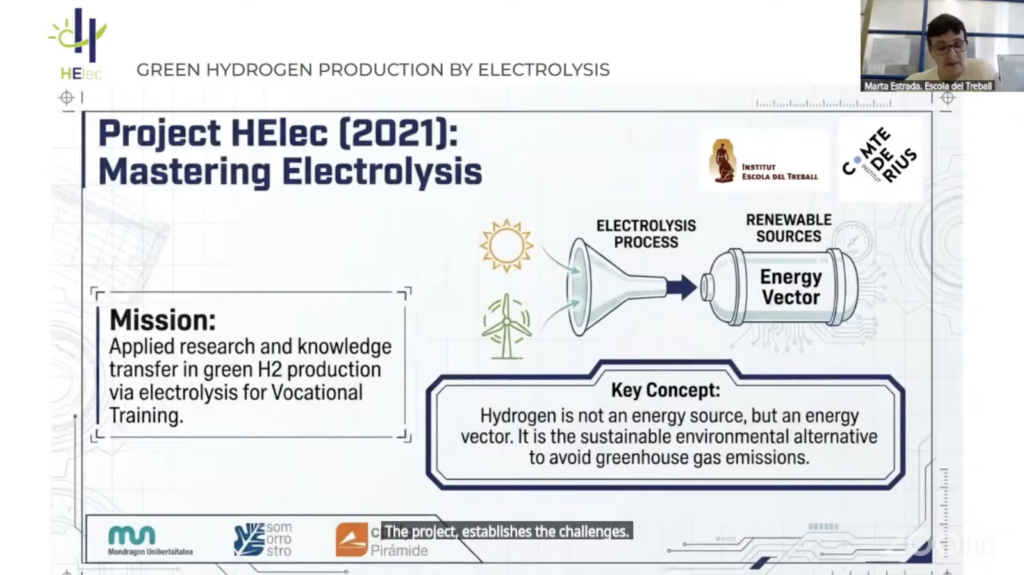
Marta Estrada Tiana from Institut Escola del Treball (Catalonia) shared the experience of the historic Barcelona-based institution in adapting its education and training offer to emerging green energy sectors.
Founded in 1868, the school has increasingly focused on hydrogen technologies and renewable energy training through participation in national ministry projects and collaboration with universities and industry stakeholders.
Marta Estrada Tiana presented several initiatives linked to hydrogen production and fuel cell applications, including the development of teaching materials, laboratory activities, and practical learning experiences. She also highlighted the importance of inter-university cooperation and lifelong learning approaches to support the transition toward new industrial sectors.
The presentation demonstrated how long-established educational institutions can successfully evolve to meet the skills demands generated by the clean energy transition.
Battery industry qualification initiatives in Baden-Württemberg
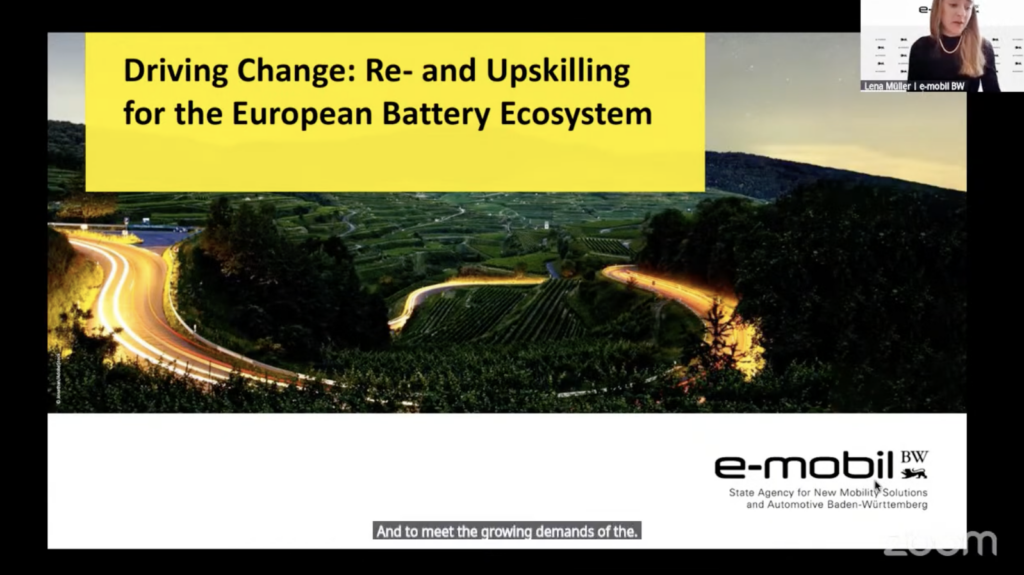
Lena Müller (State Agency for New Mobility Solutions and Automotive Baden-Württemberg) presented regional initiatives from Baden-Württemberg aimed at addressing workforce shortages linked to battery manufacturing and electric mobility.
She introduced QualiBattBW, a federally supported programme providing free training opportunities for SMEs operating across the battery value chain, as well as Voltage, an Erasmus+ CoVE project involving 14 European partners focused on innovation in vocational education and training for the battery sector.
Müller explained that the transition from combustion engines to electric vehicles is significantly transforming the automotive workforce, requiring both retraining of existing workers and new approaches to attracting young talent into the sector.
Examples included:
- battery camps designed to encourage girls and young women to explore battery technologies,
- educational films showcasing battery-related job profiles,
- and dedicated training programmes for teachers to improve battery-related competences in vocational education.
Sweden’s Battery Center and manufacturing transition
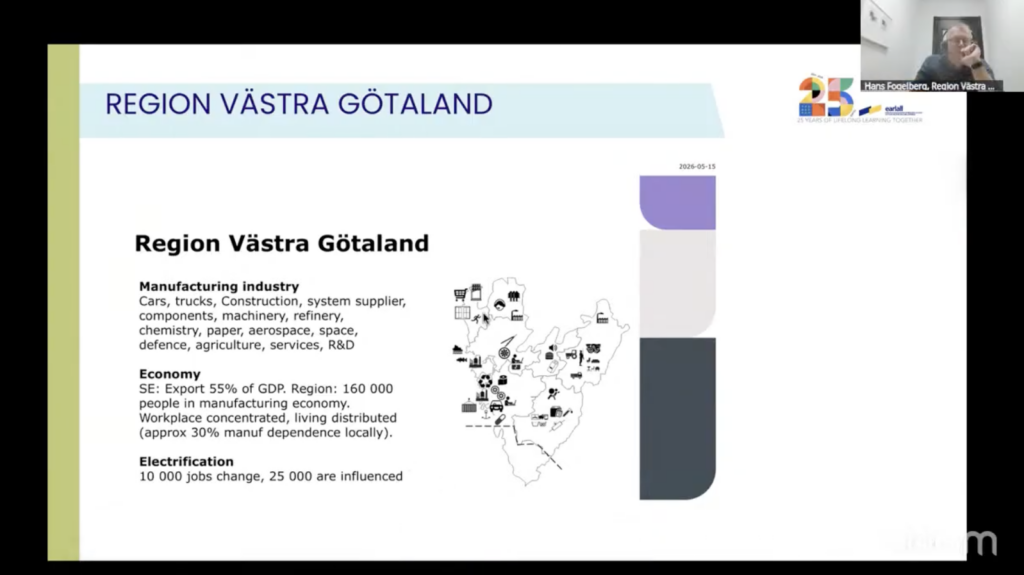
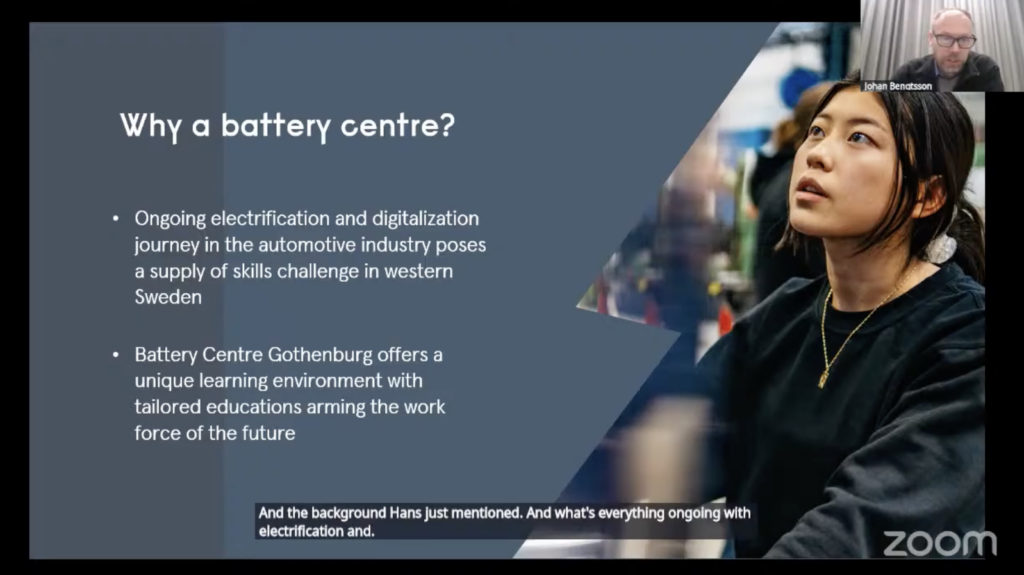
The webinar concluded with contributions from Hans Fogelberg and Johan Bengtsson, who presented regional initiatives from Region Västra Götaland supporting Sweden’s battery and electric vehicle transition.
Hans Fogelberg discussed the region’s industrial transformation challenges, particularly increasing electricity demands and the rapid shift toward green manufacturing technologies.
Johan Bengtsson then introduced the Battery Centre in Gothenburg, an 800-square-meter training facility designed to support competence development across the battery value chain. The centre provides hands-on, experience-based learning opportunities targeting a broad audience ranging from school students to factory managers.
The presenters stressed the importance of collaboration between industry, academia, regional authorities, and training providers to address emerging skills shortages and ensure that workers possess both technical expertise and broader domain knowledge required by the evolving manufacturing sector.
Participants actively engaged throughout the webinar, discussing how European regions can better anticipate future labour market changes and strengthen cooperation across education, training, and industry ecosystems. The discussions highlighted the importance of flexible lifelong learning pathways, regional partnerships, and skills intelligence systems to support Europe’s clean energy ambitions.
Resources
- 1. Presentation: Jasper van Loo, Coordinator in the Department for VET and skills, CEDEFOP
- 2. Gaute Kornberg, Project Leader, Hydrogen skills project H2CoVE, Vestland County, Norway
- 3. Marta Estrada Tiana, Institut Escola del Treball, Catalonia
- 4. Lena Müller, Project Manager, Qualification in the Automotive Industry – QualiBattBW and Voltage, Germany
- 5. Hans Fogelberg, Policy Advisor, Region Västra Götaland,
- 6. Johan Bengtsson, Technology Development Manager, Gothenburg Technical College
- Watch the recording
- Fact sheet