

EARLALL Explores Applied Arts & Craftsmanship Sector Skills Challenges and Opportunities Across European Regions
16/12/2025
On 16 December 2025, EARLALL hosted a webinar on “Applied Arts & Craftsmanship Sector Skills Analysis: Understanding Skills Challenges and Opportunities in the Applied Arts & Craftsmanship Sector Across European Regions“, bringing together around 25 participants from across Europe, including regional officers, educators, and project professionals. The event was part of EARLALL’s ongoing series examining regional skills needs in key economic sectors, with a focus on sustainable and future-ready workforce development.
Europe’s applied arts and craftsmanship are at the heart of local identity, cultural expression, and regional economies — from ceramics and textiles to jewellery and design — yet the sector faces pressing challenges such as skills shortages, digitalisation pressures, sustainability demands, and generational renewal. The webinar explored how regions and stakeholders are tackling these issues and building growth opportunities.
The webinar opened with welcome and introductory remarks by Alicia Gaban Barrio (EARLALL’s Communications manager), replacing the representative from the Regional Ministry of Education, Catalonia, and EARLALL’s Working Group on Skills and Labour Market, who framed the applied arts and craftsmanship sector as both culturally vital and economically significant. Participants were reminded of the unique blend of tradition, creativity, and innovation that defines Europe’s craft ecosystems, alongside the urgent need to modernise skills pathways and reinforce vocational training systems.
Martha Bloom, policy analyst and economist at the OECD Centre for Entrepreneurship, SMEs, Regions, and Cities (CFE), presented a comprehensive overview of the sector’s current dynamics:
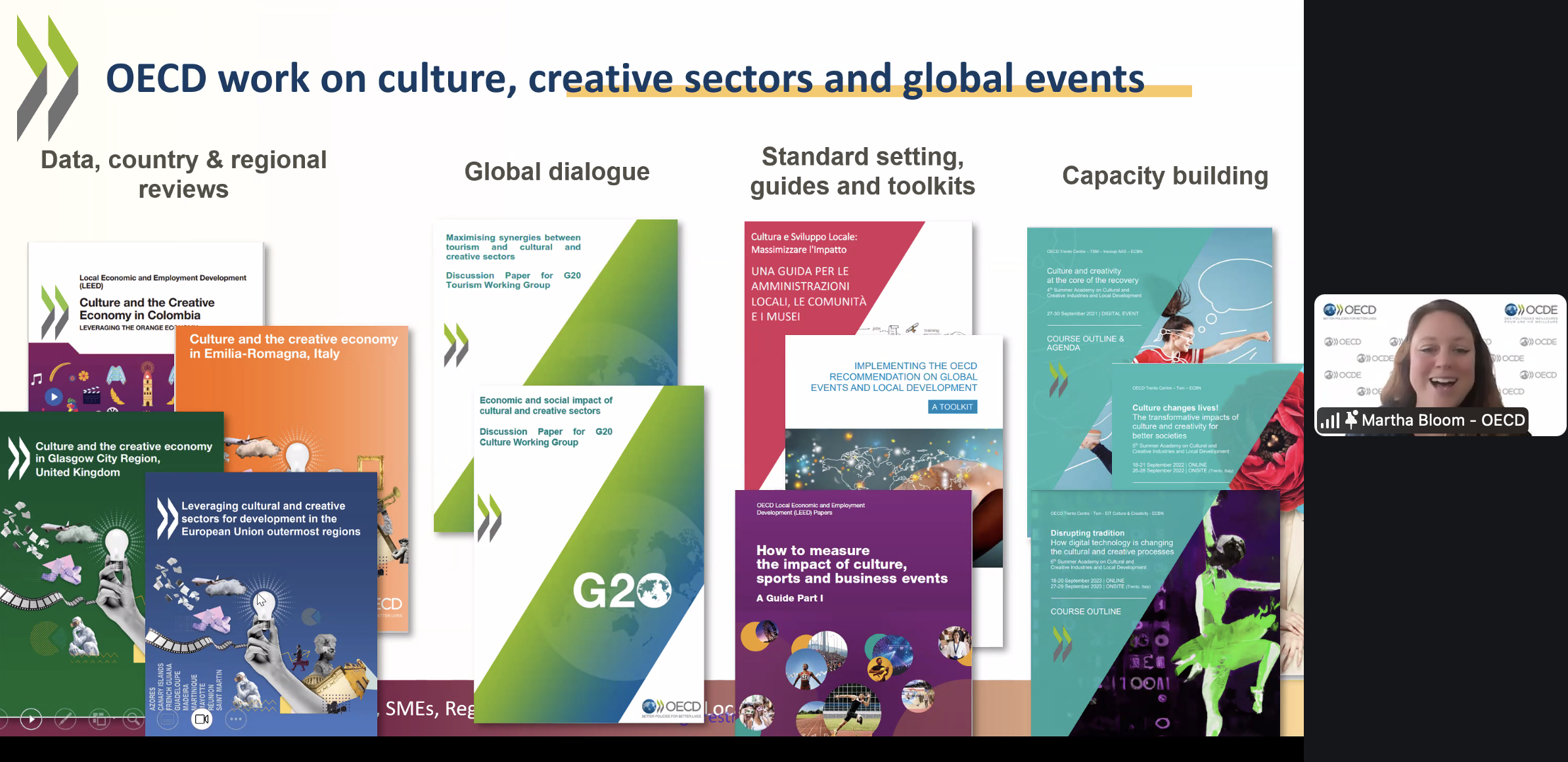
- The creative and artisanal industries play a significant role in regional development and economic activity, with strong contributions to employment and cultural tourism.
- However, many countries are experiencing declining employment and enrolment in arts and craft education, linked to demographic shifts, urban migration, and reduced training opportunities.
- Bloom emphasised the importance of upskilling in digital tools, sustainability practices, and research competencies to build resilience across craft professions.
EARLALL Regions sharing applied arts and craftsmanship challenges and opportunities
Centre-Val de Loire (France), Tuscany (Italy) and Catalonia (Spain) shared practical insights and pioneering initiatives aimed at strengthening skills and professional pathways in applied arts and craftsmanship.
Centre-Val de Loire (France): Promoting Craft Careers and Skills
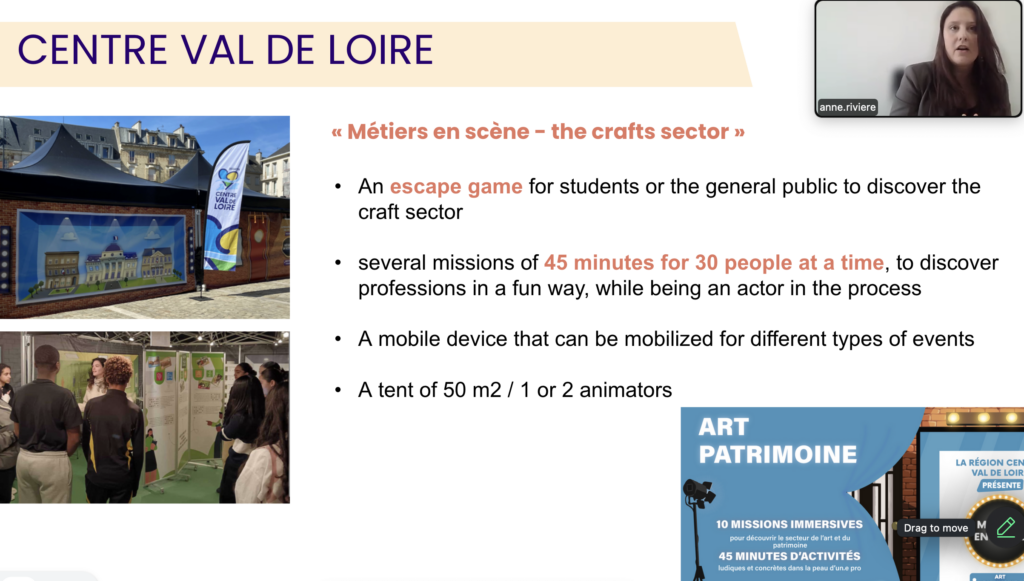
Speakers Anne Rivière, Claire Chartier, and Charlotte Fuchs showcased the Campus des métiers et des qualifications (CMQ), which integrates heritage, arts, and craftsmanship training into a coordinated regional strategy. They also presented « Métiers en scène – the crafts sector », an immersive escape-game experience designed to introduce young people to craft professions through interactive missions, helping to boost visibility and engagement with artisanal careers.
Tuscany (Italy): Structure, Workforce, and Specialisations
Miriana Bucalossi highlighted the structural resilience of Tuscany’s artisan sector, with a workforce of over 240,000 in areas such as leather, textiles, stone, and metal craftsmanship. She described the Bottega Scuola training programme, where master artisans deliver vocational training leading to recognised competency certification. Challenges remain in financing, administrative support, and integrating digital skills — issues that are being addressed through policy and pilot models such as expanding Bottega Scuola pathways to include broader provider types.
Catalonia (Spain)
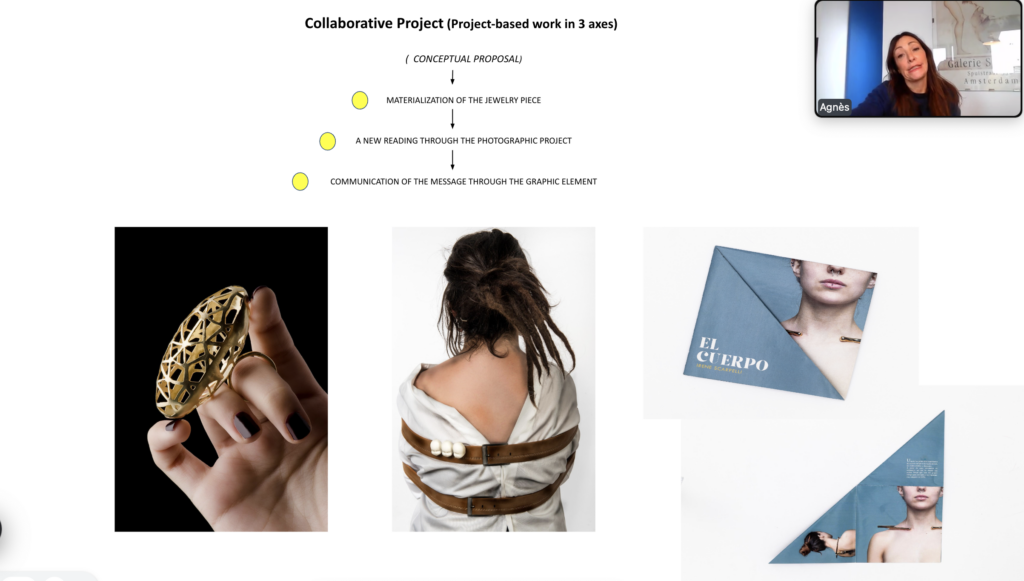
Representatives Agnès Wasserman Olivé and Felip Vidal Auladell (from the Llotja School of Art and Design (Barcelona) presented Aliages, an interdisciplinary project combining jewellery creation with photography and graphic design, fostering cross-disciplinary innovation and collaborative learning. They also discussed Spain’s participation in learner mobility and Erasmus+ cooperation, strengthening European-level craft networks.

Participants engaged in discussions around:
- Regional and European cooperation through Erasmus+ and strategic partnerships to support mobility, knowledge exchange, and policy alignment.
- Attracting younger generations to craftsmanship through modern communication and digital storytelling.
- The need for sustainability-focused skills development, including environmentally conscious production techniques.
Craftsmanship across Europe continues to play a vital role in both cultural heritage and local economies; yet, the sector faces significant challenges, including skills shortages and generational renewal. Initiatives highlighted by EARLALL demonstrate that integrating modern skills—such as digital tools, sustainability practices, and effective communication—alongside traditional techniques is crucial for keeping crafts relevant in the 21st century. Collaboration between regional authorities, vocational training providers, and industry not only fosters innovation but also strengthens pathways from education to employment. By promoting creative, interdisciplinary learning and showcasing the real opportunities in craft professions, European regions are finding ways to engage young people and ensure the continuity and vitality of their artistic and traditional crafts.
In 2026, EARLALL will continue with its sectoral skills webinars, focusing on the battery industry, energy, and construction sectors.
Resources
- OECD’s presentation
- Speakers’ presentations (Centre-Val de Loire and Catalonia)
- Tuscany presentation
- Watch the recording
- Fact sheet