

Second Exchange on Inclusive Labour Markets: EARLALL Members Deepen Exchange on Regional Approaches
29/04/2026
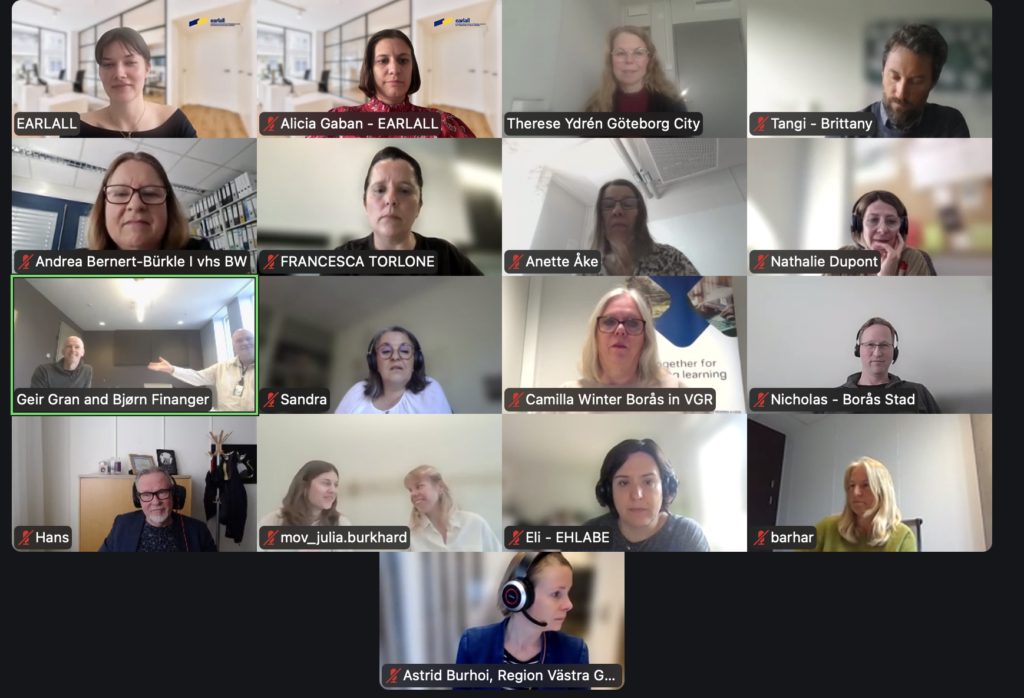
On 28 April 2026, EARLALL hosted the second Exchange Meeting on inclusive labour markets, bringing together members to share initiatives and regional insights on how to integrate individuals furthest away from the labour market. While the first meeting focused on workforce shortages linked to demographic change and explored systemic pathways to address them, this second session shifted towards concrete labour-market approaches currently implemented across EARLALL’s regions and collaborations.
The Brittany Region opened the exchange by presenting its Vocational Education and Training (VET) policy and the measures in place to ensure accessibility for target groups. Introducing the regional context, Tangi De Rochefort outlined a structured training system delivered by more than 90 VET providers and built around three pillars that prioritise inclusion. He noted that around 60% of all learners belong to one or more target groups. Brittany’s ability to identify new ways of engaging and empowering individuals, combined with strong local coordination, has contributed to the region achieving the lowest unemployment rate in France. This approach enables Brittany to move beyond traditional views of education and life pathways, rebuild confidence among individuals who are often overlooked, and remain resilient during periods of economic slowdown.
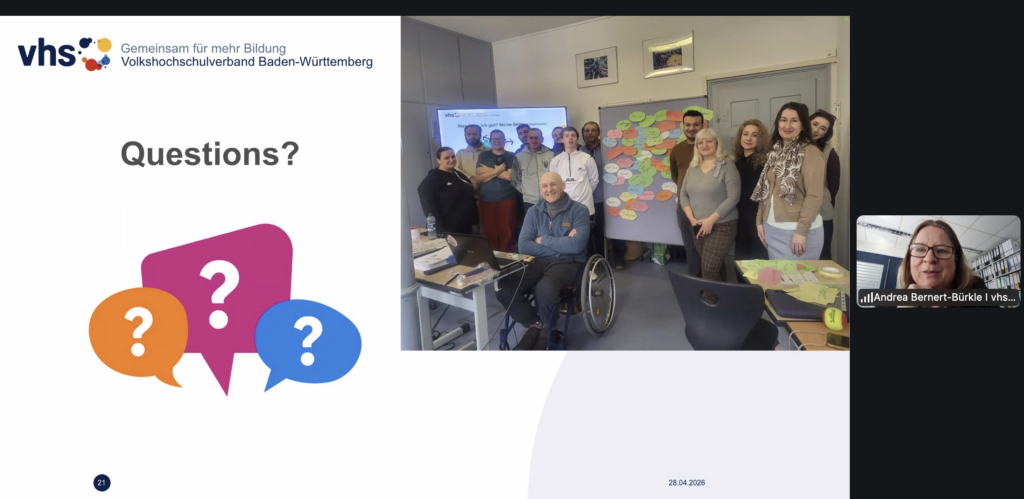
Building on this, Andrea Bernert-Bürkle from VHS Baden-Württemberg presented the Regional ESF+ programme, a decentralised initiative supporting disadvantaged groups in their transition into the labour market. She highlighted the programme’s dual approach, exemplified by the Tübingen model, which allows participants to strengthen their language skills directly within the company where they are employed. By combining workplace experience with targeted learning support, the model offers a practical and effective pathway towards integration.
Francesca Torlone, from the University of Florence, provided an overview of regional policy challenges and solutions developed within the Interreg Europe-funded SALAM project (Sustainable Accessibility to the Labour Market). She emphasised the increasingly non-linear nature of career pathways, which require personalised guidance and mentoring to help individuals navigate multiple transitions. Torlone also reflected on the impact of the “Great Resignation,” linking it to low-quality and unfulfilling jobs that fail to align with personal aspirations. She highlighted the potential of self-employment in the third-sector economy and stressed the importance of upskilling, noting that training must lead to concrete and meaningful learning outcomes. She concluded by presenting a skills-framework approach as a cutting-edge method for defining transparent career pathways and aligning them with the skills employees need, illustrating how regional governments in the SALAM project are putting these solutions into practice.

Anette Åke, from the Labour Market and Adult Education Department of Gothenburg City, presented Step by Step, a preparatory employment pathway designed to strengthen the linguistic and cultural readiness of individuals with limited Swedish language skills and a weak connection to the Swedish labour market. The pathway supports participants furthest from employment by offering structured preparation that enables quicker progression towards work. A key feature of the model is the requirement for each participant to complete the programme with a clear, jointly developed action plan outlining responsibilities for both the individual and the organisations involved, ensuring continuity and a defined route into the next stage of their integration journey.
The meeting concluded with an open discussion on joint efforts and upcoming opportunities for collaboration. EARLALL also highlighted opportunities for members to engage in its working groups on Lifelong Learning, Ageing Societies, Skills and the Labour Market.
As with the first exchange meeting, the discussion reaffirmed the shared commitment across EARLALL’s network to strengthening inclusive labour-market systems. By fostering dialogue, supporting joint initiatives and encouraging international cooperation, EARLALL continues to empower regions to recruit, retain and support individuals currently outside the labour market, contributing to more resilient, equitable and competitive regional communities.