

Attractiveness of VET: Final Consultation Webinar Highlights Key Challenges for the Future EU Strategy
11/03/2026
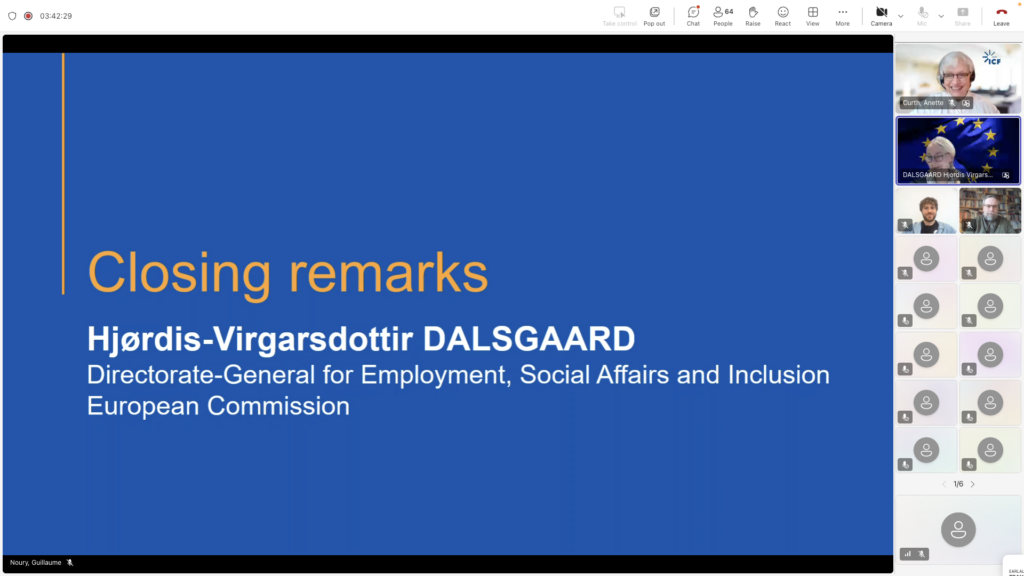
On 11 March 2026, the European Commission hosted the fourth and final consultation webinar contributing to the development of the future European Strategy for Vocational Education and Training (VET) 2026–2030. Entitled “Attractiveness of VET”, the online session brought together policymakers, VET providers, social partners, regional authorities and experts from across Europe to reflect on how vocational education and training can become a more appealing pathway for learners, educators and employers.
Building on the previous consultations on the international dimension, quality and labour market relevance, and excellence and innovation, this final webinar focused on one of the most persistent challenges facing VET systems across Europe: strengthening their attractiveness and public perception.
The meeting was opened by Andrea Laruste, Deputy Head of Unit at the European Commission’s DG Employment, Social Affairs and Inclusion, who emphasised that the attractiveness of VET is a multifaceted issue that goes far beyond communication campaigns or image-building initiatives. She highlighted that making VET attractive requires attention to several interconnected dimensions, including the quality of programmes, meaningful career opportunities, clear progression pathways, effective guidance systems, and access to learning mobility. Ensuring that VET offers strong prospects for personal development and professional success is therefore central to increasing its appeal among learners and society at large.
A keynote intervention from Denmark further framed the discussion by exploring the concept of the “wicked problem” of making VET attractive. The presentation highlighted how VET policy often faces competing objectives and complex trade-offs, where initiatives designed to address one challenge may unintentionally create new ones. The Danish experience illustrates how reforms aimed at strengthening excellence, inclusion or labour market responsiveness can sometimes generate tensions between policy priorities. This perspective provided a valuable starting point for the broader discussion on how European and national strategies can navigate such complexities.
Creating attractive career and learning pathways
The first strand of discussions explored how VET pathways can provide more attractive prospects for learning, careers and personal development. Participants reflected on the importance of ensuring that vocational routes offer clear progression opportunities, including pathways to higher education and advanced professional roles.
Guidance and information were identified as critical elements in this regard. Effective career guidance, starting early in education systems, can help learners and their families better understand the opportunities offered by VET. Participants also emphasised the role of role models, success stories and skills competitions in showcasing the achievements of VET graduates and strengthening the prestige of vocational professions.
At the same time, several contributions highlighted that communication efforts alone are not sufficient. The credibility of VET depends fundamentally on the quality of programmes, strong links with labour markets, and tangible career outcomes.
Strengthening work-based learning and apprenticeships
A second major focus of the webinar was the role of work-based learning (WBL) and apprenticeships in increasing the attractiveness of VET. Participants agreed that well-designed WBL systems strengthen the connection between education and the world of work, allowing learners to gain practical skills while building professional networks.
However, discussions also pointed to a number of persistent challenges. In many contexts, SMEs require additional support to engage in apprenticeship training, whether through financial incentives, shared training facilities or administrative simplification. Participants also stressed the importance of ensuring fair conditions for apprentices, including appropriate remuneration and quality mentoring in companies.
Across contributions, there was broad agreement that strong employer engagement and structured partnerships between VET providers and companies remain essential to ensuring that work-based learning opportunities are both accessible and of high quality.
Expanding learning mobility in VET
The third discussion theme focused on learning mobility for VET learners and staff, which was widely recognised as an important factor in enhancing the attractiveness of vocational pathways. Mobility experiences can strengthen technical skills, foster intercultural competences and increase learners’ confidence and employability.
Despite progress through European programmes such as Erasmus+, participants noted that mobility opportunities remain less accessible for VET learners compared to students in general education or higher education. Administrative barriers, funding constraints and organisational challenges continue to limit participation in some countries and sectors.
Participants therefore highlighted the need to further expand and simplify mobility opportunities, while ensuring that VET learners and teachers can fully benefit from international learning experiences.
Feeding into the future EU VET Strategy
The webinar concluded with a plenary discussion synthesising insights from the working groups and reflecting on their implications for the future European VET Strategy. Several key messages emerged from the exchanges:
- Attractiveness must be addressed through a systemic approach, combining quality, progression pathways, labour market relevance and strong guidance systems.
- Work-based learning and apprenticeships remain central pillars of attractive VET systems and require sustained support for both learners and companies.
- Learning mobility should become a more accessible and integrated component of vocational education and training.
- Communication and promotion efforts should be complemented by structural reforms that strengthen the real opportunities offered by VET pathways.
As the final webinar in the consultation series, the discussion marked an important milestone in gathering stakeholder perspectives from across Europe. The insights collected during the event will feed into a synthesis report and contribute to shaping the forthcoming European Strategy for Vocational Education and Training 2026–2030, ensuring that VET systems across Europe become more attractive, inclusive and responsive to the needs of learners, societies and economies.
Previous webinars insights
- Third webinar: Excellence, Innovation and Entrepreneurship in VET: Third Consultation Webinar Advances the Future EU Strategy
- Second webinar: Future-Proofing VET: Stakeholders Discuss Quality and Labour Market Relevance in Second Consultation Webinar
- First webinar: Shaping the International Dimension of VET: Stakeholder Insights Feeding the Future EU Strategy