

WISE: Staff Training on Human Trafficking and Labour Exploitation
23/12/2025
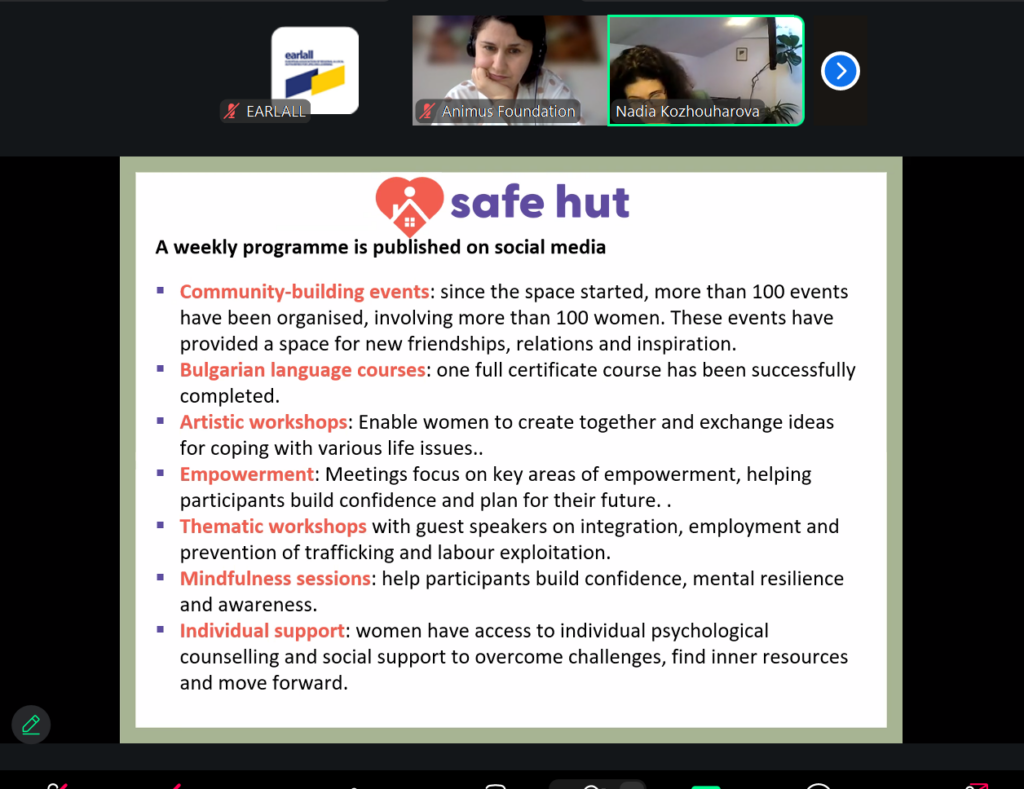
On 12 December, the WISE consortium took part in the Staff Training on Human Trafficking and Labour Exploitation. EARLALL participated in the meeting in its role as Communication Manager of the WISE project.
Nadia Kozhouharova, from the Animus Association Foundation in Bulgaria, presented trafficking in human beings and labour exploitation, inviting project partners in the WISE project (Supporting Ukrainian Refugee Women’s Socio-Economic Integration and Wellbeing) to explore how labour trafficking affects refugee women from Ukraine in European countries, specifically in Sofia (Bulgaria) and in Milan, Rome, and Turin (Italy). Kozhouharova highlighted empowering examples such as Safe Hut and outlined both challenges and methods of prevention.
Kozhouharova explained human trafficking through three aspects:
- Actions – such as recruitment, transportation, or harbouring of individuals;
- Means – including threats, abduction, coercion, or payments;
- Purpose – which entails exploitation, including forced labour, criminal activities, illegal adoption, or sexual exploitation.
She clarified that human trafficking should not be confused with violations of labour rights. The differentiation between the two definitions depends on consent, whereas labour exploitation involves administrative violations, trafficking is a criminal offence conducted without consent.
Building upon this definition, Kozhouharova presented preconditions for human trafficking victims, noting that young women are among the most exposed groups. While gender and age are an integral part of the picture, personal factors such as emotional conditions, family issues, personal capacities (education and language), and socio-economic status also increase vulnerability and must be addressed in prevention efforts. Prevention, Kozhouharova explained, must take place at three levels:
- Personal level – fostering healthy integration by building mental resilience, empowerment, and emotional well-being. Tailored training opportunities are essential to address individual vulnerabilities.
- Employer level – as some employers exploit refugees by underpaying or employing them without contracts, holding employers accountable is a critical part of preventing exploitation.
- Labour market – creating a prepared labour market for migrants by ensuring existing procedures and legislation are responsive. This includes addressing administrative barriers such as housing, bank accounts, and health insurance.
She emphasized the importance of lobbying and advocacy to continue enforcing migrant workers’ rights, ultimately empowering migrants and enabling access to the right information and opportunities to report abuse.
Kozhouharova concluded by presenting ProjectSafe Hut as a good practice example. The project aims to offer “a place where women can feel good” and foster a community where women can connect, develop skills and training.
Refugee women from Ukraine face significant barriers that impede their entry into the labour market, forcing them to compromise their wellbeing and putting them at risk of exploitation. The WISE project continues to support refugee women from Ukraine in Europe by providing safe guidance, facilitating integration, and helping them access sustainable employment and socio-economic opportunities.