
WISE ESF+ Project Final Webinar on Replicating Holistic Support Models
23/06/2026
On 22 of June, EARLALL hosted the final webinar of the WISE (Supporting Ukrainian Refugee Women’s Socio Economic Integration and Wellbeing) ESF+ project, bringing together practitioners, policymakers and stakeholders to explore how gender-sensitive and holistic support models can be replicated and adapted across different local and regional contexts.
The webinar focused on the WISE Holistic Support Centre model and featured contributions from project partners, as well as representatives from the Directorate for Vocational Training and Employment of the Centre-Val de Loire Region, a member of the EARLALL network, and the Centre d’Information sur les Droits des Femmes et des Familles (CIDFF). Their collaboration, supporting migrant women facing barriers to labour market integration, has been recognised as a good practice under the SALAM Interreg Europe project.
A Holistic Approach to Integration
The WISE project was developed in response to the arrival of refugee women displaced by the war in Ukraine. Implemented in Bulgaria and Italy, the project aims to support refugee women through a comprehensive approach that combines employment support, psychosocial assistance and mental health services.
During the webinar, Elisabetta Bianchin, Project Coordinator from International Rescue Committee (IRC) presented the Holistic Support Centre model, an adaptation of the organisation’s Women and Girls Safe Spaces. The model provides a dedicated and safe environment where women can access integrated support tailored to their individual needs while strengthening their social connections and confidence.
The approach is based on three interconnected pillars:
- Mental health support;
- Psychosocial support and service navigation;
- Employment support and career development
A key innovation of the model is the integration of employment services into a traditionally protection-oriented framework, helping women identify their skills, access training opportunities and progress towards economic independence.
Key Conditions for Replication
Elena Lanteri, Integration Counsellor from Milan, IRC highlighted that while the model should be adapted to local realities, several core elements are essential for successful replication.
These include cultural and linguistic mediation in multiple languages, trained staff working with trauma-informed and person-centred methodologies, effective safeguarding mechanisms and strong interdisciplinary cooperation between different professionals.
The discussion also underlined the importance of having a dedicated physical space for women and children. Childcare arrangements were identified as a crucial enabler allowing women to participate fully in support activities and training opportunities.
Another key lesson concerned the need to embed support centres within local ecosystems by establishing referral pathways and cooperation with organisations providing housing, legal assistance, healthcare and other services.
Learning from the Centre-Val de Loire and CIDFF Experience
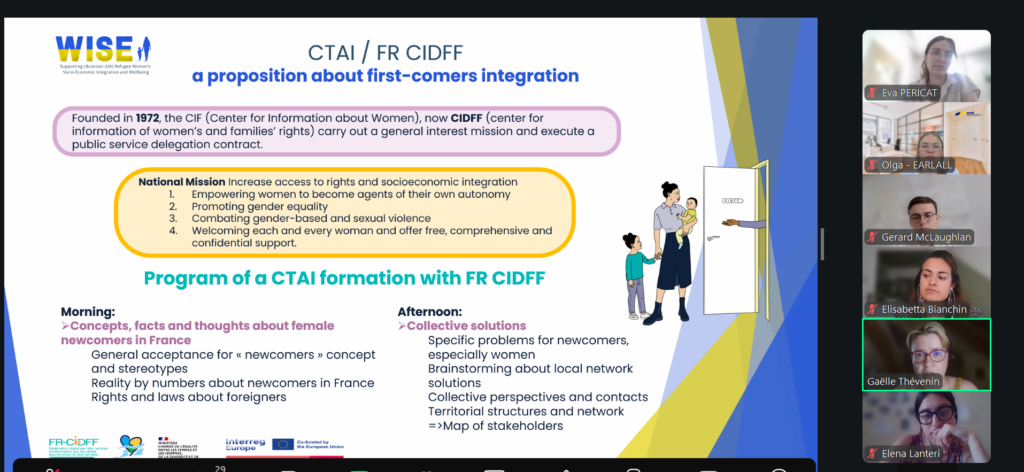
Representatives from the Directorate for Vocational Training and Employment, Centre-Val de Loire Region (EARLALL member) and CIDFF (Center for information of women’s and families’ rights) presented their experience supporting newly arrived migrant women through the Contrat Territorial d’Accueil et d’Intégration (CTAI).
The initiative combines professional integration measures, access to rights and specialised support for women facing social and gender-based vulnerabilities. Through training and professionalisation activities, the programme brings together local stakeholders from different sectors to strengthen cooperation and improve services for migrant women. The initiative has been recognised as a good practice within the SALAM Interreg Europe project.
CIDFF also presented the PAC (Primo Arrivante et Citoyenne) project, which combines information on rights and citizenship with participatory workshops focused on identity, empowerment and integration. The initiative was developed together with migrant women, illustrating the value of a bottom-up approach to service design.
Common Success Factors
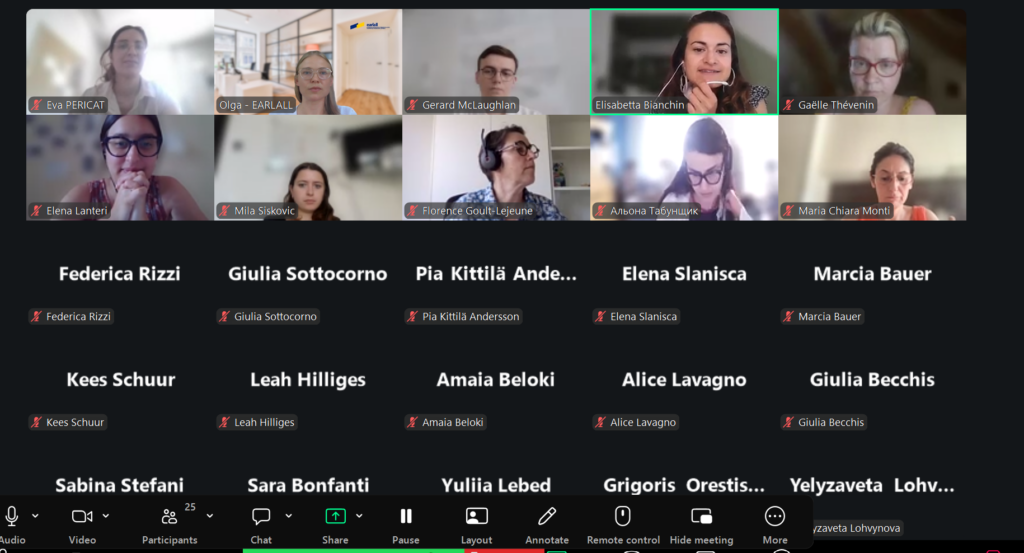
During the interactive discussion, participants identified several common elements shared by both the WISE and CIDFF approaches.
Among the most important were the use of gender-sensitive and trauma-informed methodologies, the creation of safe spaces where women can speak openly about their experiences, and the active involvement of beneficiaries in programme design and implementation.
Group activities were highlighted as particularly effective in building trust, reducing isolation and fostering a sense of belonging. Speakers stressed that successful integration requires recognising migrant women not only as beneficiaries of support but also as active contributors to their communities.
The Importance of Strong Stakeholder Ecosystems
A recurring theme throughout the webinar was the importance of collaboration between stakeholders. Participants emphasised that no single organisation can address the complex needs of refugee and migrant women alone.
Building effective networks across employment, housing, healthcare, education and social services remains a challenge in many contexts. However, examples presented during the webinar demonstrated that long-term cooperation and structured coordination mechanisms can significantly improve outcomes for beneficiaries.
Regional and local authorities were identified as key actors in supporting such ecosystems through policy frameworks, funding instruments and stakeholder coordination. As the communication, dissemination and scale-up leader of the WISE project, EARLALL is proud to connect regional lifelong learning and employment ecosystems with innovative social models such as the Holistic Support Centre, supporting their transfer, replication and integration into regions across Europe.
4th Webinar: presentation