

WISE First Field Exchange Visit in Rome
22/01/2026
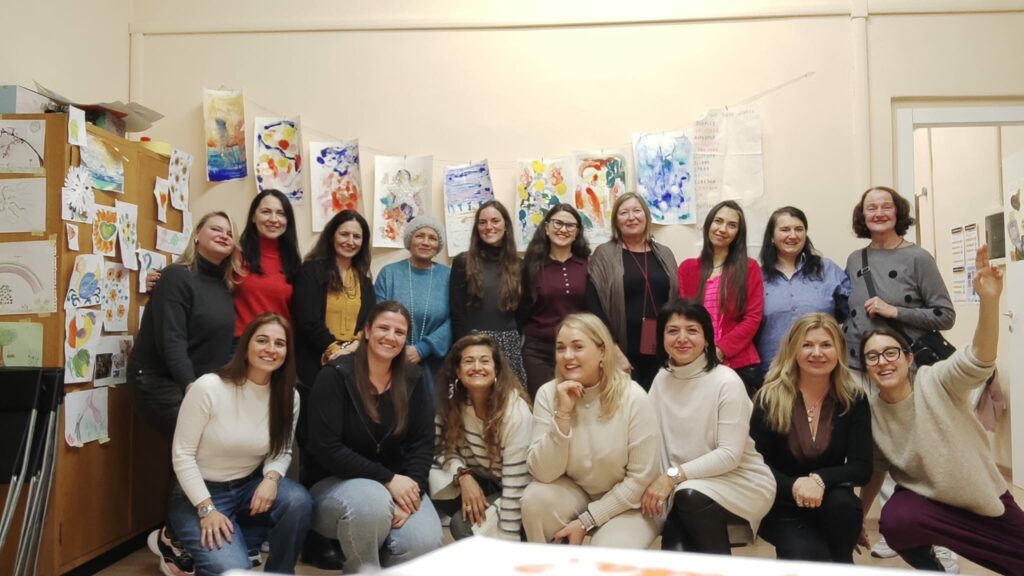
From 14 to 16 January 2026, project partners gathered in Rome for the First Field Exchange Visit, a key moment for peer learning and reflection, with a particular focus on employment pathways within the WISE project – Supporting Ukrainian Refugee Women’s Socio-Economic Integration and Wellbeing.
The exchange visit aimed to assess where the project currently stands and to jointly shape the next phase of implementation. Partners from Italy and Bulgaria shared concrete experiences from the field, highlighting both good practices and operational challenges.
The visit opened with direct engagement in activities at the Holistic Support Center in Rome, allowing participants to meet women involved in the project and observe group-based initiatives, including wellbeing and physical activities.
Reflecting on Progress and Learning from Practice
The second day focused on the exchange of experiences across project locations in Turin, Milan, Rome, and Sofia. Partners shared good practices, challenges, and context-specific dynamics, with particular attention to mental health and psychosocial support as a foundation for socio-economic inclusion. Sessions explored how safe spaces contribute to stability, trust, and readiness for employment-related support.
While local contexts differ, common patterns emerged across all locations, including the complexity of beneficiaries’ needs, labour market barriers, and the importance of flexible, person-centred support.
Partners also discussed the integration of the SkillLab AI tool, sharing first experiences from Bulgaria and reflecting on implementation plans in Italy. Key considerations included digital access, beneficiaries’ tech skills, eligibility criteria, and the role of staff support in facilitating the use of the tool.
The discussions confirmed that effective employment support cannot be developed in isolation. Instead, it must be embedded in a broader framework that considers mental health, care responsibilities, legal status, and housing conditions.
Mental Health as a Foundation for Inclusion
A central theme of the exchange was the role of mental health and psychosocial support (MHPSS) as a prerequisite for labour market integration. Experiences from Italian locations demonstrated that safe spaces offering mental health support help stabilise beneficiaries’ lives, rebuild confidence, and create the conditions necessary for engaging in employment-related activities. This integrated approach was widely recognised as a cornerstone of the WISE model.
Tailored Employment Support through Personas and Integration Plans
To better align services with beneficiaries’ realities, partners worked on developing user personas reflecting the main profiles of women supported by the project. These personas considered factors such as age, education, work experience, language skills, health, care responsibilities, motivation, and career aspirations.
Building on this, partners reflected on how individual and group-based employment support can be tailored to different levels of need. The Comprehensive Integration Plan (CIP), updated every six months, was reaffirmed as a key tool to structure and monitor personalised pathways into employment, training, or education.
Combining Individual and Group Approaches
The exchange highlighted the added value of combining one-to-one employment support – such as CV preparation, job placement, employer engagement, and post-placement follow-up – with group activities. These include job readiness sessions, language and digital skills training, labour rights awareness, qualification recognition pathways, and meetings with employers. Together, these measures aim to improve employability while reducing the risk of labour exploitation and skills mismatch.
Looking Ahead
The visit concluded with forward-looking discussions on emerging trends, including the extension of 2027 European temporary protection impacts the services, possible return movements, and the so-called “waiting dilemma” faced by many beneficiaries. Clear next steps were identified for employment support activities in Bulgaria, SkillLab implementation in Italy, and the upcoming Women Rise initiative.
Overall, the First Field Exchange Visit reinforced the value of peer learning and cross-country collaboration. It confirmed that sustainable socio-economic integration requires holistic, flexible, and integrated approaches – placing women’s wellbeing at the centre while building realistic and empowering pathways into employment.