
WISE Final Conference: Scaling Up Holistic Support for Refugee and Migrant Women Across Europe
21/09/2026
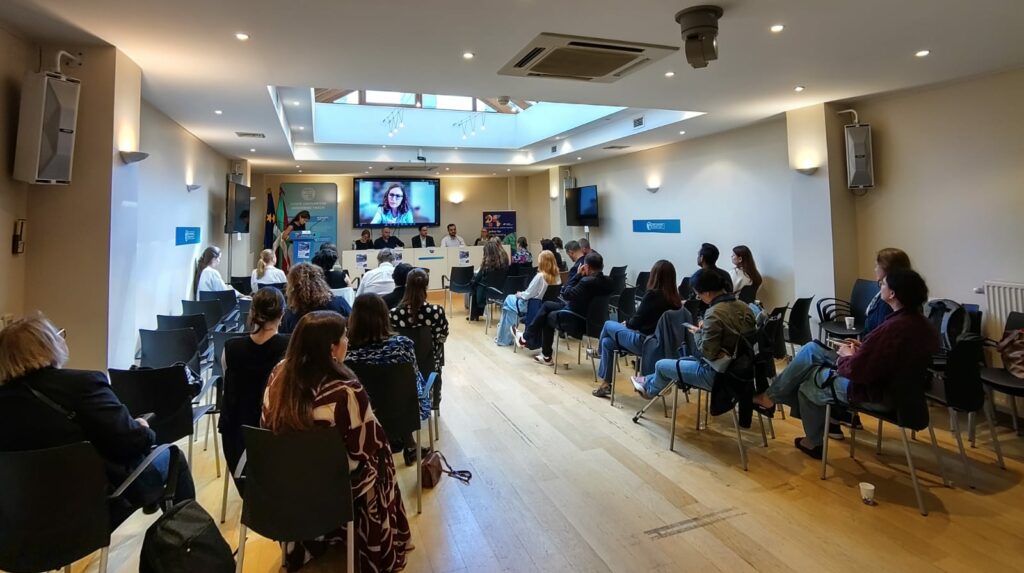
On 16 September 2026, EARLALL hosted and co-organised the Final Conference of the WISE project, “Scaling Up Holistic Support for Refugee and Migrant Women Across Europe”, at the Delegation of the Basque Country to the European Union in Brussels. The hybrid event welcomed practitioners, policymakers, researchers, refugee-led organisations, project partners and stakeholders from across Europe, both in person and online, to reflect on the project’s results and, importantly, discuss how the WISE approach can be adapted, replicated and scaled up beyond the project.
Led by the International Rescue Committee Italy and funded by the European Social Fund Plus (ESF+), WISE is implemented by a six-partner consortium comprising IRC Italy, EARLALL, Animus Association Foundation, Centro PENC, Laboratorio di Gruppoanalisi and SkillLab. The collaboration and expertise of partners across the consortium have been central to the implementation of WISE and were also key to shaping and delivering its Final Conference.
As the partner leading communication and scale-up activities, EARLALL has worked throughout WISE to increase the visibility of the project’s results, connect its experience with wider European networks and stakeholders, and create opportunities for exchange, knowledge transfer and replication.
Across the WISE partnership, stakeholder engagement has been an important part of the project’s implementation and outreach. Together, project partners mapped 268 public and civil society services, engaged 44 organisations, organised 8 co-design meetings and 46 Key Informant Interview meetings, and delivered 4 local dissemination workshops and 5 dissemination webinars, with the webinars reaching 74 stakeholders.
These efforts culminated in the WISE Final Conference, which gathered nearly 70 participants in person and online from across Europe.
Taking place as part of the European Skills and VET Week 2026, the conference provided an opportunity to reflect on the scale and impact achieved through WISE. More than 600 women and dependants were supported through the project; 51% received individual case management, 26% received one-to-one employment support and 60% participated in group activities. Among those receiving individual employment support, 55% completed their career goals and 42% used the project’s AI-powered skills-assessment tool. Mental health and psychosocial support was equally integral to the model: 75 women received individual psychological support in Italy, with 63% reporting that they were better able to recognise, express and cope with difficult emotions, according to data collected in June 2026.
Implemented in Italy and Bulgaria, WISE has piloted the Holistic Support Centre (HSC) model, bringing together individualised guidance, employment support, skills development, mental health and psychosocial services, cultural mediation and other forms of assistance within a gender-sensitive and trauma-informed framework.
The Final Conference provided an opportunity not only to reflect on the project’s results and lessons learned, but also to look ahead: how can holistic support models be sustained, adapted and replicated in different contexts across Europe?
Behind the results are individual integration journeys
Opening the conference, Noelia Cantero, Director of EARLALL and Communication and Scale-up Leader of WISE, reflected on why WISE has been particularly important for EARLALL.
She reminded participants that behind the project’s results and figures are individual stories of women rebuilding their lives, developing their skills and finding new pathways into education, employment and their communities. Every integration journey is also a lifelong learning journey, she stressed, highlighting the importance of carrying the lessons from WISE into wider European efforts to create more inclusive learning opportunities and labour markets.
The first conference session then turned to the results and experience of implementing WISE. Elisabetta Bianchin, WISE Project Coordinator and Programme Manager for Economic Wellbeing; Serena Leone, Senior Grants Manager; and Elena Lanteri, Integration Counsellor from IRC Italy, presented the impact of the HSC model and reflected on its core components for future adaptation and replication.
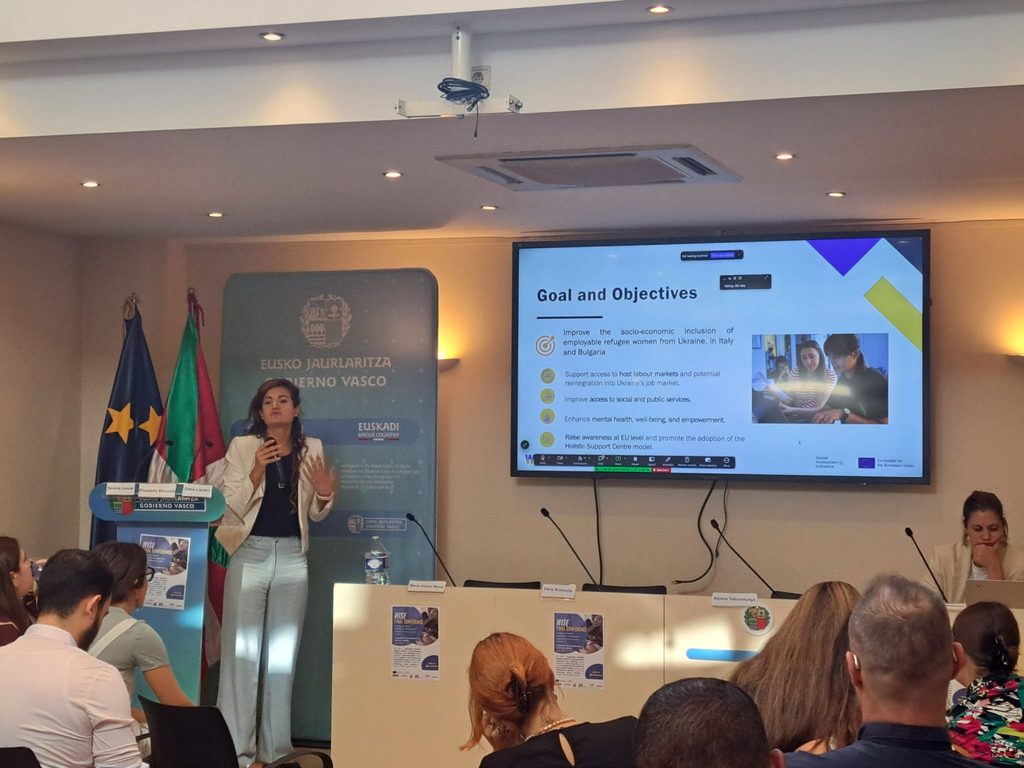
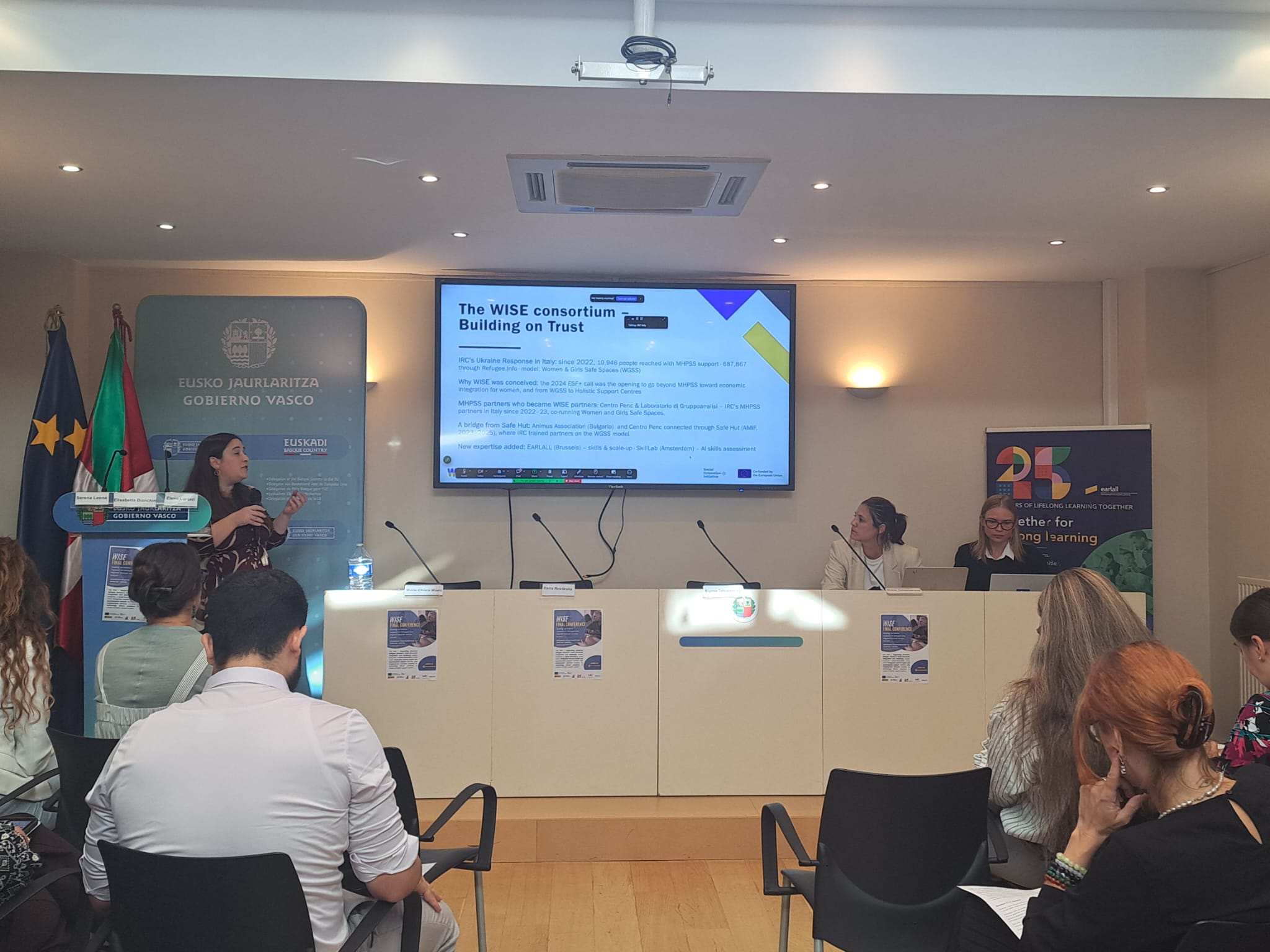
A central lesson emerging from WISE is that labour-market integration cannot be addressed in isolation. Women’s pathways towards employment and learning are closely connected with mental wellbeing, family responsibilities, language, previous professional experience and qualifications, access to services and the broader process of rebuilding their lives in a new country.
The WISE model responds to this complexity by bringing different forms of support together around the individual rather than treating each barrier separately.
From the model to practice: what does holistic support mean?
The Practical Panel, moderated by Olena Yakovets, Cultural Mediator at Centro PENC, moved the discussion from the overall project results to the day-to-day experience of delivering holistic support.
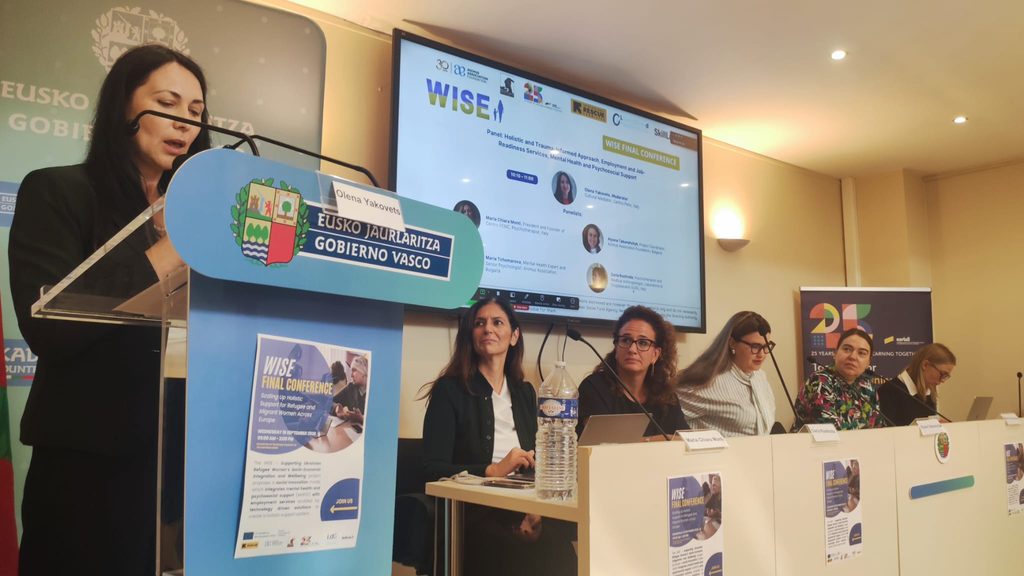
Maria Chiara Monti, President and Founder of Centro PENC; Alyona Tabunshchyk, Project Coordinator at Animus Association Foundation (AAF); Maria Tchomarova, Mental Health Expert at AAF; and Daria Rostirolla, Psychotherapist and Medical Anthropologist at Laboratorio di Gruppoanalisi, shared perspectives from the implementation of WISE in Italy and Bulgaria.
Their discussion explored how employment, mental health, trauma, gender and social integration intersect in the lives of refugee women, and why effective support needs to respond to these needs together.
The exchange also highlighted the importance of trust, safe spaces, cultural mediation, interdisciplinary cooperation, individualised support and strong local referral networks. Rather than offering a single pathway for every participant, holistic support requires services to respond to each woman’s circumstances, capacities and aspirations.
How can Europe scale up holistic support?
The second half of the conference shifted the focus from implementation to policy, sustainability and scale-up.
The Policy and Scale-up Panel brought together perspectives from European institutions, academia, refugee-led organisations, civil society and local social services.
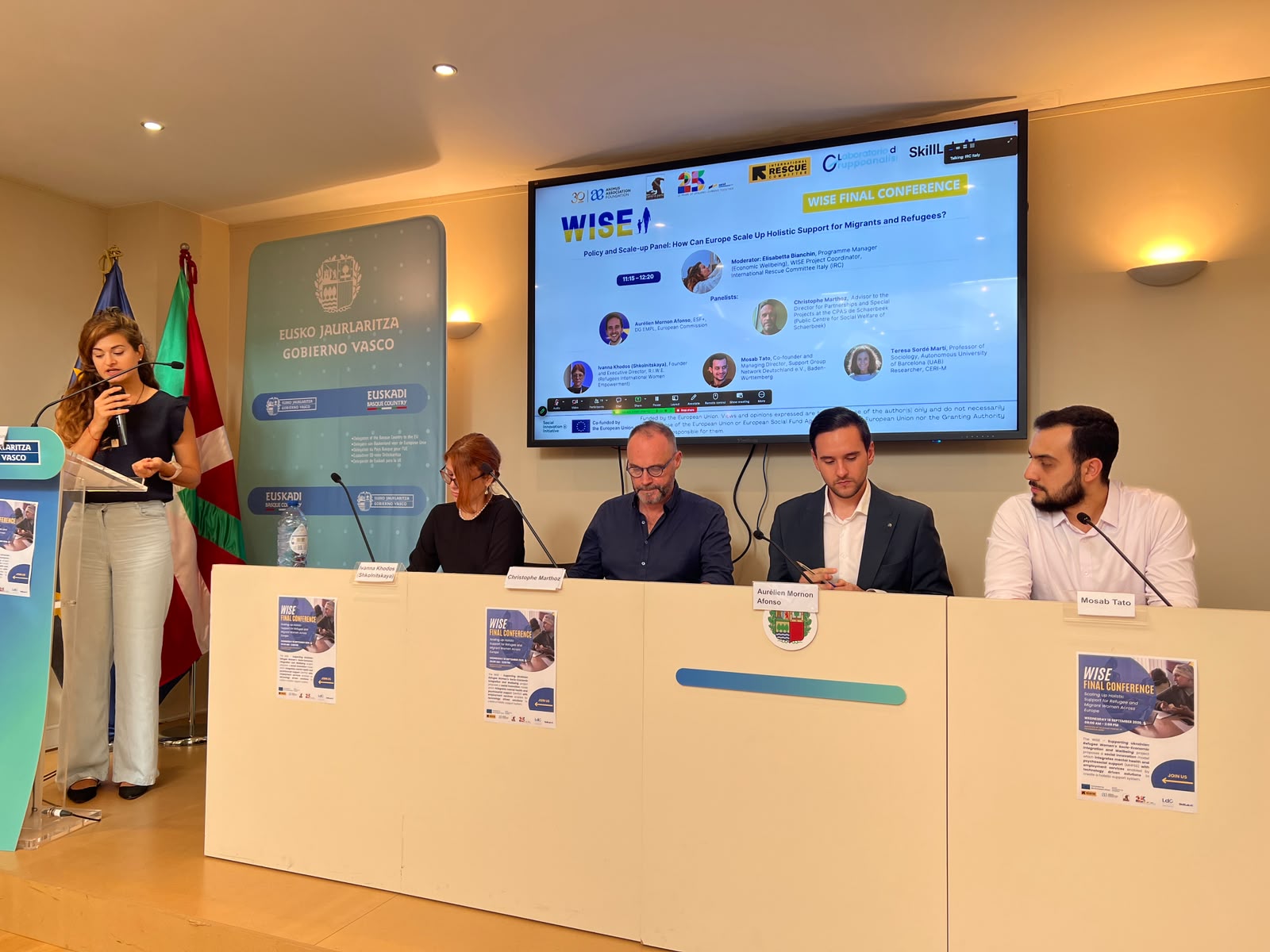
Moderated by Elisabetta Bianchin, the discussion featured Aurélien Mornon Afonso, Policy Officer at the European Commission’s Directorate-General for Employment, Social Affairs and Inclusion (DG EMPL); Ivanna Khodos (Shkolnitskaya), Founder and Executive Director of R.I.W.E. – Refugees International Women Empowerment; Professor Teresa Sordé Martí from the Autonomous University of Barcelona and CERI-M; Mosab Tato, Co-founder and Managing Director of Support Group Network Deutschland e.V. from Baden-Württemberg region (EARLALL member); and Christophe Marthoz, Advisor to the Director for Partnerships and Special Projects at the CPAS de Schaerbeek.
The discussion centred on a question that reaches beyond WISE: what is needed for successful social innovation to move beyond individual projects and become embedded in sustainable policies, partnerships and services?
Panellists explored the role that European funding, local and regional authorities, civil society organisations and refugee-led organisations can play in this process. The exchange addressed the importance of sustainable funding, cooperation across different levels of governance, evidence and knowledge transfer, as well as the value of organisations rooted directly in refugee communities.
The discussion particularly highlighted the contribution of refugee-led organisations in building trust and reaching people who may not engage with larger organisations or mainstream public services, alongside the need for effective cooperation between community-based organisations, public authorities and larger service providers.
Connecting WISE with wider European cooperation
The discussions on replication and scale-up also reflected connections already built around WISE through the EARLALL network and other European initiatives.
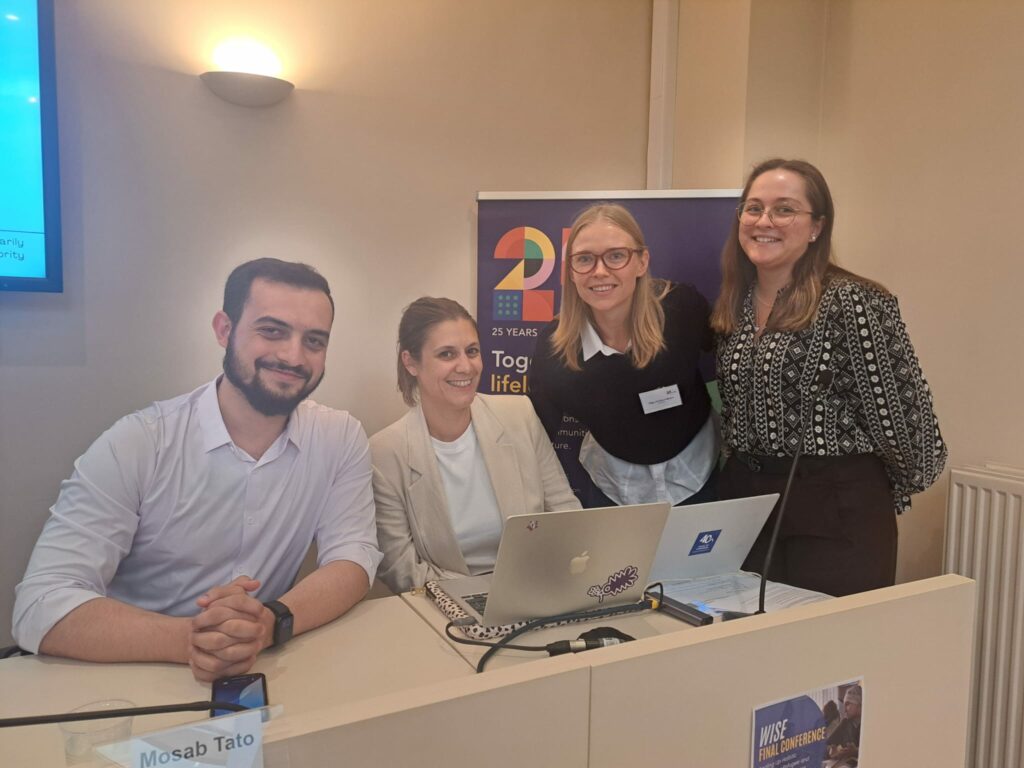
Baden-Württemberg, an EARLALL member region, was connected with WISE through the SALAM Interreg Europe project, bringing additional experience and perspectives on the sustainability and scale-up of support for refugees and migrants.
WISE has also benefited from exchanges with Centre-Val de Loire, another EARLALL member region, which contributed to the fourth WISE stakeholder webinar on the replicability of gender-sensitive and holistic approaches to refugee women’s integration. The region shared its experience and contributed to the discussion on how approaches such as WISE could be adapted and replicated by different types of organisations and public actors.
These connections demonstrate how EARLALL’s network has helped extend WISE beyond the project partnership, creating opportunities for mutual learning between regions, practitioners and European initiatives and supporting the continued exchange and transfer of promising practices.
Continue engaging with WISE
Although the Final Conference marked the closing stage of the project, there are several ways for stakeholders to continue exploring its results and connecting with the wider European discussion.
Join the ESF+ Community of Practice on Migrant Integration. During the Policy and Scale-up Panel, European Commission highlighted the ESF+ Social Innovation+ initiative, coordinated by the European Competence Centre for Social Innovation, as an opportunity for stakeholders to continue exchanging knowledge and experience beyond individual projects. Through its Communities of Practice (CoPs), it brings together stakeholders for ongoing peer learning, knowledge exchange and live meetings around key areas of social innovation. Stakeholders interested in continuing these exchanges can join the relevant CoPs and participate in their activities.
Follow WISE as a European good practice. The exchange will also continue through SALAM Interreg Europe, where WISE will be presented as a good practice during the webinar “European Good Practices for Migrant Labour Inclusion”, creating another opportunity to share its experience with organisations and regions working on migrant labour-market inclusion.
Explore WISE results and resources.
Add yourself to the WISE Stakeholder Database here and stay part of the conversation on strengthening holistic support for refugee and migrant women across Europe.
Project Title: WISE – Supporting Ukrainian Refugee Women’s Socio-Economic Integration and Wellbeing
Project number: ESF-SI-2024-UA-01-0032 – WISE