

Vitoria-Gasteiz becomes European hub for vocational excellence with LCAMP Week & Open Days 2026
23/04/2026
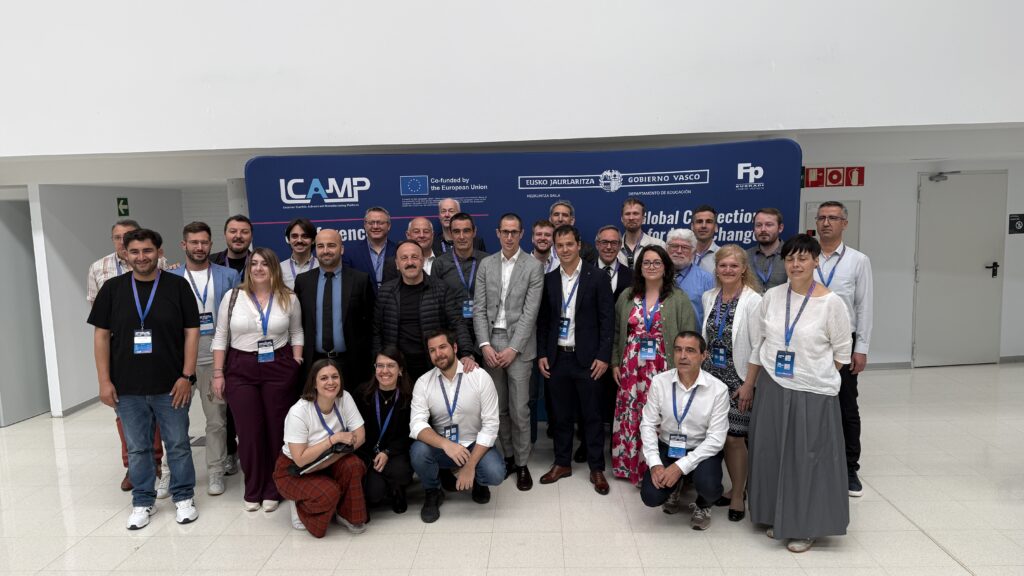
From 21 to 23 April 2026, Vitoria-Gasteiz (Basque Country) became a European meeting point for vocational education and training (VET) and advanced manufacturing, hosting the International LCAMP Week & Open Days under the theme “Global Connection for Local Change”.
The event, organised by the Basque Government’s Department of Education and Tknika in collaboration with the LCAMP project, gathered nearly 700 participants from 24 countries, positioning the Basque Country as a European reference point for innovation in VET and skills development for the green and digital transitions.
The week also included the final LCAMP partners’ meeting, held on 21 April at the Mendizabala VET Centre in Vitoria-Gasteiz. EARLALL participated in this meeting as leader of the LCAMP Alliance and in its role as project communications manager, contributing to discussions on the project’s legacy and next steps.
Across three days, the programme combined policy dialogue, hands-on learning, and industry engagement, demonstrating how strong VET ecosystems can connect regional strategies with European priorities.
A dynamic start: networking, visits and student engagement
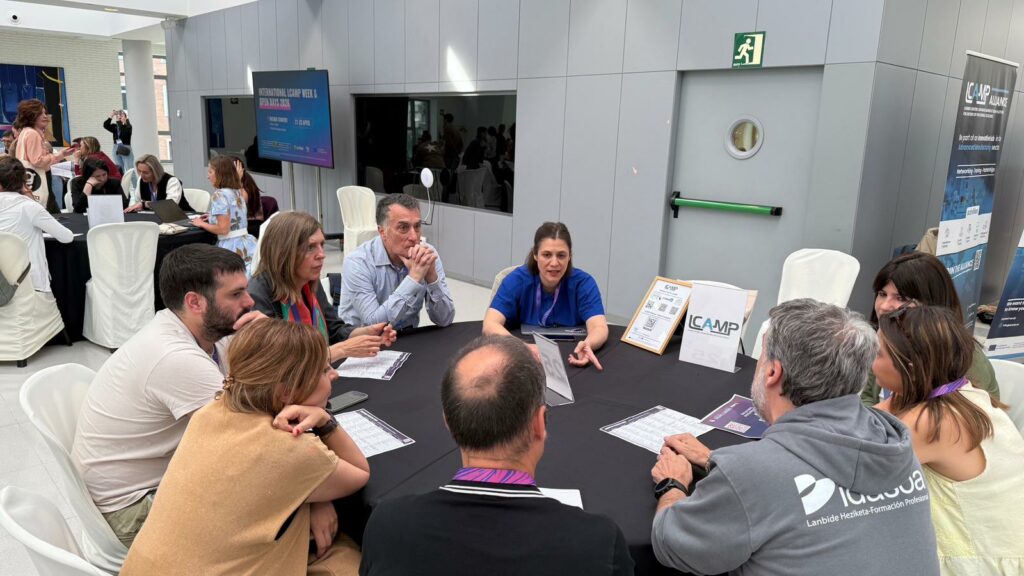
The opening day, 21 April, focused on connection and immersion. Participants engaged in networking activities within VET schools and visited Tknika, gaining first-hand insight into the Basque VET ecosystem—widely recognised for its strong collaboration between education, industry and innovation.
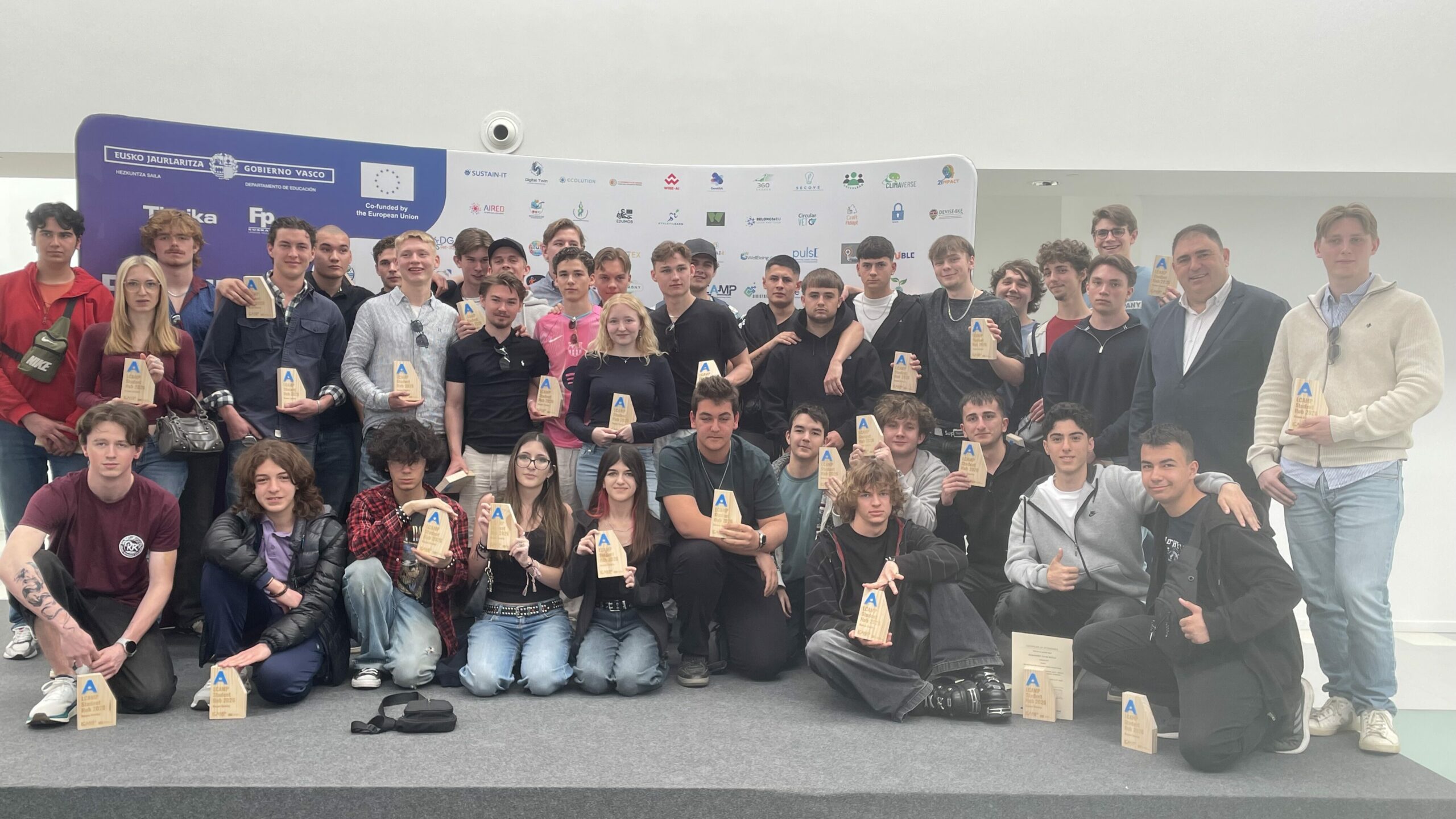
Running alongside the official programme, the LCAMP Student Hub brought together more than 30 international students, some of whom were participating in a blended mobility programme coordinated by Tknika. Their presence added a strong learner-centred dimension to the week.
Conference highlights: Global connection for local change
The second day centred on the international conference “Global Connection for Local Change”, bringing together policymakers, institutions and experts from organisations such as the European Commission, OECD, European Training Foundation and UNESCO-UNEVOC.
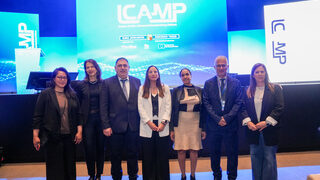
In the institutional opening, Begoña Pedrosa, Minister of Education, Department of Education, Basque Government, emphasised collaboration as the foundation of the Basque VET model, highlighting the importance of connecting schools, companies and institutions, and placing students at the centre of innovation. She framed the event as an opportunity to “grow together”, underlining the value of open systems where learning happens through exchange, collaboration and real-world practice.
A strong message throughout the conference was clear: VET systems must evolve rapidly to respond to digitalisation, artificial intelligence and the green transition. Speakers underlined that while employment levels across Europe are improving, productivity and skills development remain critical challenges.
A key highlight came from El Iza Mohamedou, Head of Centre for Skills at OECD, who stressed that the green transition is already reshaping the labour market. Most jobs are not being replaced but transformed, with changing tasks and skills requirements. Her message was clear: the challenge is not only to create jobs, but to ensure there are enough qualified people to fill them—placing VET graduates “right at the centre” of this transition.
The LCAMP project was presented by Inge Gorostiaga, Director of Digital Transformation and Advanced Learning, Department of Education, Basque Government, who highlighted how its results are already being integrated into the Basque VET system. She connected the project to the region’s long-term strategy, built on training, innovation, entrepreneurship and internationalisation, and aligned with the Centres of Vocational Excellence approach. LCAMP, she noted, demonstrates how European collaboration can generate real regional impact through initiatives such as the Observatory, Skills and Jobs Profiler, Open Innovation Community and Learning Factories. “We need results, not just words,” she emphasised.
Discussions also showcased how Centres of Vocational Excellence (CoVEs) bridge education and industry, with the Basque Country presented as a leading example of long-term strategic alignment, applied innovation and strong public-private partnerships.
A practical perspective from industry was provided by Alessandro Marini, Cluster Manager at AFIL – Lombardy Intelligent Factory Association, who highlighted the persistent mismatch between skills supply and industry needs. A learner-centred perspective was brought by prof Klaus-Dieter Rupp, Duale Hochschule Baden-Württemberg, who illustrated the need for more flexible and modular learning pathways through the example of a student navigating skills gaps in advanced manufacturing.
The panel discussion brought the theme of local change for global connection into focus, emphasising that while challenges are global, solutions must often be rooted in local contexts. Speakers highlighted the importance of strong governance, collaboration and sharing good practices across regions. As discussed, connecting local initiatives to global networks is essential to scale impact and inspire transformation.
Closing the conference, Jon Labaka, Vice Minister of Vocational Education and Training, Department of Education, Basque Government, reflected on the journey and its broader meaning. He highlighted that the event was not only about presenting results, but about showing how a VET ecosystem can be built over time through sustained collaboration and strategic vision. His message was clear: we cannot move forward alone—connection, both at the European and global level, is key to building a more competitive and future-ready society.
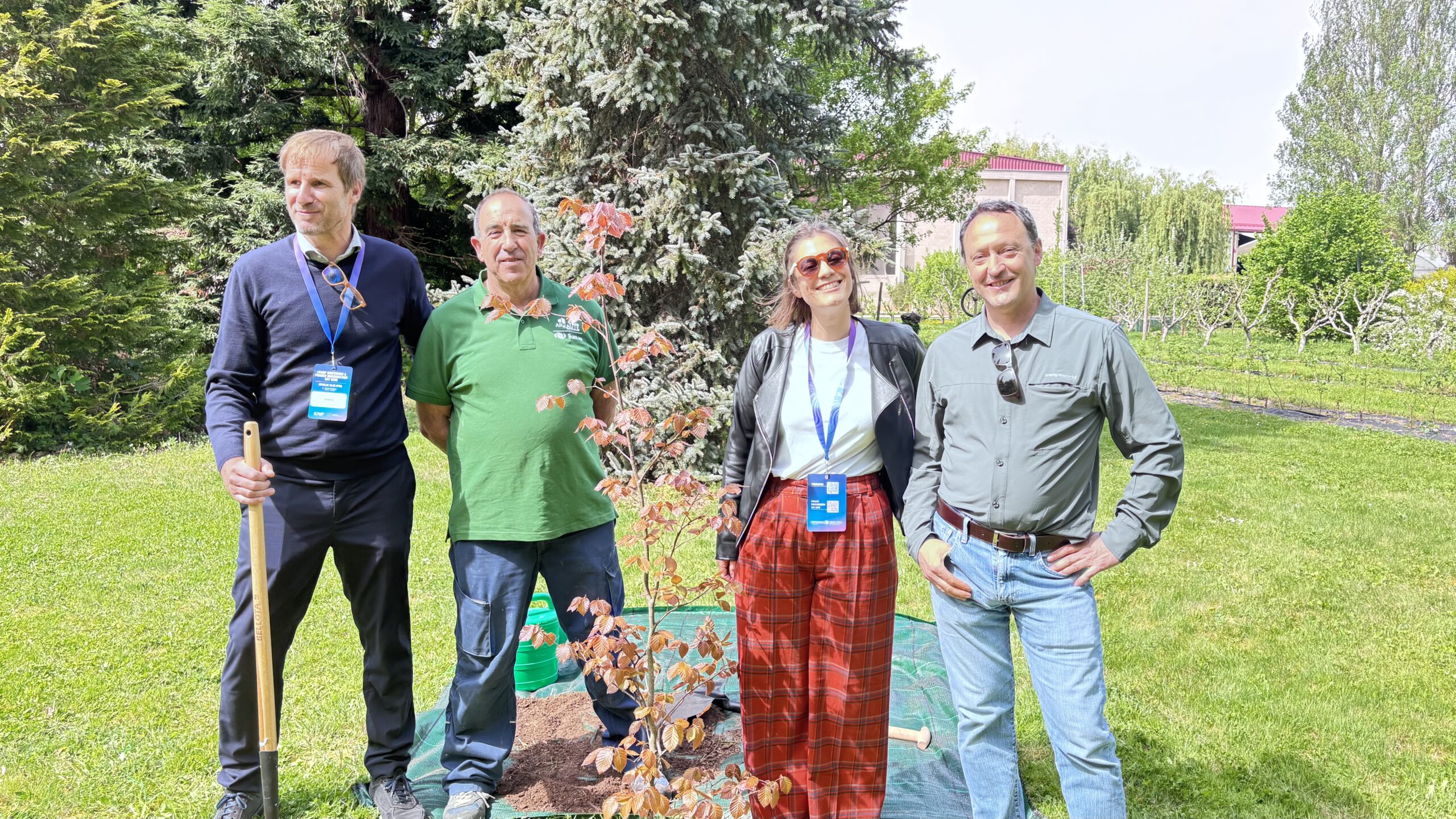
In the afternoon, participants engaged in 14 hands-on workshops focused on advanced manufacturing, experiencing LCAMP results in practice. The day concluded with a symbolic sustainability action at CIFP Agrario Arkaute, where TKNIKA and EARLALL planted a tree to represent the project’s legacy and future growth on Earth Day.
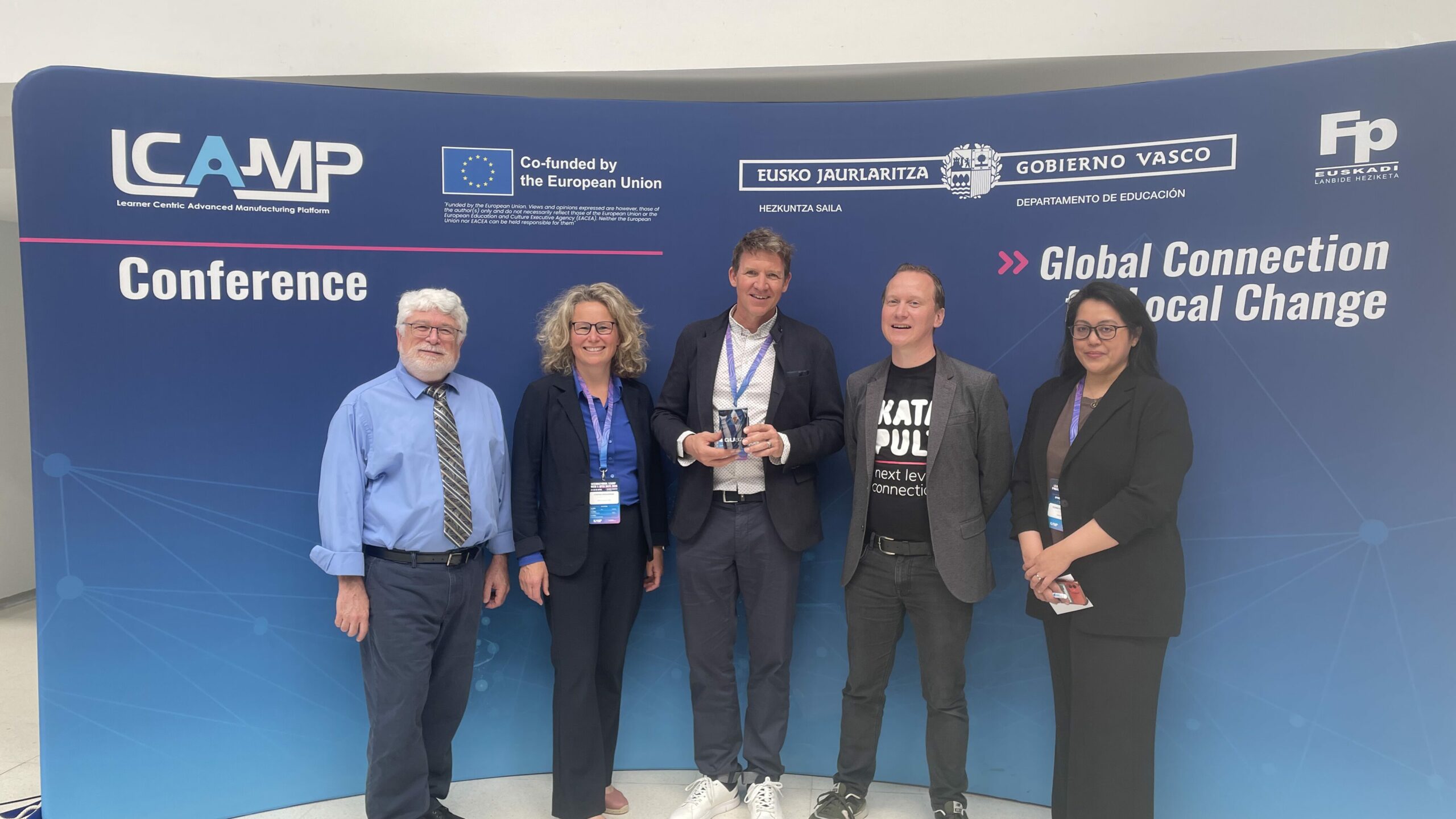
Final day: from knowledge to practice
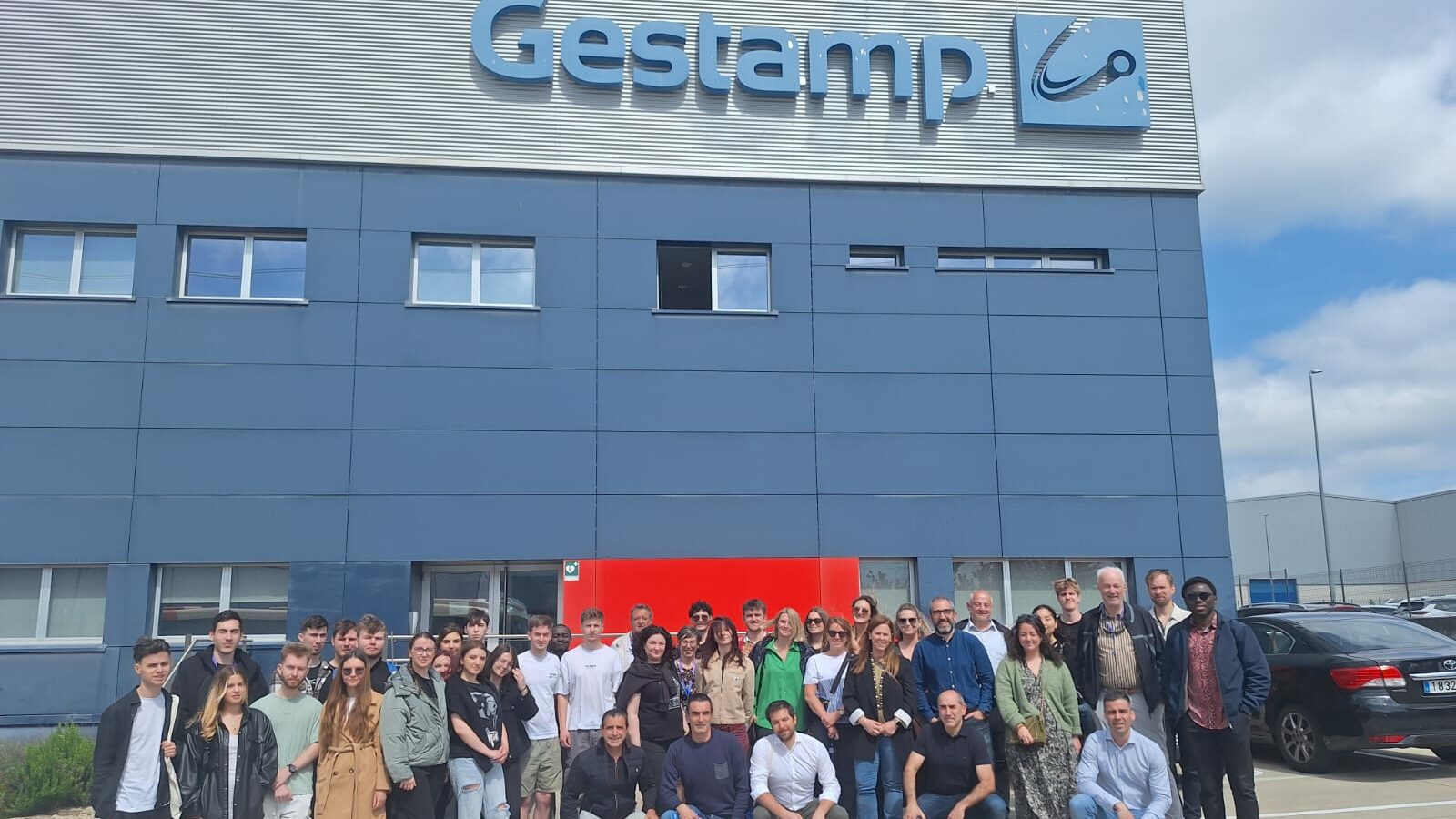
On 23 April, participants could choose between a Project Dissemination Day and visits to leading advanced manufacturing companies, including Mercedes-Benz, Gestamp, Basquevolt and CIC energiGUNE.
The dissemination day was opened by Jon Labaka, Vice Minister of Vocational Education and Training, Department of Education, Basque Government, together with Georgios Zisimos, Head of the Human Capital Development Policy Advice Unit at the European Training Foundation (ETF). The session highlighted the strong international dimension of the Basque VET system, with more than 25 projects presented, demonstrating their contribution to building a robust, innovative and globally connected VET ecosystem.
In his remarks, Georgios Zisimos emphasised the essential role of teachers—not only in preparing skilled professionals, but in shaping individuals. He stressed that their contribution is fundamental to the success of VET systems. Reflecting on the event, he noted that the three days in Vitoria-Gasteiz offered a clear example of VET “in practice,” closely aligned with the direction of the upcoming European Commission VET Strategy. This strategy, currently under development, places increasing attention on the teaching profession as part of the broader ambition under the Union of Skills.
A key moment of the day was the LCAMP Student Hub Skill Competition, showcasing the talent of VET students across different qualification levels. Activities throughout the day focused on learning factory ecosystems and the connection between Industry 4.0 and 5.0.
A lasting legacy
More than a closing event, the International LCAMP Week & Open Days 2026 demonstrated how local excellence can connect globally to address shared challenges. As the project moves towards its final phase, the newly established LCAMP Alliance will ensure that collaboration, innovation and knowledge exchange continue beyond its official end.
In a rapidly changing world, the message from Vitoria-Gasteiz was clear: strong, connected VET systems are essential to building a skilled, adaptable and future-ready workforce.