

TRAILS conference highlights the importance of skills, mobility and lifelong learning in a changing labour market
17/09/2026
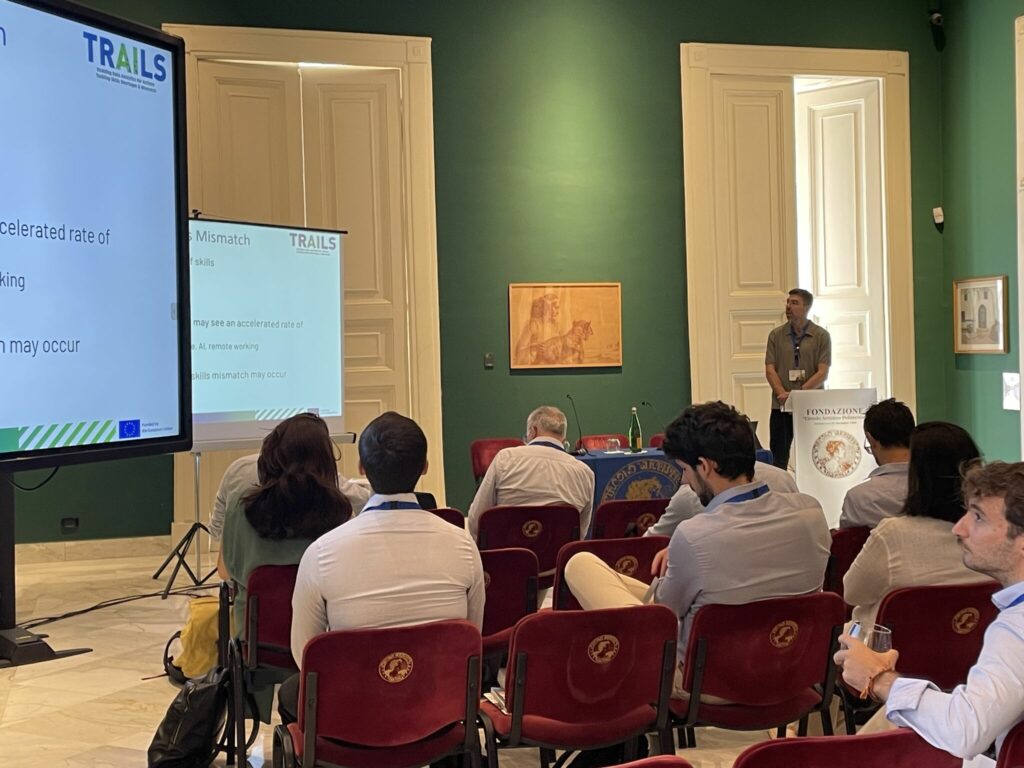
How can Europe ensure that workers have the skills they need as jobs and technologies evolve? This question brought researchers, policymakers and experts together in Naples on 10–11 September for the TRAILS Conference on Occupational Mismatch and Skill Shortage.
Hosted by the University of Naples Federico II, the conference explored how technological transformation, demographic change and labour-market transitions are affecting workers’ careers and the relationship between education, skills and employment.
The event brought together research from universities, research institutes, central banks and international organisations, with discussions ranging from digital skills and teleworking to vocational education, job displacement, labour mobility and human capital allocation.
Understanding the changing world of work
The conference highlighted that skills shortages and occupational mismatch are complex challenges. They are not only about whether workers have the right qualifications, but also about whether their skills are effectively used, whether they can move between jobs and regions, and whether education and training systems respond to changing employer needs.
Presentations examined how technological change is reshaping workers’ careers, how training can help people adapt to changing job requirements, and how factors such as housing costs and geographical mobility can influence access to employment opportunities.
The discussions also highlighted the importance of addressing inequalities in the digital transformation of work, including differences in access to advanced digital tasks and opportunities for career progression.
Supporting young people and strengthening vocational pathways
A keynote lecture by Professor Pierre Cahuc (Sciences Po) focused on “Job Search Assistance for Vocational Students.” The research explored how providing job-search support during education can help students prepare for the transition into employment.
The presentation underlined the value of helping young people identify their skills, understand labour-market opportunities and develop practical job-search strategies — particularly when they may not have access to strong professional networks.
The conference also devoted a policy panel to dual vocational education and training, bringing together Konstantinos Pouliakas (CEDEFOP), Sandra McNally (University of Surrey) and Samuel Bentolila (CEMFI), under the moderation of Ferdinando Giugliano (CEPR).
The panel discussed the contribution of apprenticeships and vocational education to school-to-work transitions, while also stressing that the quality and relevance of training opportunities are essential. Retraining and upskilling must respond to actual labour-market needs and remain accessible throughout people’s working lives.
Connecting skills policy with the future of work
The discussions in Naples also reflected on the growing role of artificial intelligence and digital technologies. As tasks and occupations evolve, workers and employers need opportunities to develop new skills, while policymakers need reliable evidence to understand where support is most needed.
A key message emerging from the conference was that skills policy cannot be separated from wider labour-market and regional policy. Mobility, job quality, education choices, training provision and access to opportunities all influence how effectively people and economies can adapt.
The conference provided a valuable opportunity to connect research findings with policy discussions relevant to education and training stakeholders across Europe.
For the TRAILS project, the event marked an important moment in bringing together research and policy perspectives as the project moves towards its final phase.
The discussions reaffirmed the importance of lifelong learning, strong vocational pathways and better connections between education, skills and employment in building more inclusive and resilient labour markets.