

Shaping the International Dimension of VET: Stakeholder Insights Feeding the Future EU Strategy
03/02/2026
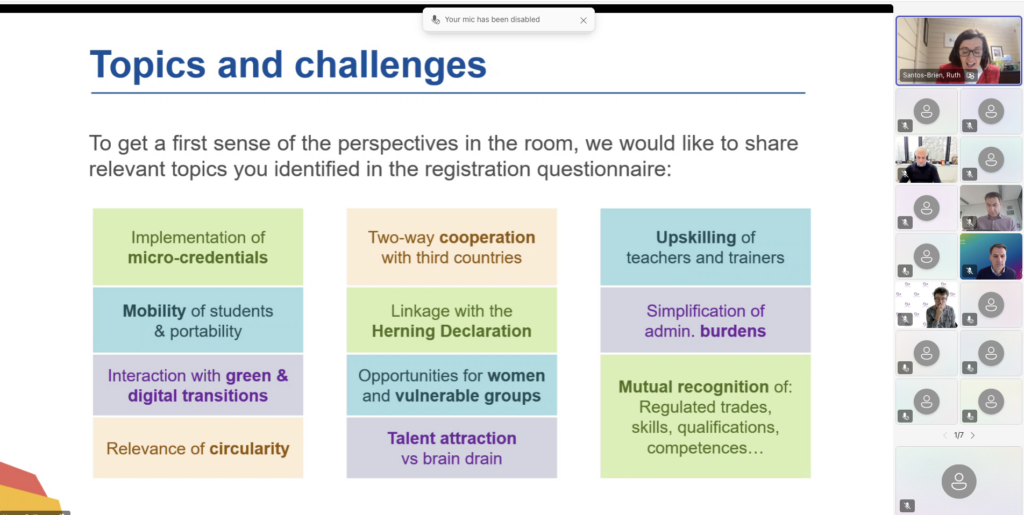
On 3 February 2026, the European Commission hosted the first in a series of four consultation webinars dedicated to the future European Strategy for Vocational Education and Training (VET) 2026–2030, focusing on the international dimension of VET
The webinar brought together European associations, practitioners, social partners, VET providers and experts to reflect on priorities, challenges and opportunities for strengthening international cooperation in VET.
The event was opened by Ms Anna Banczyk, Head of Unit for Vocational Education and Training, Skills Portability at DG Employment, Social Affairs and Inclusion, who underlined the strategic relevance of VET internationalisation for Europe’s competitiveness, resilience and social cohesion. She highlighted the importance of grounding future policy orientations in practical experience and stakeholder input.
This webinar is part of a broader consultation process aimed at gathering structured input from stakeholders. Insights collected across the four webinars will feed into a synthesis report to be published in the coming months and will inform discussions at a dedicated workshop in Cyprus, organised in the margins of the informal meeting of Directors-General for VET in March. The overall process will culminate in the publication of a Communication from the European Commission on the future EU VET Strategy, expected in June 2026.
Setting the scene, Georgios Zisimos (European Training Foundation) emphasised that internationalisation should be understood as a comprehensive process, encompassing institutional capacity, appropriate tools, regulatory frameworks, and sustainable support structures. He highlighted in particular the critical role of local and regional actors in translating European objectives into effective practice on the ground.
The agenda structured discussions around three core areas: attracting skilled talent, improving VET systems through international cooperation, and fostering peer learning and exchanges of best practices with third countries and international organisations. Scene-setting contributions from national authorities, social partners and European VET organisations provided diverse perspectives, followed by interactive exchanges with participants.
Stakeholder input collected through registration questionnaires and live interactions pointed to a broad range of topics relevant to VET internationalisation. These included the implementation of micro-credentials, mobility and portability of learning outcomes, mutual recognition of skills and qualifications, upskilling of teachers and trainers, links with the Herning Declaration on Vocational Education and Training (VET), cooperation with third countries, talent attraction versus brain drain, and the alignment of VET with green, digital and circular transitions. Participants also highlighted persistent challenges such as fragmentation, skills mismatches, administrative and language barriers, sustainability of initiatives, and the need to reduce administrative burdens.
Overall, the webinar confirmed strong stakeholder engagement and a shared understanding that a reinforced international dimension of VET is essential for Europe’s future skills agenda. The contributions gathered will play a key role in shaping the evidence base and policy orientations of the forthcoming EU VET Strategy.
Call for evidence: open consultation
Commission launches call for evidence for new Vocational Education and Training (VET) strategy. The consultation is open until 19 February 2026. Read more