

SALAM brings regional perspectives together on migrant inclusion and labour market integration
09/10/2026
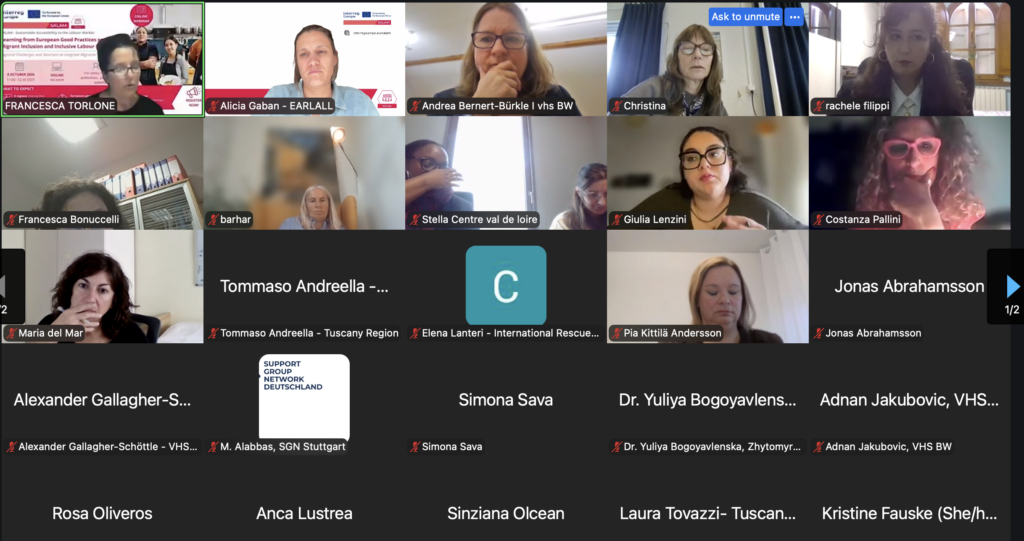
More than 60 participants joined the SALAM -Sustainable AccessibIlity to the LAbour Market Interreg Europe webinar on migrant inclusion and labour market integration, co-organised and moderated by EARLALL, bringing together regional and local authorities, policy experts and Interreg Europe project representatives to exchange experiences and explore solutions for more inclusive labour markets.
Professor Francesca Torlone from the University of Florence opened the webinar by raising a key question: how can approaches and practices to migrant inclusion be successfully transferred and adapted to different regional contexts?
From integration to comprehensive inclusion
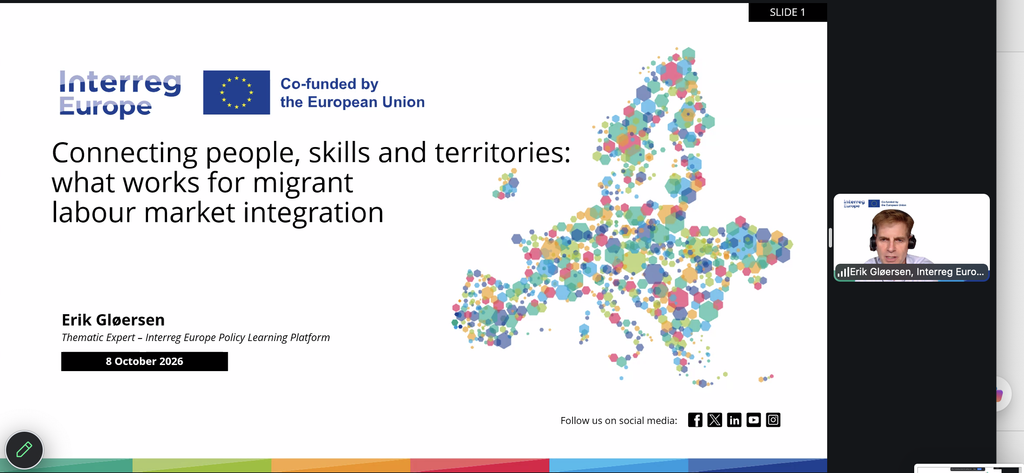
Erik Gløersen from the Interreg Europe Policy Learning Platform highlighted the need to move beyond predefined target groups and address the overlapping barriers people face when accessing employment, including housing insecurity, caring responsibilities, transport, language and qualification recognition.
The discussion drew on the Policy Learning Platform policy brief Comprehensive local and regional inclusion strategies, which explores comprehensive approaches to inclusion. Gløersen also invited participants to the next webinar, Integrating third-country nationals into rural communities and labour markets, on 5 November 2026.
Regional experiences and practical solutions
SALAM partners from Tuscany, Catalonia, Romania, Centre-Val de Loire, Västra Götaland, Baden-Württemberg and the Municipality of Mark shared approaches to improving migrants’ access to employment and economic opportunities.
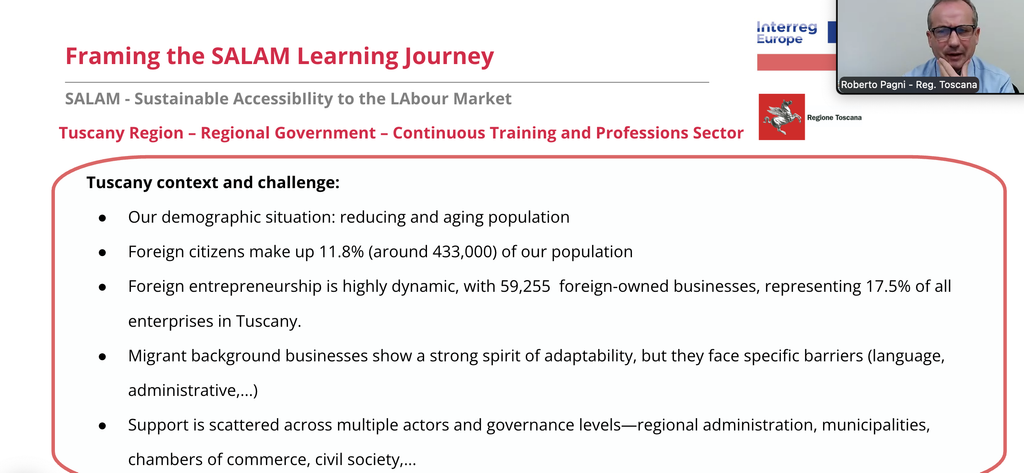
Tuscany presented its work on migrant entrepreneurship, highlighting coordinated support that continues beyond business start-up. Partners also discussed job matching and career guidance from day one, language learning alongside employment, and cooperation between public authorities, employers and third-sector organisations.
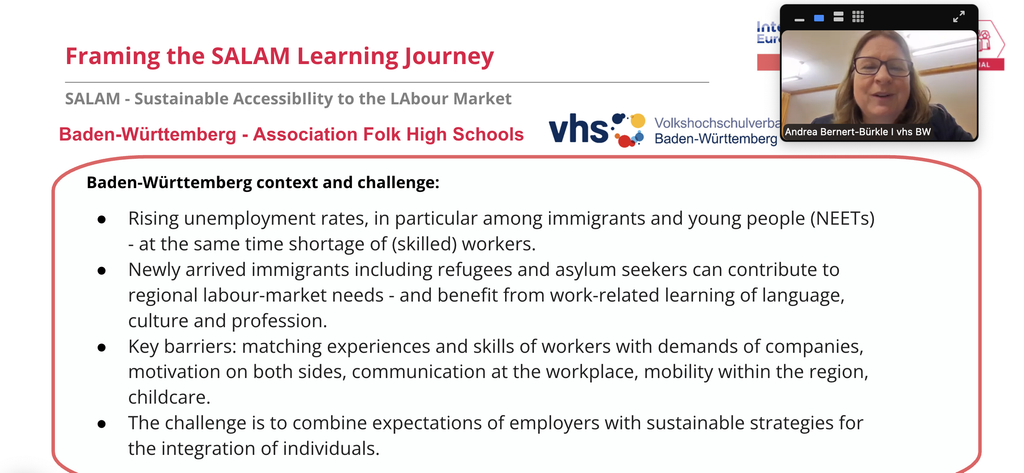
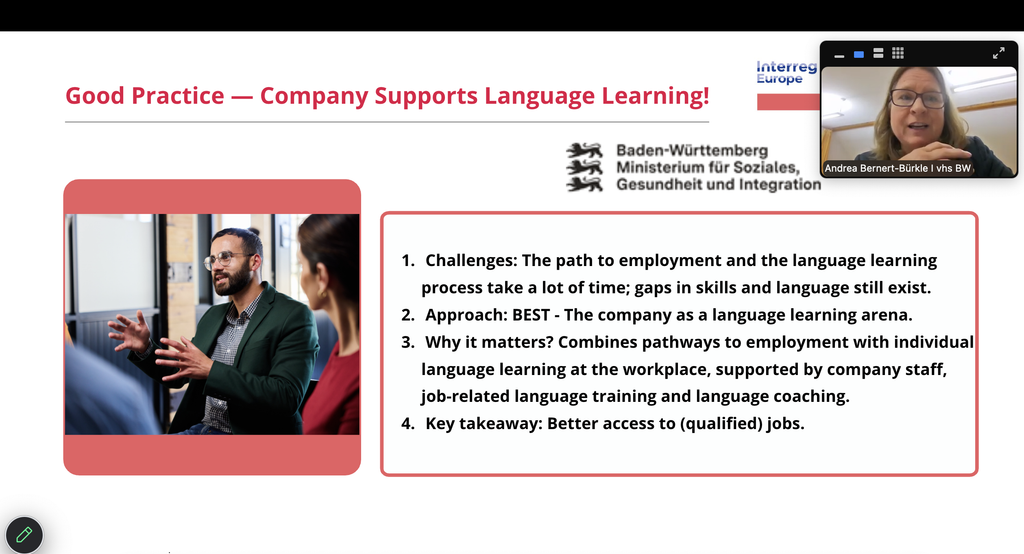
Baden-Württemberg and Tuscany shared approaches to skills development, bridging programmes and profession-specific language training to help migrants use their existing qualifications and access employment. Participants also discussed the risk of migrants entering precarious work despite their skills and experience, underlining the importance of combining targeted training with practical work opportunities.
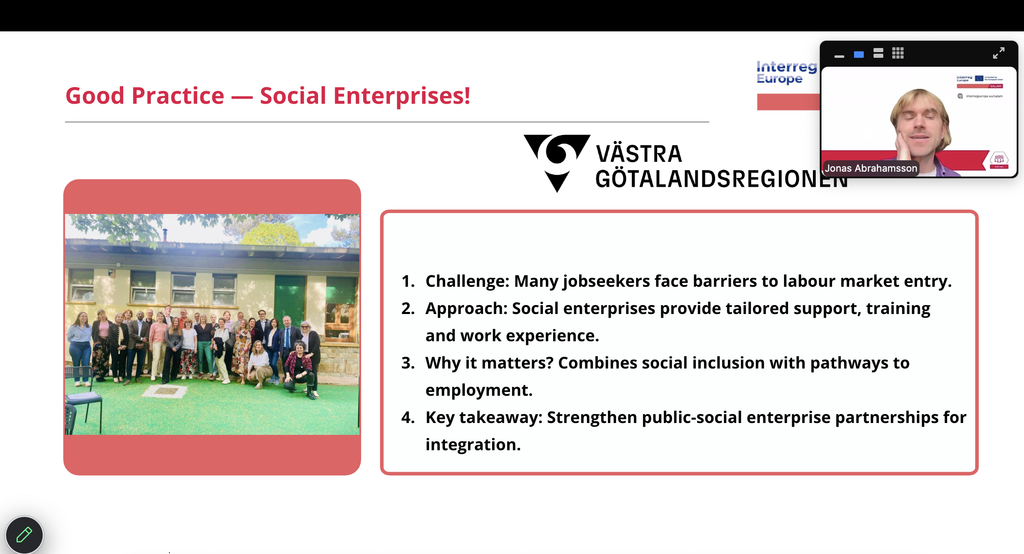
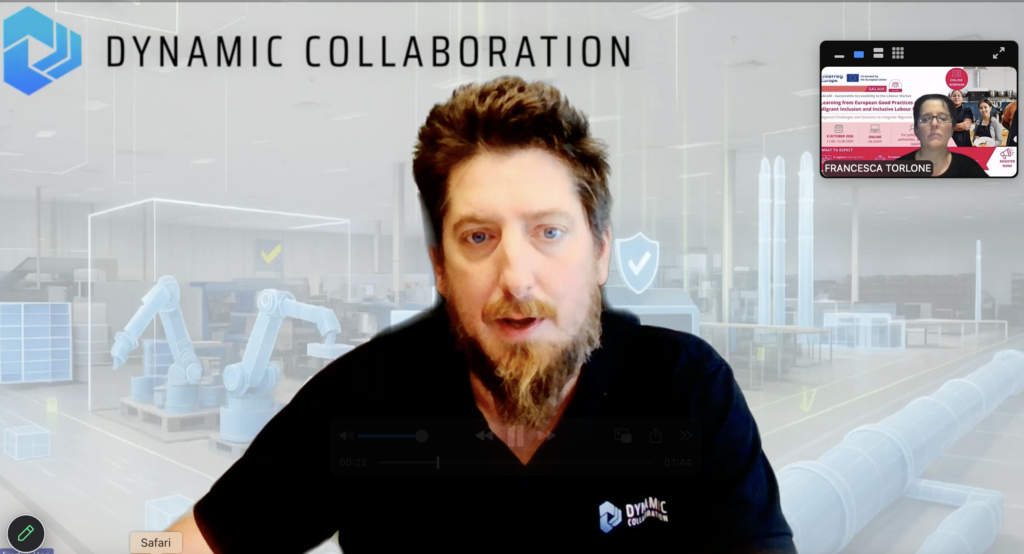
The Good Practice gallery showcased examples of migrant entrepreneurship in Tuscany, job matching from day one in Mark, and integrated pathways involving social enterprises. Together, these approaches demonstrate how coordinated support can help address the different barriers migrants face.
Connecting European projects and policy learning
The webinar also connected SALAM’s regional exchange with wider European initiatives working on inclusion and socio-economic participation.
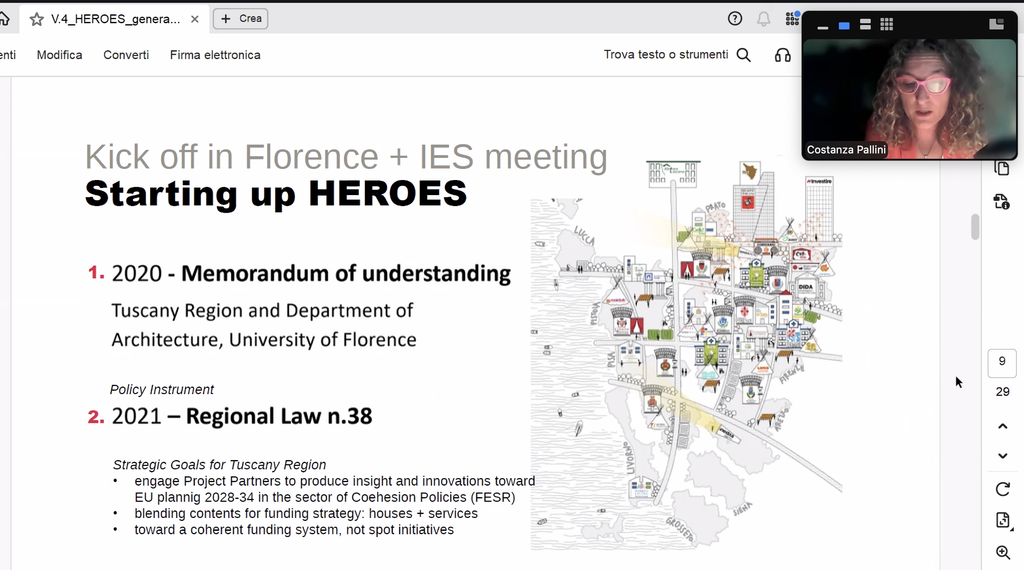
Dr Costanza Pallini, from the Department of Urban Planning and Sustainability (Direzione Urbanistica e Sostenibilità) at Regione Toscana, presented the HEROES Interreg Europe project, highlighting the role of affordable housing and complementary community services in social inclusion.
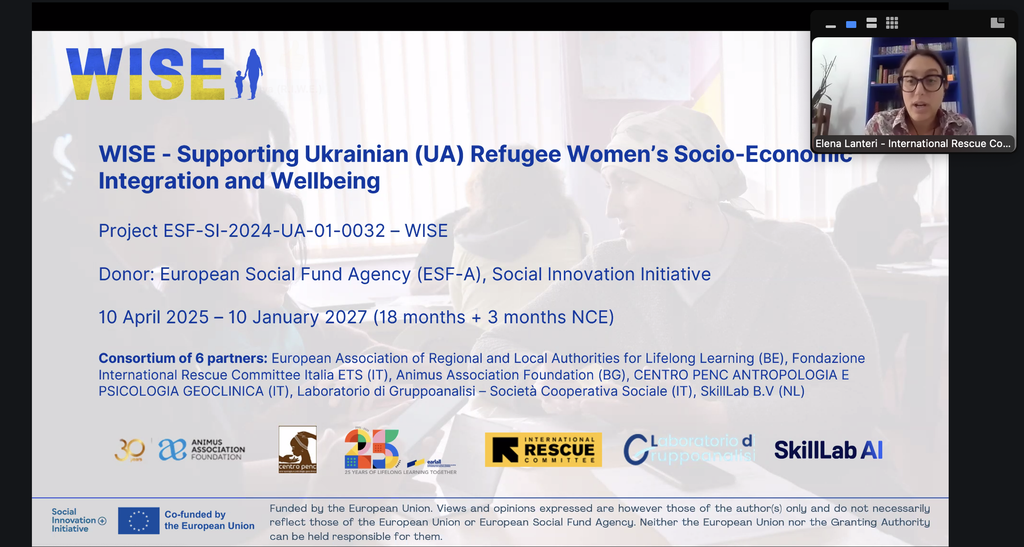
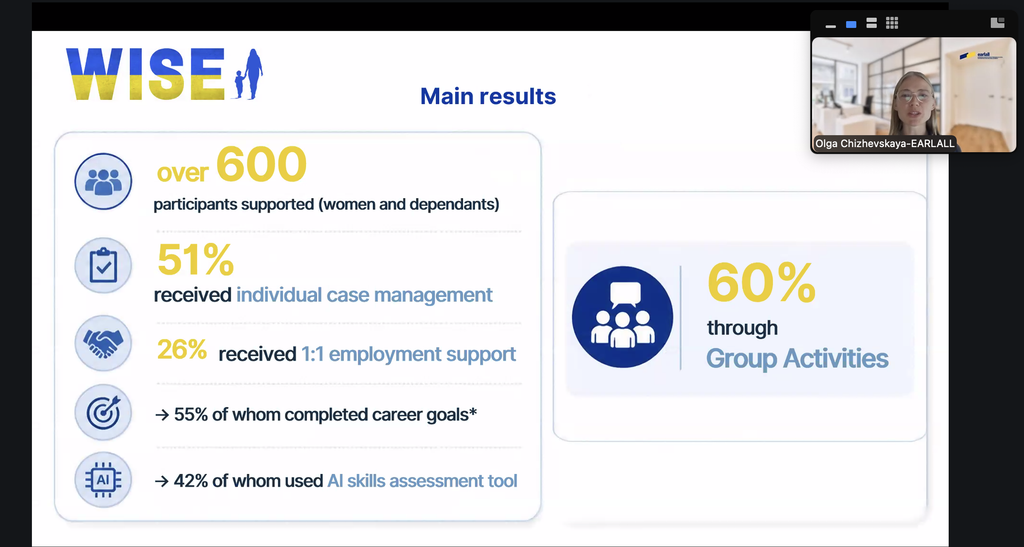
The WISE project in which EARLALL is a partner, was represented by Elena Lanteri, Case Worker at IRC Italy, and Olga Chizhevskaya, EARLALL’s Project & Partnership Officer and WISE Communications Officer. WISE supports Ukrainian refugee women through holistic support centres that combine employment readiness, psychosocial support and individual case management.
Representatives from other Interreg Europe projects, including SIRM, atWork4NEETs and MILEstone, also joined the exchange, bringing additional perspectives on employment, skills and social inclusion.
Continuing the exchange
The discussion and chat explored qualification recognition, precarious employment, profession-specific language training, housing and stakeholder coordination. These exchanges reinforced the importance of connecting employment measures with wider support systems and adapting solutions to regional needs.
Through its involvement in SALAM and other European cooperation initiatives, EARLALL supports regional learning and the exchange of practices that can inform more inclusive policies and strengthen migrants’ economic participation and financial independence.
Regional experiences and practical solutions
SALAM partners from Tuscany, Catalonia, Romania, Centre-Val de Loire, Västra Götaland, Baden-Württemberg and the Municipality of Mark shared approaches to improving migrants’ access to employment and economic opportunities.
Tuscany presented its work on migrant entrepreneurship, highlighting coordinated support that continues beyond business start-up. Partners also discussed job matching and career guidance from day one, language learning alongside employment, and cooperation between public authorities, employers and third-sector organisations.
Baden-Württemberg and Tuscany shared approaches to skills development, bridging programmes and profession-specific language training to help migrants use their existing qualifications and access employment. Participants also discussed the risk of migrants entering precarious work despite their skills and experience, underlining the importance of combining targeted training with practical work opportunities.
The Good Practice gallery showcased examples of migrant entrepreneurship in Tuscany, job matching from day one in Mark, and integrated pathways involving social enterprises. Together, these approaches demonstrate how coordinated support can help address the different barriers migrants face.
Find further information in the webinar presentation.
Connecting European projects and policy learning
The webinar also connected SALAM’s regional exchange with wider European initiatives working on inclusion and socio-economic participation.
Dr Costanza Pallini, from the Department of Urban Planning and Sustainability (Direzione Urbanistica e Sostenibilità) at Regione Toscana, presented the HEROES Interreg Europe project, highlighting the role of affordable housing and complementary community services in social inclusion.
The WISE project, in which EARLALL is a partner, was represented by Elena Lanteri, Case Worker at IRC Italy, and Olga Chizhevskaya, EARLALL’s Project & Partnership Officer and WISE Communications Officer. WISE supports Ukrainian refugee women through holistic support centres that combine employment readiness, psychosocial support and individual case management.
Representatives from other Interreg Europe projects, including SIRM, atWork4NEETs and MILEstone, , also joined the exchange, bringing additional perspectives on employment, skills and social inclusion.
Continuing the exchange
The discussion and chat explored qualification recognition, precarious employment, profession-specific language training, housing and stakeholder coordination. These exchanges reinforced the importance of connecting employment measures with wider support systems and adapting solutions to regional needs.
Through its involvement in SALAM and other European cooperation initiatives, EARLALL supports regional learning and the exchange of practices that can inform more inclusive policies and strengthen migrants’ economic participation and financial independence.
Materials
- Webinar recording
- General presentation: SALAM Learning Journey and Good Practices
- Erik Gløersen’s presentation
- WISE presentation
- HEROES presentation