

Inclusive Labour Markets: EARLALL Members Exchange Good Practices
12/02/2026
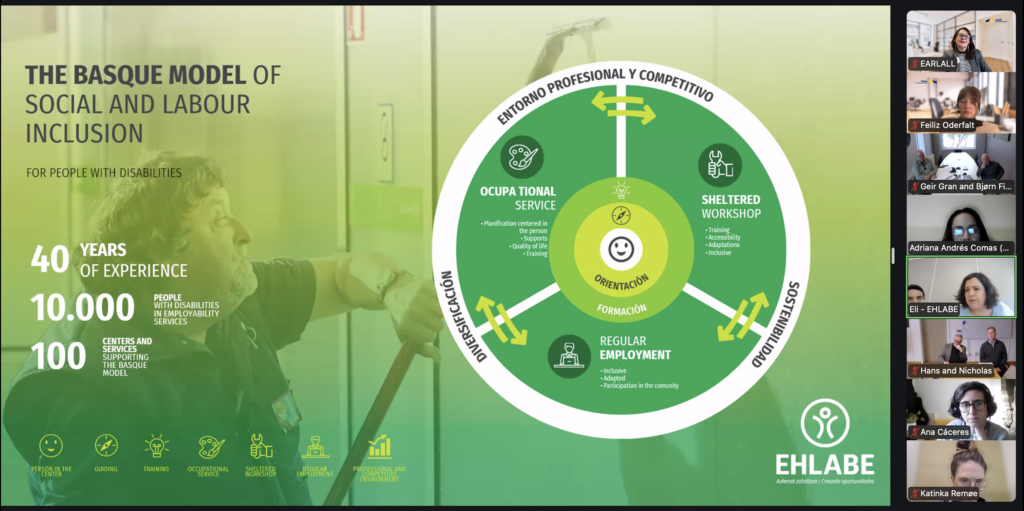
On 12 February, EARLALL hosted an online meeting bringing together members of the EARLALL network and partner organisations to exchange best practices on inclusive labour market policies. The meeting responded to a strong interest expressed by the Norwegian region of Trøndelag in strengthening collaboration with European regions on approaches to recruiting and supporting people currently outside the labour market, including persons with disabilities.
Across Europe, regions are facing profound structural challenges: shrinking labour force, rising numbers of NEETs (young people not in Education, Employment or Training), and ageing populations across Europe. In this context, promoting inclusive labour market participation is not only a social responsibility but also an economic necessity. Ensuring that all individuals — particularly those with fewer opportunities — can access quality education, training and employment pathways is central to sustainable regional development and social cohesion.
Addressing Shared Demographic and Inclusion Challenges
Trøndelag presented the current state of its region with regard to the labour market, highlighting demographic challenges arising in the region. The region further discussed its aim to create international cooperation with partners at the regional level to gain inspiration on methods for systematic inclusion and on how to encourage employees to remain in the workforce.
With particular attention to vulnerable groups, the meeting explored various models and initiatives implemented across the EARLALL network to promote inclusive labour market approaches. Borås Stad in Sweden echoed the challenges identified by the Trøndelag region and reflected on their shared objectives. With an unemployment rate of approximately 7%, the municipality highlighted the need to upskill and reskill individuals with lower levels of formal education to maintain a highly skilled workforce. Borås Stad reaffirmed its commitment to increasing the employment rate, focusing on inclusive labour markets as a way to foster social integration.
Eli Zurutuza Ortega represented the association EHLABE from the Basque Country, dedicated to the social and occupational inclusion of persons with disabilities, stressed the transnational nature of these challenges, stressed the transnational nature of these challenges. Demographic shifts and labour shortages are increasing pressure on employment systems, often disproportionately affecting persons with disabilities. EHLABE showcased its work in raising awareness, influencing policy, and implementing inclusive employment models that provide coherent and flexible pathways into the labour market. As highlighted during the meeting, Eli Zurutuza Ortega made their guiding principle: “We adapt the work to the person, not the other way around.”
Representatives from Public Employment Services from Catalonia subsequently presented the ALMA programme, a European Commission mobility initiative supporting the integration of NEETs aged 18–29. The programme facilitates the social and professional integration of disadvantaged young people through mobility opportunities across EU Member States. While ALMA specifically targets youth, Catalonia also implements several complementary programmes focused on broader labour market inclusion.
This discussion closely aligns with EARLALL’s Regional Skills Partnership for Lifelong Learning Mobility, launched under the European Commission’s Pact for Skills. While mobility instruments such as ALMA represent one important tool to foster inclusion, the exchange primarily highlighted the crucial role of lifelong learning systems in supporting individuals who are currently outside the labour market. Strengthening upskilling and reskilling pathways, ensuring accessible and flexible learning opportunities, and developing inclusive regional skills strategies are key priorities shared across the network.
Strengthening Democratic Engagement and Social Cohesion
The exchange further reaffirmed EARLALL’s commitment to promoting democratic engagement, citizenship and social inclusion through lifelong learning. Inclusive labour market policies contribute not only to economic resilience, but also to social cohesion and active participation in society. Supporting NEETs, persons with disabilities, migrants and other vulnerable groups strengthens both regional competitiveness and democratic values. EARLALL will continue to facilitate dialogue, exchange of good practices and the development of joint initiatives to support regions in recruiting, retaining and empowering individuals currently outside the labour market.