
European Education and Skills Summit 2026: teachers and basic skills at the centre of “Schools for tomorrow”
23/11/2026
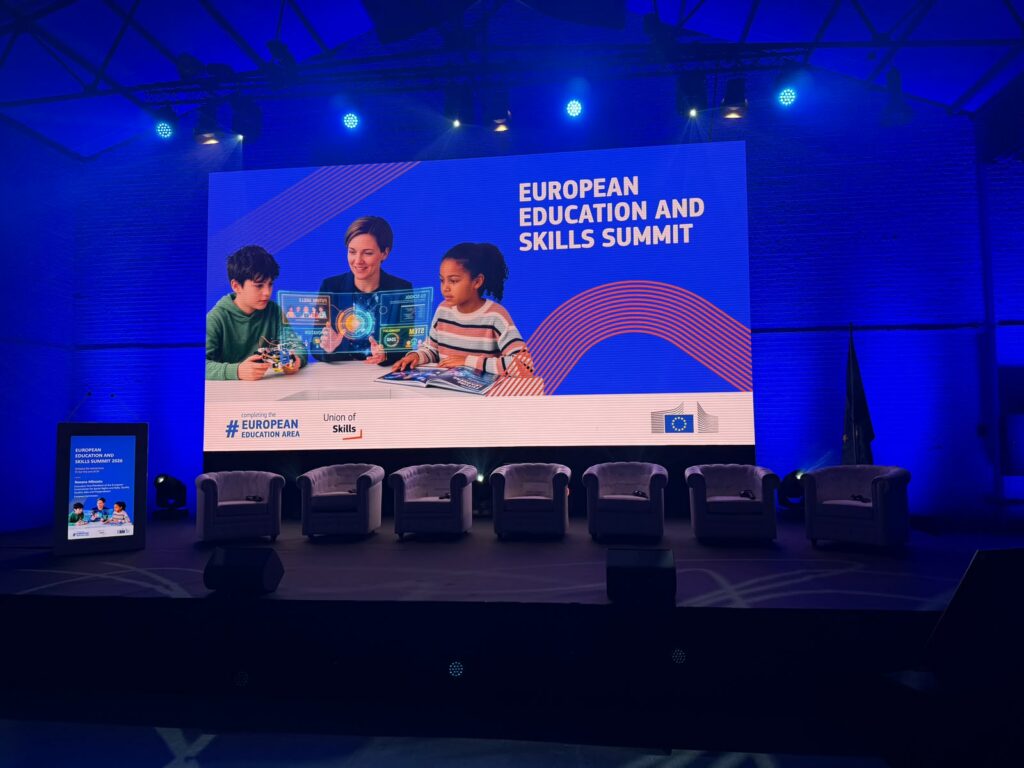
On 20 November, the European Commission held the 2026 European Education and Skills Summit at Tour & Taxis in Brussels. This year’s theme, “Schools for tomorrow: fit for the era of AI”, explored how Europe can build learning environments ready for artificial intelligence. The Summit brought together education stakeholders from across Europe to address the main challenges facing education today. These include declining basic skills, teacher shortages, digital transformation and growing inequalities. Participants looked at how schools can give learners the skills and confidence they need for the future. The Summit also launched the implementation of the Education and Skills Package presented on 5 November. EARLALL followed the day, and several representatives of our member regions also took part.
A clear message from the Commission: teachers come first
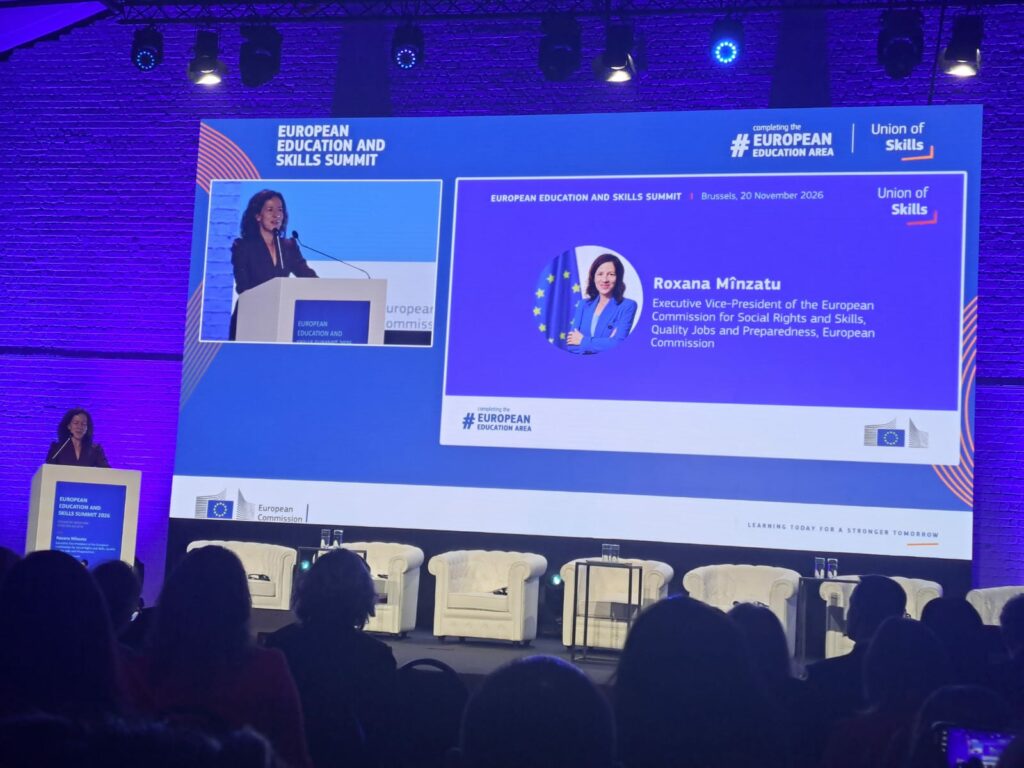
Executive Vice-President Roxana Mînzatu opened the Summit. She said education must stay at the centre of EU policymaking. It should be mainstreamed across all EU policies, and it must not be forgotten in the discussions on the next MFF. The Package has four pillars, all important, but she made clear that this Summit was about teachers. In her view, that means empowering them and future-proofing the profession. It also means stronger voices for teachers, through trade unions and associations, and “Teacher Academies 2.0” built around mentoring.
She also set out the other priorities. Basic skills should come first in schools, backed by tools and the new European School Alliances, so that what is developed there can be scaled up. On VET, she argued that industrial shortages and competitiveness are linked: shortages relate to VET, and too few learners choose it. Her answer was to boost its excellence, quality and prestige, because trainees are tomorrow’s industry talent, and to use the Centres of Vocational Excellence as sectoral accelerators and for micro-credentials. On AI, she said the Package reflects its growing importance. Tools must be safe in the classroom, accessible for free and must not create dependencies. She also stressed AI literacy.
Setting the course: ministers on basic skills and teachers
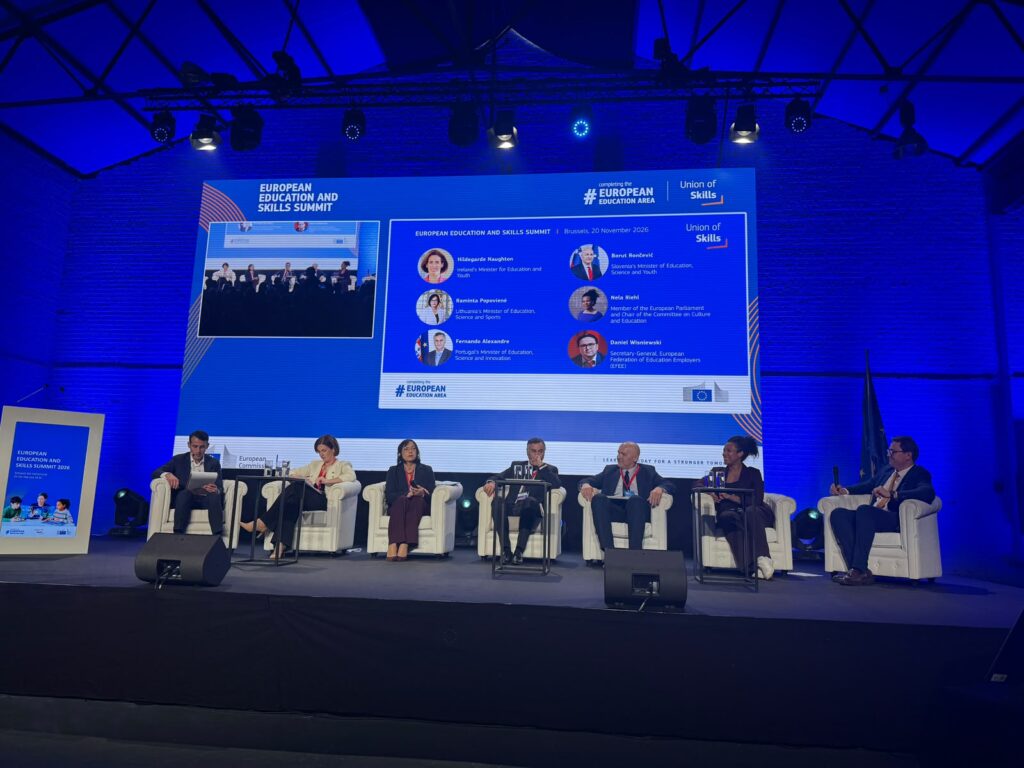
The first plenary, “Setting the course: quality education fit for the future”, brought together four ministers, a Member of the European Parliament and the employers’ federation.
Ireland’s Minister for Education and Youth, Hildegarde Naughton, pointed to the Education Council held the day before, which approved Council conclusions on AI skills and competences as well as on STEM education. She said countries are looking at best practices, tools and practices. On the Package, she observed that every country has its own challenges, such as recruiting teachers, but that there are many commonalities.
Lithuania’s Minister of Education, Science and Sports, Raminta Popovienė, highlighted the country’s teachers’ agenda, built on professional autonomy and participation. She also made a point that matters to EARLALL: regional differences exist even within a small country, rural areas are opening up, and many problems have to be tackled at regional level. Lithuania takes over the Council Presidency in January, and its priorities, including skills and early childhood, were published the day before the Summit.
Portugal’s Minister of Education, Science and Innovation, Fernando Alexandre, described a race between education and technology to build a highly skilled labour force and attract tech companies. He said Portugal is focusing on basic skills while also embracing changing technology. He underlined the need to involve municipalities and have them work together with schools.
Slovenia’s Minister of Education, Science and Youth, Borut Rončević, reported that PISA results are falling. Slovenia has carried out two research studies on the use of mobile phones and smartphones, is aware of the problems and is developing solutions. Critical thinking and school autonomy are part of the answer.
Nela Riehl, MEP and Chair of the Parliament’s Culture and Education Committee, said she strongly believes in the teachers Europe already has, and that they need training so that every child’s needs are met. She mentioned the EU Kids Act and called for an increase in the Erasmus+ budget. Daniel Wisniewski of the European Federation of Education Employers (EFEE) also took part.
Talent, skills and ambition
The programme’s second plenary turned to digital education, trusted infrastructure, technological sovereignty and AI literacy. The third, on Europe’s talent pipeline, brought a more critical tone.
Ylva Johansson, Chair of the European Skills High-Level Board, called for smart investment to make upskilling, reskilling and lifelong learning possible, noting that this has been discussed for four years. She said AI is also discussed at the Board. AI will be everywhere for our children, which raises the question of what role schools should play, and she called for a focus on human, interactive and creative skills. She also said Europe lacks ambition and should put more pressure on itself. PISA results are poor, but governments seem more worried about energy bills.
El Iza Mohamedou, Head of the OECD Centre for Skills, said PISA gives policy direction and not only alarming data, and that family support is declining. She called for children to be put at the centre of education, and for making lifelong learning a reality, as participation is low, with education and training keeping pace with evolving skills needs.
Alina Ujupan, Head of Cabinet of Executive Vice-President Mînzatu, said education is being placed at the centre of EU policy. She named two pillars: the labour force of tomorrow, and societal and democratic resilience.
Experiencing the school for tomorrow
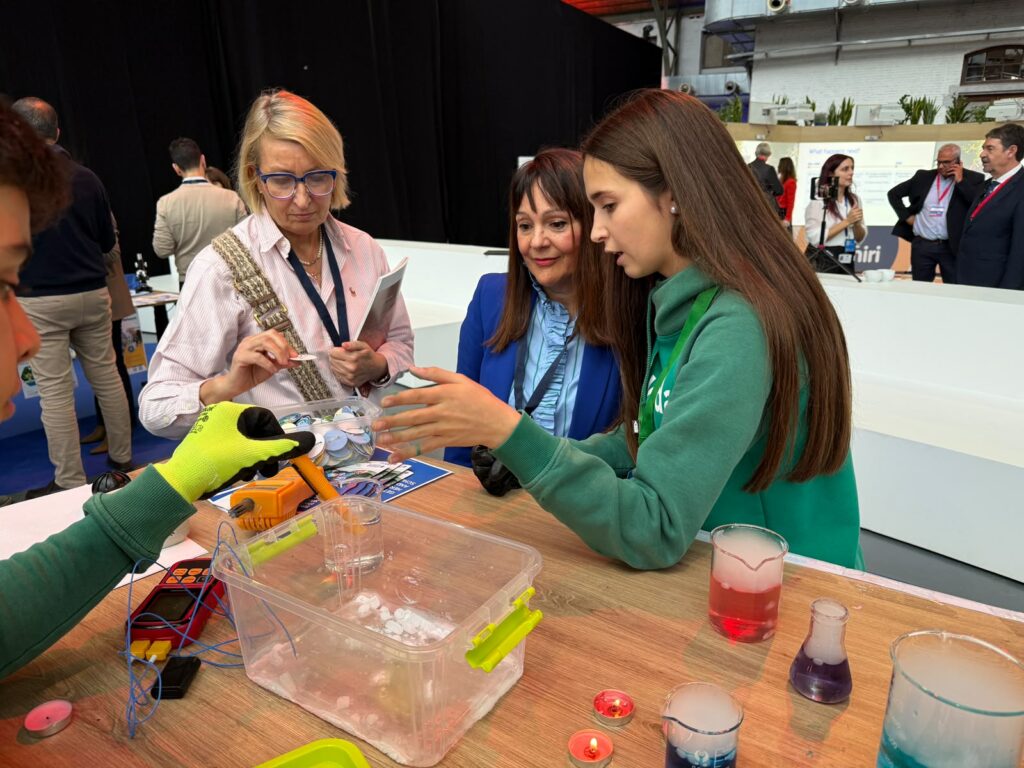
For the first time, the Summit offered a fully interactive experience that brought its theme to life through three spaces that were a very interesting part of the day. The EdTech Lab presented innovative solutions from Europe’s EdTech community. In the Classroom, teachers and students showcased real-life examples of forward-looking learning practices. The Projects Library featured EU actions and initiatives that support innovation and the development of schools fit for the future. Together, these spaces let participants visualise the future of education and engage directly with educators, learners, innovators and project representatives. Several representatives of EARLALL members took part, and the afternoon sessions continued the discussions.