

EARLALL Reflections on the “Skills for Democracy” Seminar
08/12/2025
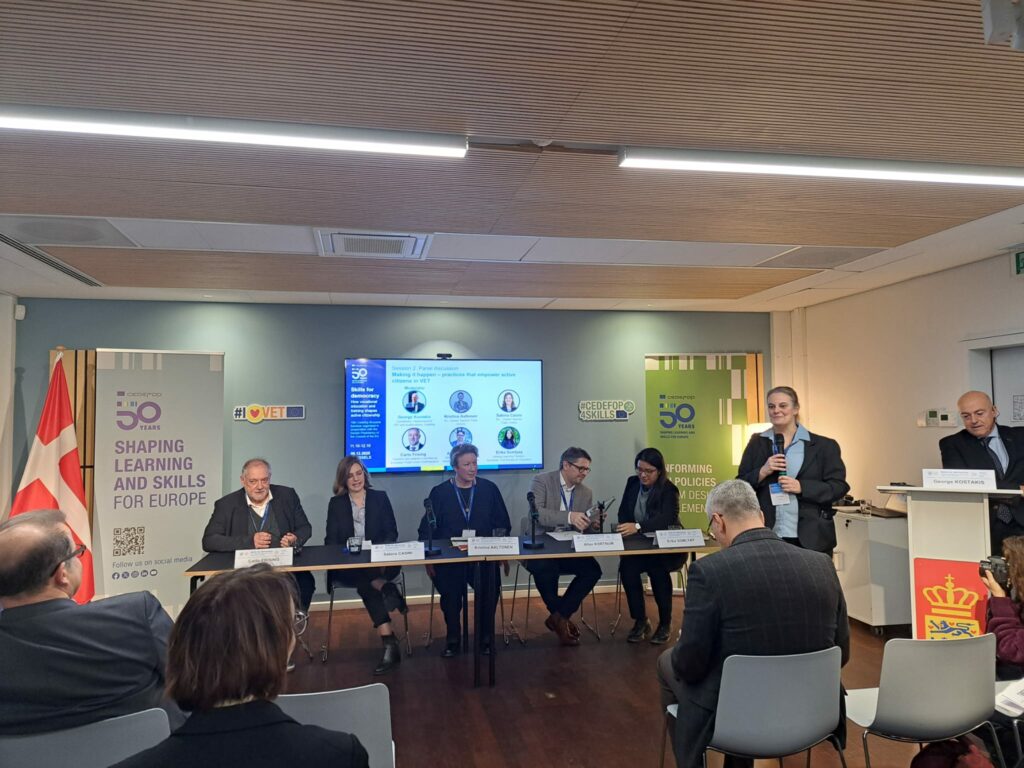
On Monday 8 December 2025, EARLALL attended the seminar Skills for democracy: How vocational education and training shapes active citizenship, held in Brussels and organised by Cedefop in cooperation with the Danish Presidency of the Council of the EU.
The event gathered representatives from EU institutions, European associations, regional representatives, academic associations, VET providers, researchers, social partners and civil-society organisations. Its central theme was clear: vocational education and training (VET) has a vital role to play not only in preparing learners for the labour market, but also in equipping them with the competences needed to participate actively in democratic life.
Key messages from the seminar
One of the highlights was the presentation of the first findings of Cedefop’s 2025–2027 study on citizenship education in initial VET, delivered by Dmitrijs Kuļšs, Cedefop expert in VET systems and key competences. His intervention emphasised that embedding civic competences and democratic values into VET curricula can significantly contribute to shaping active, informed citizens. He also underlined the strong potential of VET settings due to their diversity of learners and the practical nature of work-based learning.
A particularly relevant contribution came from Jurgen Siebel, Executive Director of Cedefop, who highlighted several systemic barriers: VET learners often have fewer structured opportunities to express democratic engagement compared to peers in general or academic education; limited curricular time dedicated to democratic competences; and insufficient training and support for teachers delivering related content. At the same time, he stressed — echoing the input by Cedefop colleague Dimitrijs Kuļšs — that the diversity of VET learner groups, combined with practical and work-based learning environments, creates unique opportunities to cultivate democratic participation.
The seminar featured additional contributions from a range of high-level speakers, including:
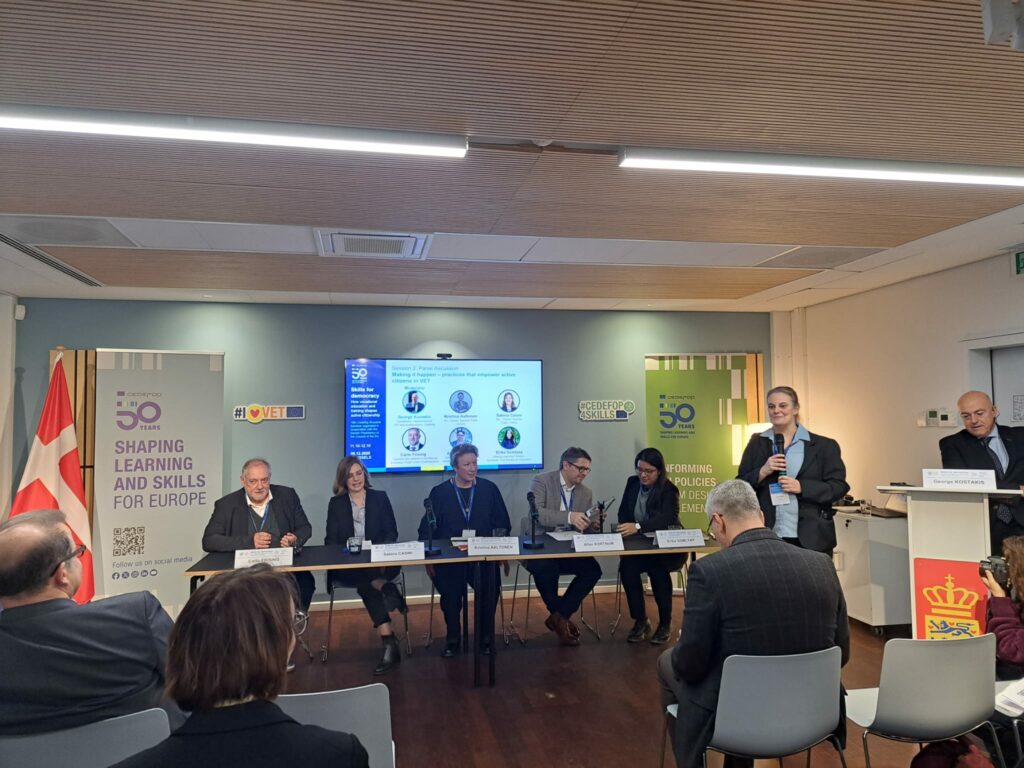
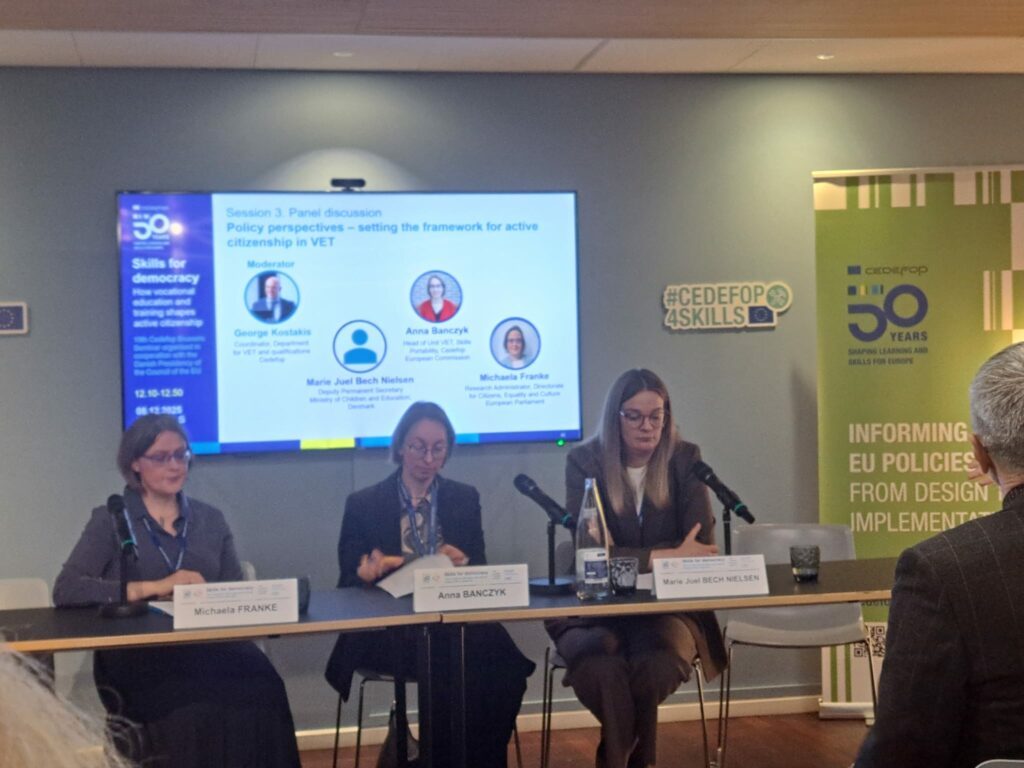
- Anna Banczyk, European Commission, Head of Unit for Vocational Education and Training and Skills Portability
- Marie Juel Bech Nielsen, Deputy Permanent Secretary, Ministry of Children and Education, Denmark
- Allan Kortnum, Director, Herningsholm Vocational College, Denmark
- Representatives from employer organisations, trade unions and civil society
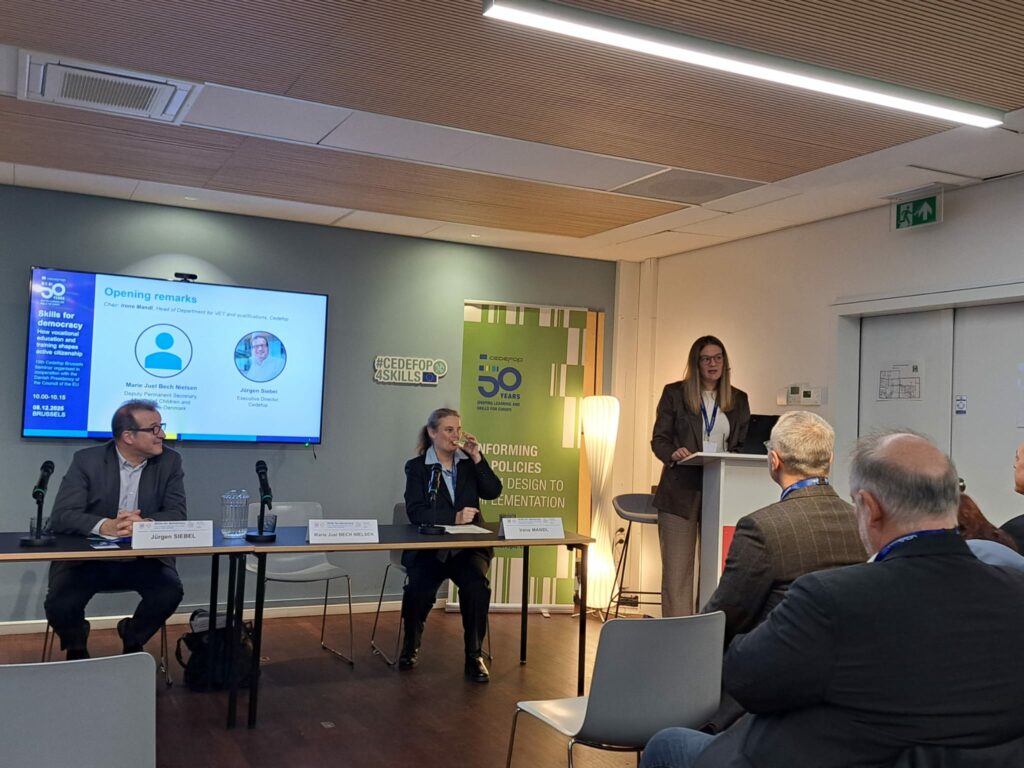
Across panels and discussions, several themes consistently emerged:
- VET reaches highly diverse learner groups — including young people, adults, migrants, early school leavers and those seeking new pathways.
- This diversity creates opportunities to promote inclusive citizenship, social cohesion and equal participation.
- Citizenship education in VET can help develop transversal competences such as critical thinking, collaboration, digital literacy and civic engagement.
- Strengthening democratic competences is increasingly relevant in light of Europe’s evolving social, economic and political landscape.
Major Announcement: European Skills and VET Weeks 2026 – 2028
A standout moment of the seminar was the joint announcement by Jurgen Siebel (Cedefop) and Anna Banczyk (European Commission) of the upcoming European Skills and VET Weeks in 2026 – 2028. Co-organised by Cedefop and the European Commission, these editions will build on the achievements of previous European Vocational Skills Weeks, the Union of Skills, and the European Year of Skills.
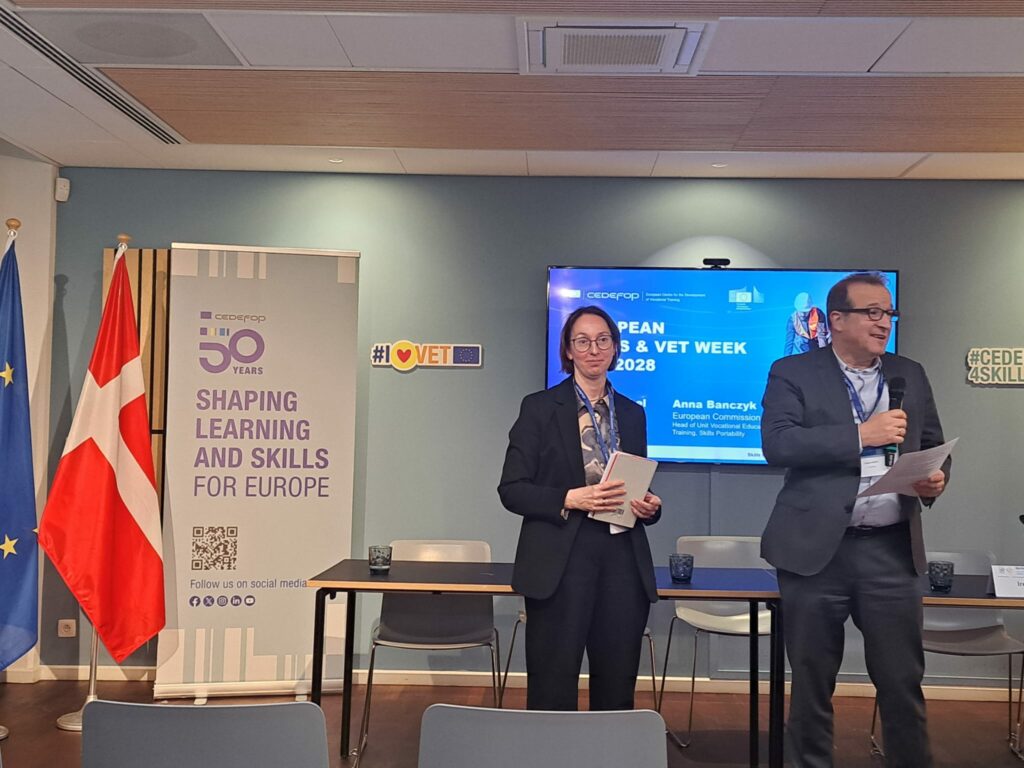
These future Weeks will place a strong emphasis on:
- Boosting the attractiveness and visibility of VET across Europe
- Upskilling and reskilling opportunities for all learners
- A renewed, evidence-based narrative for VET, rooted in facts and data
- Co-creation with stakeholders as a central guiding principle
This announcement marks a significant step in reinforcing VET’s role in shaping Europe’s future skills landscape.
Anna Banczyk provided a comprehensive overview of the EU’s growing commitment to strengthening democratic competences through VET. She outlined several key developments:
- The Union of Skills initiative, placing skills at the heart of Europe’s competitiveness and democratic resilience.
- The forthcoming Action Plan on Basic Skills, designed to strengthen foundational and civic competences across education and training systems.
- The integration of democratic competences into the EU VET strategy from 2026 onward, reinforcing the role of VET in shaping active citizens.
- Links to the EU Democracy Shield and the upcoming strategy for teachers and trainers, which will include specific measures to support educators — including in-company trainers — in addressing democratic competences.
- A planned increase in Erasmus+ funding for actions focused on democratic engagement and civic participation.
- The need for more systemic cooperation among actors, improved pedagogical approaches, and a stronger focus on evidence, research and data collection, which are currently insufficient.
Democracy and European Values: A Growing Priority for EARLALL
The seminar resonated strongly with EARLALL’s ongoing work. During the General Assembly in Mechelen (November 2025), EARLALL members approved the 2026 Work Plan, which identifies democracy, European values and active citizenship as a priority for the year ahead.
The reflections shared in Brussels underline why this priority matters. Regions and local authorities play a key role in shaping learning systems that foster participation, intercultural understanding and community engagement.
Looking ahead: implications for regions and local authorities
For EARLALL and its members, the seminar offered valuable insights into how democratic competences could be integrated into VET and lifelong-learning strategies. It highlighted practical ways in which regional and local actors can:
- Encourage VET providers to embed civic and democratic dimensions into training programmes
- Support inclusive learning environments and ensure equal access for diverse learners
- Facilitate partnerships between education institutions, employers and communities to strengthen civic participation
- Share practices and explore how democratic engagement can be cultivated at local and regional level
As Europe prepares for the challenges and transitions ahead, EARLALL sees growing relevance in promoting a vision of VET that supports not only employability, but also active, resilient and democratic societies.
EARLALL looks forward to continuing its work with members, partners and European institutions to bring these reflections into practice in 2026 and beyond.