

EARLALL Highlights the Role of Regions and Cities in Strengthening Apprenticeship Ecosystems at EAfA High-Level Event 2026
08/06/2026
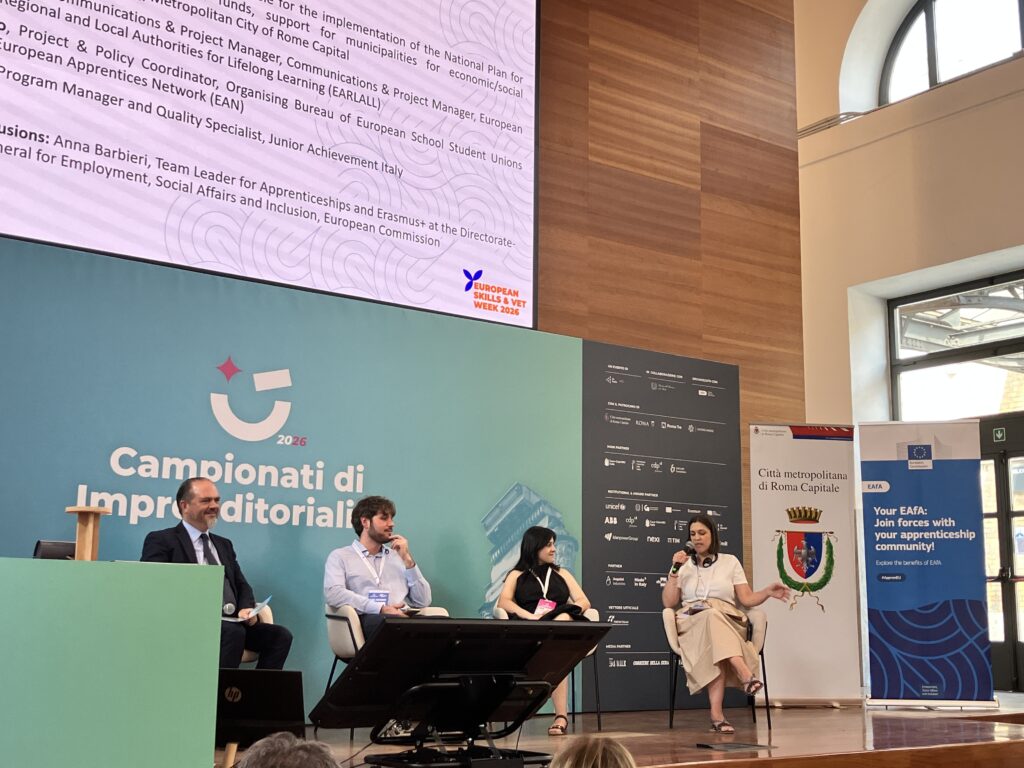
On 4-5 June 2026, EARLALL participated in the European Alliance for Apprenticeships (EAfA) High-Level Event 2026, hosted in Rome by the European Alliance for Apprenticeships (European Commission), the Metropolitan City of Rome Capital, Junior Achievement Italy and Roma Tre University.
Bringing together policymakers, education and training providers, employers, social partners, learners, and regional and local authorities from across Europe, the event focused on the future of apprenticeships, entrepreneurial learning, and vocational education and training (VET). Participants explored how apprenticeship systems can better respond to labour market needs while supporting Europe’s green and digital transitions.
Apprenticeships and entrepreneurship as drivers of Europe’s future
The event opened alongside the final stage of the Junior Achievement Italy Entrepreneurship Championship, creating a unique opportunity to connect discussions on entrepreneurial learning with the broader debate on skills and apprenticeships.
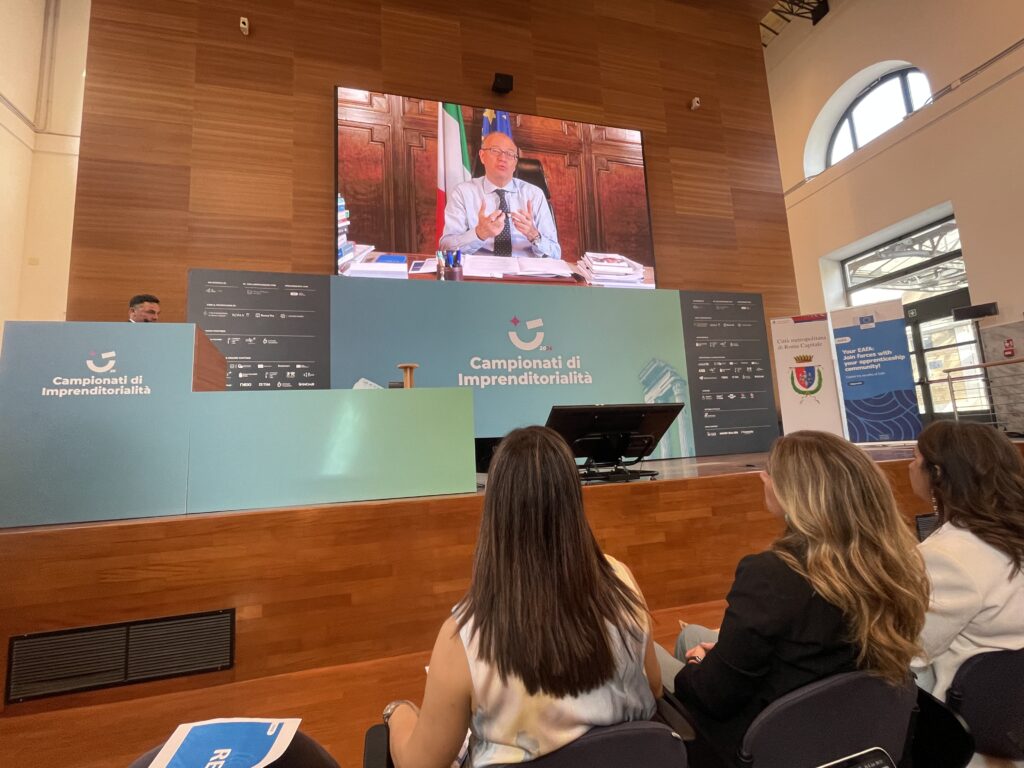
In a video message, Italy’s Minister of Education, Giuseppe Valditara, highlighted the importance of fostering entrepreneurial mindsets from an early age and strengthening the links between education and the world of work. Referring to recent developments in the Italian VET system, the Minister emphasised that entrepreneurship, creativity and innovation are essential drivers of economic growth and social prosperity. Encouraging young people to embrace initiative and innovation, he stressed that entrepreneurship can play a crucial role in creating jobs, opportunities and prosperity for future generations.
Anna Gionfriddo, President of Junior Achievement Italy, highlighted the growing importance of transversal skills and the European dimension of entrepreneurship education and apprenticeships. Miriam Cresta, CEO of Junior Achievement Italy, reinforced this message, noting that while technologies and labour markets continue to evolve, human creativity remains a key driver of innovation and progress.
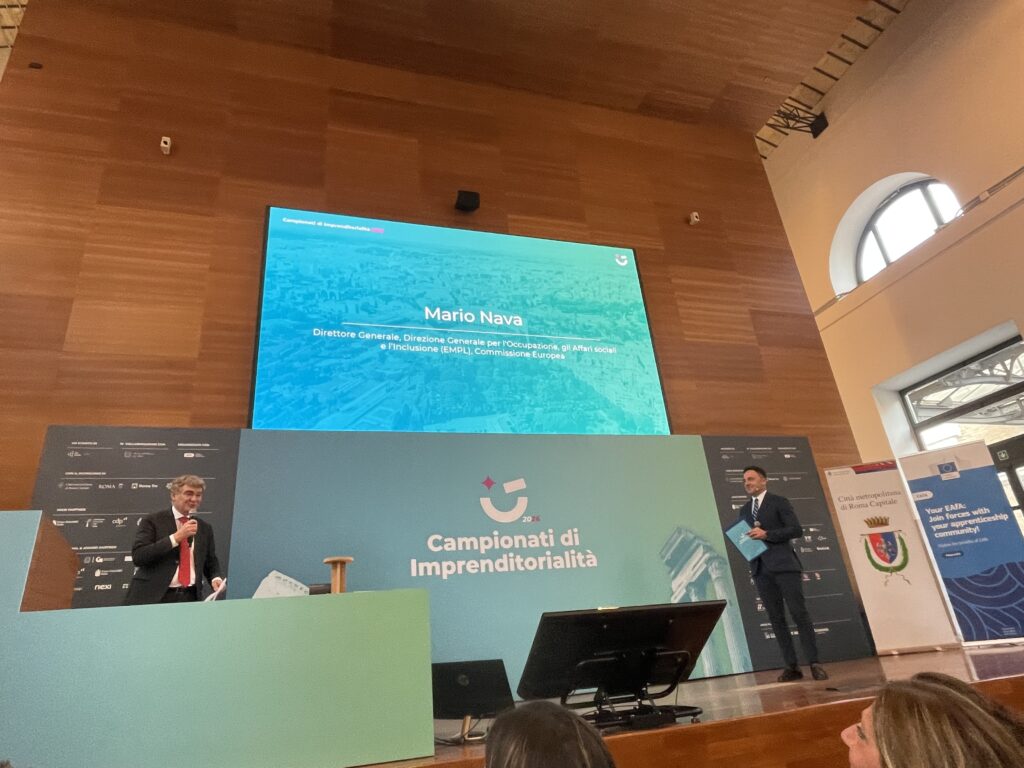
Delivering the European Commission’s perspective, Mario Nava, Director-General of DG Employment, Social Affairs and Inclusion (DG EMPL), stressed that vocational education and training and the European Alliance for Apprenticeships are fundamental pillars of Europe’s skills agenda. He highlighted that successful apprenticeship systems depend on strong partnerships between European institutions, national governments, local authorities, education providers and employers. Policies, he noted, only become meaningful when they are translated into concrete action on the ground through committed local leadership and effective cooperation.
Representing the host city, Daniele Parrucci, Councillor of the Metropolitan City of Rome Capital, shared how local initiatives supported by European cooperation have helped engage thousands of learners across Italy. He emphasised the importance of addressing skills mismatches, strengthening connections between education and labour market needs, and ensuring that young people can access high-quality vocational and higher education pathways.
Embedding entrepreneurial competences into VET and apprenticeships
The first panel discussion, “Embedding Entrepreneurial Competences in Higher VET and Apprenticeships: European Perspectives”, moderated by Magda Janiak (Lublin Academy of Economics and Innovation and coordinator of the EAfA Community on Higher Apprenticeships), explored how entrepreneurial competences can be better integrated into vocational education and apprenticeship pathways.
The discussion focused on how entrepreneurial skills can be embedded into curricula, assessment methods and work-based learning experiences while responding to real labour market needs.
Anna Maria Czarny (Hanse Parlament) presented experiences from Centres of Vocational Excellence (CoVEs), highlighting the importance of learning-by-doing approaches and stronger collaboration between VET providers, businesses and regional stakeholders. She stressed that entrepreneurial competences should be integrated across educational pathways and supported through practical experiences that help learners develop initiative, creativity and problem-solving skills.
Lucy Marshall (Workplus Ireland) shared insights from the Irish apprenticeship system, emphasising the importance of employer engagement and stronger cooperation with SMEs. She highlighted the need to raise awareness of apprenticeship opportunities, expand pathways into emerging sectors and ensure closer collaboration between education providers and employers to meet evolving labour market demands.
Providing a regional perspective, Pierpaolo Pontecorvo (ITS Academy Lazio Digital) showcased how entrepreneurship is embedded within higher technical education through close cooperation with companies, universities and local authorities. He highlighted practical initiatives supporting students in business creation, innovation and start-up development, demonstrating how entrepreneurial learning can become an integral part of vocational pathways.
A common message emerged from the discussion: entrepreneurial competences are becoming increasingly important for learners, employers and local economies alike. Building effective apprenticeship systems requires collaboration between education providers, businesses, public authorities and intermediary organisations, ensuring that entrepreneurial learning is embedded throughout the learner journey.
In her concluding remarks, Anna Barbieri, Team Leader for Apprenticeships and Erasmus+ for VET at the European Commission, highlighted the importance of moving from successful pilot initiatives towards more systemic approaches. She emphasised the role of Erasmus+, Centres of Vocational Excellence and the European Alliance for Apprenticeships in supporting innovation, awareness-raising and long-term partnership building.
EARLALL highlights the strategic role of regions and cities
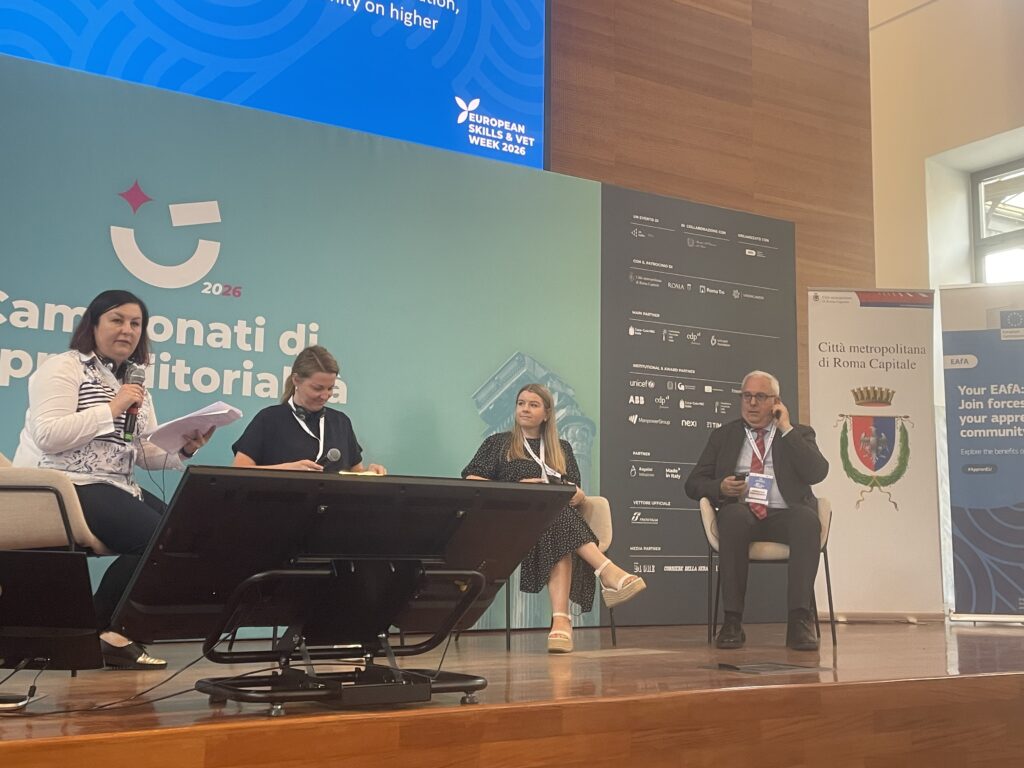
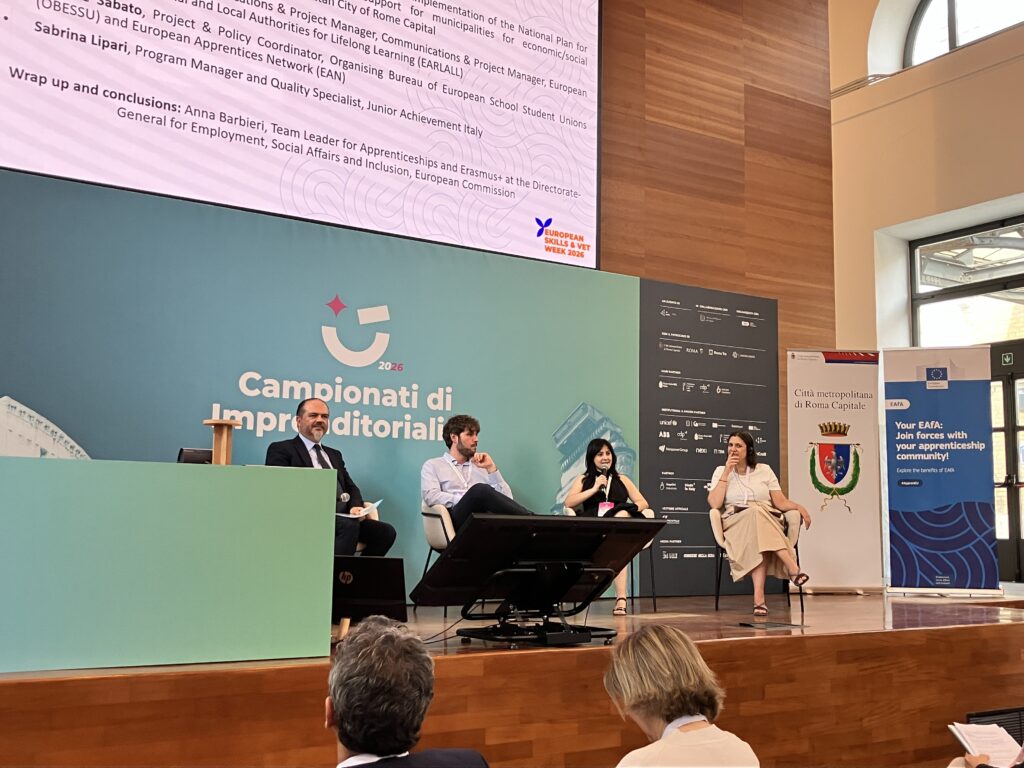
The second panel, “Metropolitan Governance for VET and Apprenticeships: Comparing Ecosystem Models Across Europe”, focused on how local and regional authorities can act as facilitators of integrated apprenticeship ecosystems and foster sustainable stakeholder engagement.
Moderated by Luca Mobilio (Ecorys), the discussion brought together Stefano Carta (Metropolitan City of Rome Capital), Alicia Gabán Barrio (EARLALL), Daniele Sabato (OBESSU and the European Apprentices Network) and Sabrina Lipari (Junior Achievement Italy).
The panel explored how apprenticeship ecosystems can move beyond project-based cooperation towards long-term governance structures that bring together education providers, employers, learners and public authorities.
Representing EARLALL, Alicia Gabán Barrio highlighted the unique position of regional and local authorities as connectors within skills ecosystems. Drawing on EARLALL’s work and experiences from the QUEEN – Quality apprenticeships for evolving labour needs, Interreg Europe Programme project, she emphasised that regions and municipalities are increasingly acting as strategic enablers of lifelong learning, skills development and apprenticeship pathways.
Her intervention focused on the conditions needed for local and regional authorities to play a stronger role in apprenticeship governance. These include more effective multi-level governance arrangements, stable and long-term funding mechanisms, improved access to labour market intelligence, and stronger recognition of regions and cities as key actors in education and skills policies.
The discussion also addressed the importance of sustaining employer engagement beyond individual projects. Speakers highlighted the value of trust-based partnerships, learner participation, intermediary organisations and collaborative governance models that create lasting benefits for both employers and learners.
A key takeaway from the session was that successful apprenticeship ecosystems do not emerge through isolated initiatives. Instead, they require coordinated governance structures, long-term commitment and strong partnerships capable of adapting to changing economic and social realities.
Strengthening cooperation across Europe
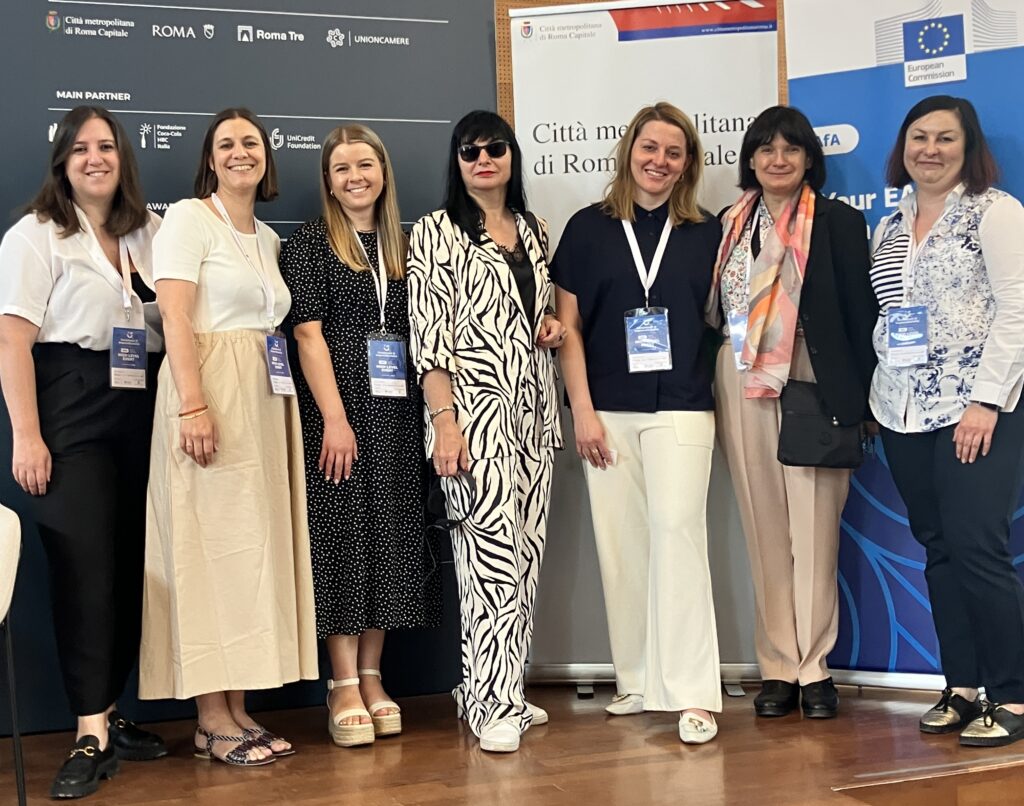
Beyond the panel discussions, the event provided an excellent opportunity for EARLALL to strengthen its collaboration with the Metropolitan City of Rome Capital and engage directly with members of the EAfA Community on the Role of Cities and Regions in Fostering Apprenticeships.
Across all sessions, a shared message emerged: Europe needs apprenticeship systems that are collaborative, inclusive and responsive to future skills needs. Achieving this ambition requires strong cooperation between all levels of governance, with regions and cities playing a central role in connecting education, training and employment opportunities.
Resources
- Good for youth, good for business (European Alliance for Apprenticeships)