

EARLALL at the European Employment and Social Rights Forum 2026:“Empowering People in Times of Change”
04/03/2026
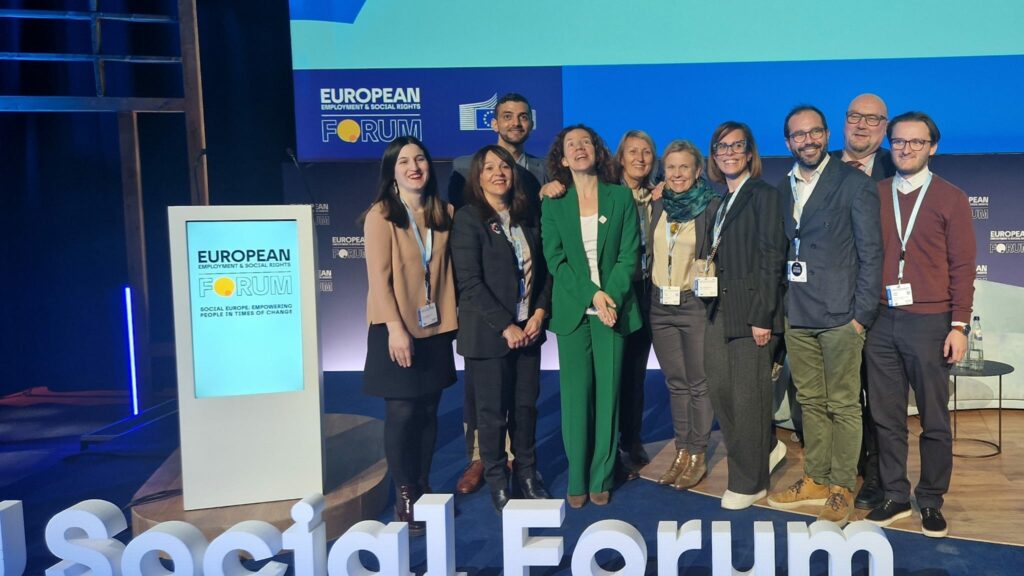
From The EGG in Brussels to hybrid participation across Europe, the European Employment and Social Rights Forum 2026 (EU Social Forum) convened policymakers, social partners, business leaders, academics and civil society to discuss how Europe can uphold its social model while adapting to global economic pressures, technological change and evolving labour markets. This year’s edition, organised by the European Commission’s Directorate‑General for Employment, Social Affairs and Inclusion, focused on three core pillars: quality jobs, the fight against poverty and fair labour mobility.
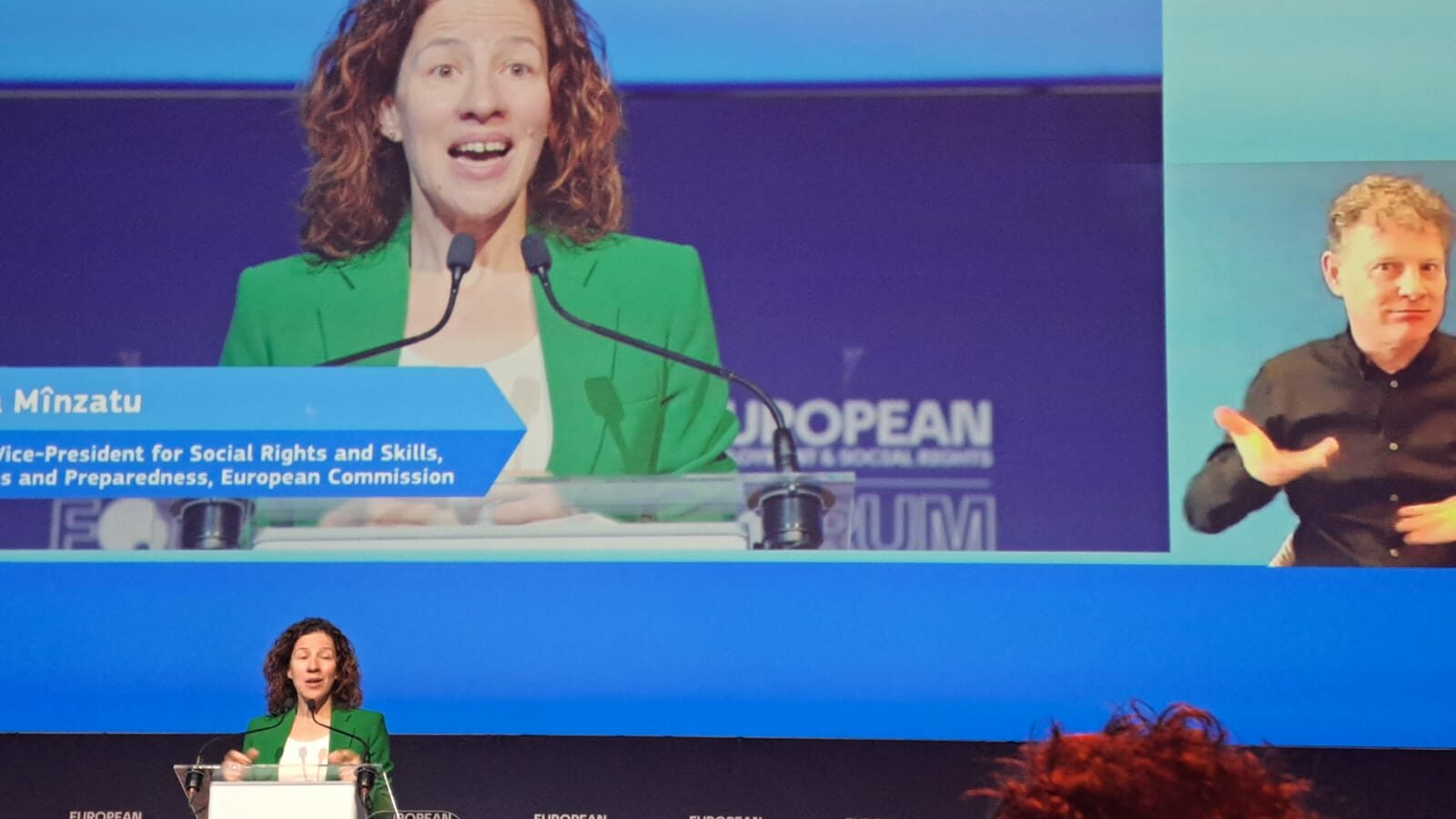
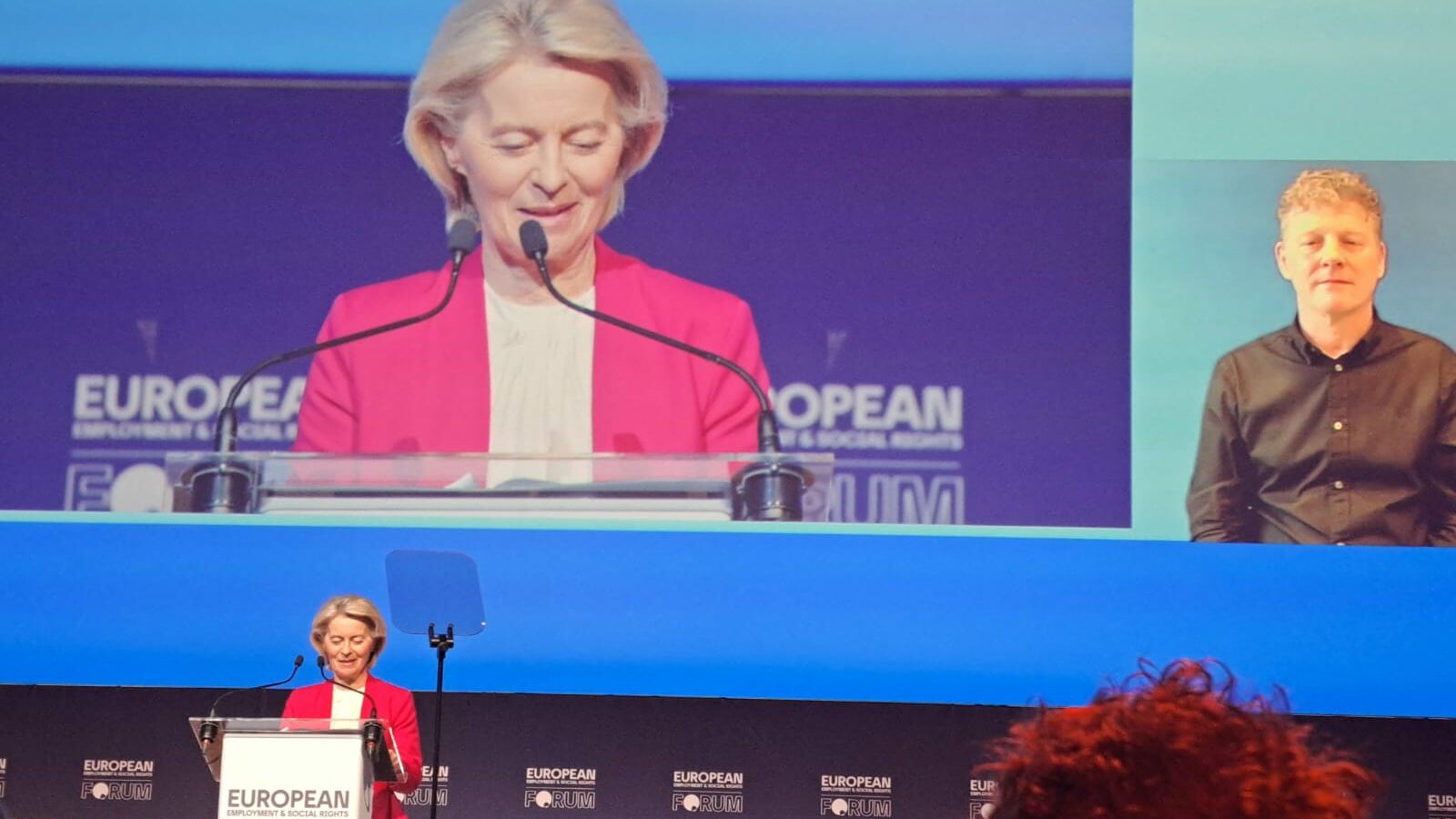
The Forum kicked off on 3 March with opening remarks from Roxana Mînzatu, Executive Vice‑President for Social Rights and Skills, who set the scene for a strategic dialogue on competitiveness and social inclusion. This was followed by a keynote from Ursula von der Leyen, President of the European Commission, who underlined the interconnectedness of social and economic agendas — a “Social Europe in a Competitive Europe”. Von der Leyen reflected on Europe’s resilience through recent crises, from protecting jobs during the pandemic to investing in skills for the twin digital and green transition under Next Generation EU. She highlighted the challenges of ongoing structural transformation, particularly with the rise of AI and sectoral transitions.
Von der Leyen laid out three strategic priorities:
- Completing the Single Market by reducing fragmentation with tools like the forthcoming EU Ink for rapid online company registration across Member States, and the anticipated Fair Mobility Package to facilitate cross‑border labour mobility.
- Skills and Quality Jobs, including advancing the Union of Skills and a Future Skills Guarantee to help people navigate transitions between sectors. The newly discussed Quality Jobs Act was framed as a win for workers, enterprises and Europe’s competitiveness.
- Affordability, with a focus on housing as a basic right and the upcoming Affordable Housing Action Plan to reduce financial insecurity.
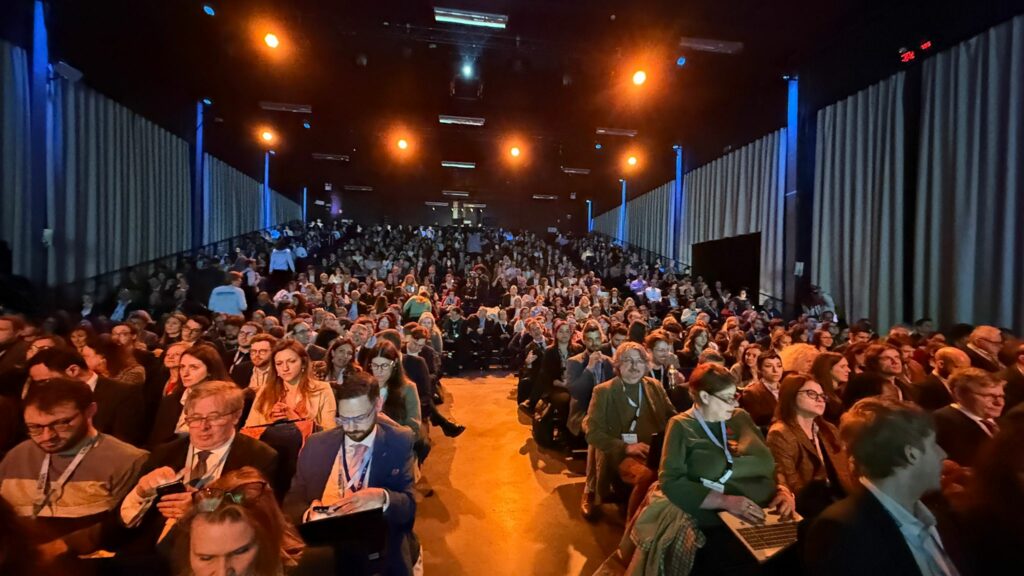
Panel Discussions and Diverse Perspectives
The first day’s plenary brought together distinguished figures including:
- Enrico Letta, former Prime Minister of Italy and academic leader;
- Yolanda Díaz, Spain’s Second Vice‑President and Minister for Labour and Social Economy;
- Li Andersson, Chair of the European Parliament’s Employment and Social Affairs Committee;
- Esther Lynch, General Secretary of the European Trade Union Confederation (ETUC);
- Markus J. Beyrer, Director‑General of BusinessEurope;
- Maria Nyman, Secretary‑General of Caritas Europa;
- Olivier De Schutter, UN Special Rapporteur on extreme poverty and human rights;
- Sidsel Marie Kristensen, CEO of the LEGO Foundation;
- Mario Nava, Director‑General of DG Employment, Social Affairs and Inclusion.
Discussions spanned how digitalisation, demographic shifts, and global competition are reshaping work and social protection systems — while reaffirming the human dimension at the core of European policymaking.
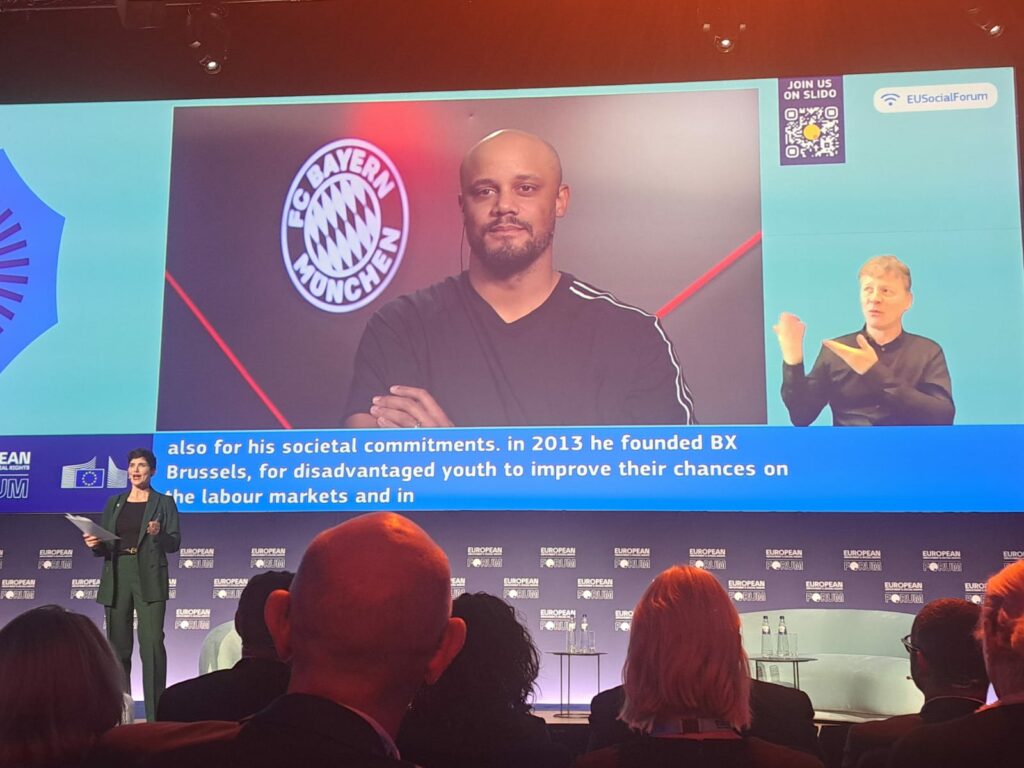
A notable cultural highlight was the participation of Vincent Kompany, former professional footballer and current coach, who joined discussions to underline the importance of education, resilience, and youth empowerment in societal transformation — bringing a unique voice from the world of sport to emphasise that skills, teamwork and lifelong learning are essential beyond traditional labour market frameworks to promote ‘Social cohesion’.
Day Two: Deep Dive into Skills and Policy Breakouts
On 4 March, the EU Social Forum transitioned to detailed breakout sessions addressing core policy areas:
Pact for Skills Sessions
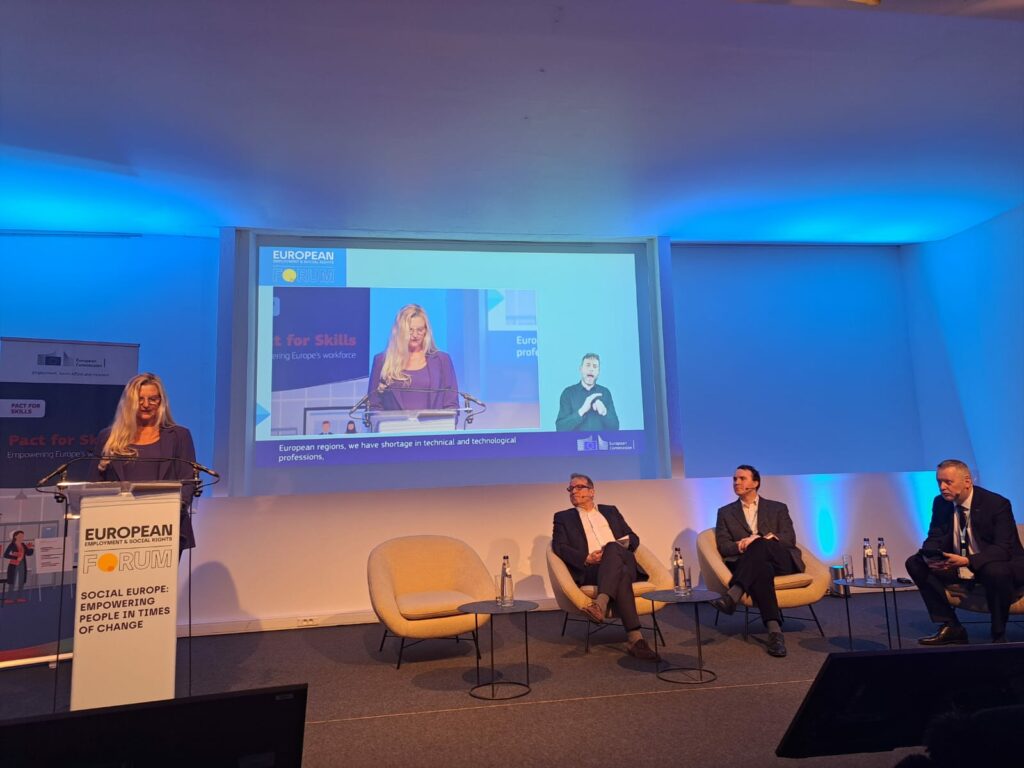
EARLALL took an active role in the sessions connected to the Pact for Skills, which placed private‑public cooperation and long‑term investment in workforce development front and centre. The Pact sessions — built around three thematic discussions — explored:
- Future skills needs and developments
- Closing the skills gap for a competitive Europe
- Pact for Skills and the Clean Industrial Deal: Opportunities for synergies
These sessions highlighted the strategic role of coordinated action among businesses, training providers, public authorities, and civil society to tackle labour and skills shortages, innovate in upskilling pathways, and transform regional examples into scalable European approaches.
A regional voice came from a representative of the Province of North Holland, presenting a Manifesto for Lifelong Learning and Upskilling/Reskilling that unites over 400 local actors behind a shared vision for continuous learning ecosystems.
Broader Policy Dialogues
Across the day, other breakout themes included:
- The first‑ever EU Anti‑Poverty Strategy – key elements and the way forward
- Empowering NEETs Through ALMA (Aim, Learn, Master, Achieve)
- Microfinance and social/financial inclusion of vulnerable groups
- Social protection for dignified ageing
- Fair labour mobility
- Resilient societies through research and evidence‑based policy
These breakout discussions tied closely to the Forum’s overarching mission to combine social rights with economic resilience, drawing connections between policy design, labour market dynamics and lived experience.
High‑Level Skills Leadership
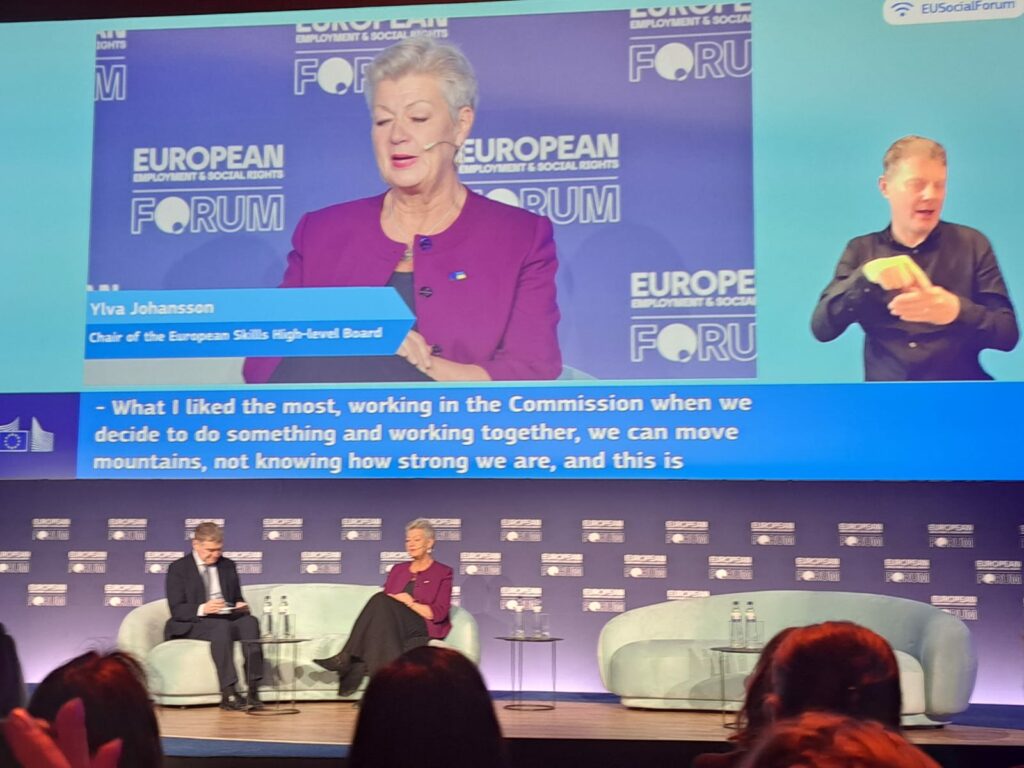
Prior to the breakout sessions, newly appointed Ylva Johansson, Chair of the European Skills High-Level Board, delivered an important message for the future of European skills policy. She emphasised that Europe must significantly raise adult participation in lifelong learning, from current levels below 40% towards the 60% target by 2030, as outlined in the European Pillar of Social Rights Action Plan. Johansson stressed that education systems must strengthen basic skills, better integrate learning with labour market needs, and cultivate people’s ability to continually adapt — coining the vision of a “New Social Human Capital model” that recognises both the potential and under‑utilisation of existing competences.
Looking Ahead
The EU Social Forum concluded with a renewed call for integrated strategies that bridge regional, national and European efforts, ensuring that transitions through digitalisation, demographic shifts and global competition remain human‑centred. For organisations like EARLALL, the EU Social Forum was both a platform for sharing regional innovation and a conduit for shaping Europe’s social and skills priorities going forward.