

EARLALL at the 12th “Europe, Let’s Cooperate” Interreg Europe Event
22/04/2026
EARLALL participated online in the 12th “Europe, Let’s Cooperate!” Interregional Cooperation Forum, a hybrid event held on 16–17 April 2026 in Copenhagen, Denmark. The event brought together participants from across the EU interested in interregional cooperation, policy improvement, and hands-on policy learning.
Irma Astrauskaite-Denis, Head of Unit – Communication and Contact Points, welcomed over 600 participants, with more than 400 joining the event online.
Henriette Winther, Deputy Director General of the Danish Business Authority, opened the event by thanking the organisers and presenting the programme ahead, along with the priorities under the Danish Presidency. She highlighted that Interreg Europe plays a key role in advancing interregional cooperation, supporting innovation, small and medium-sized enterprises, and developing solutions to shared challenges.
Erwin Siweris, Programmes Director, Interreg Europe, opened with an update on Interreg Europe, emphasising its strong collaborative spirit as a “family meeting” of long-term partners. He highlighted that Interreg Europe continues to play a key role in strengthening interregional cooperation and policy learning across Europe. Covering all EU Member States, as well as Norway, Switzerland, and – since 2021 – the Western Balkans, Ukraine, and Moldova, the programme is one of the largest under European Territorial Cooperation. With over 260 approved projects, the programme connects regions and supports EU cohesion policy. The PLP brings together nearly 25,000 members, sharing 4,000+ good practices and offering peer reviews, policy briefs, and thematic events.
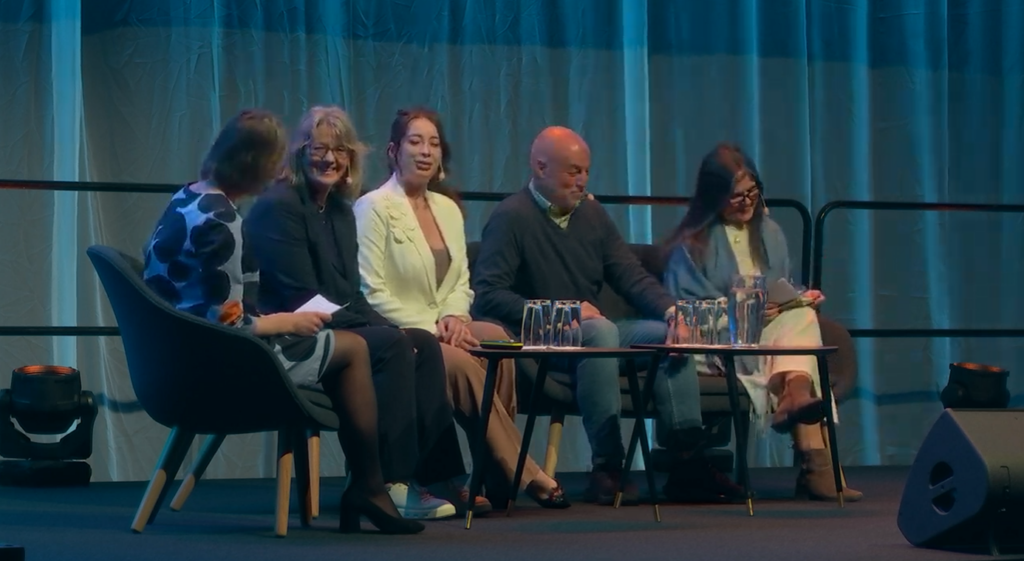
The event continued with a panel discussion featuring policymakers: Katarina Nordmark (Debuting project), Georgiane Nedelea (SireNergy project), Juan-Anton Gambina (atWork4Neets project), and Rute Dias Gregório, who shared experience from a peer review process. Speakers presented their initiatives and highlighted key success factors, including regular exchange of good practices, strong involvement of policy staff, and the use of peer reviews, expert input, and study visits. They also emphasised the importance of early stakeholder engagement, while noting time constraints due to administrative processes as a key challenge.
Federica Ferrara Senior Consultant in Public Policy Evaluation from Ernst and Young, presented the unique added value of Interreg Europe as a key instrument for strengthening territorial cohesion across Europe. The programme brings together partners from more and less developed regions, enabling the exchange of experience and expertise across a wide geographical scope. Its peer learning approach and strong focus on capacity building support public authorities in improving governance and translating knowledge into long-term impact, notably through concrete policy improvements.
The event featured high-level speakers discussing the future of EU cohesion policy and the contribution of interregional cooperation.
Oana Andreea Dordain (DG REGIO) presented an ambitious future EU budget of €2 trillion, including €10.2 billion for Interreg, aimed at strengthening territorial cooperation, simplifying programmes, and enhancing results-oriented funding. She also outlined the three-layer legislative framework governing EU funds, covering horizontal regulations, the “Plan” Regulation, and fund-specific rules such as ERDF/Interreg.
The first day online session concluded with a panel discussion featuring Pavel Branda (Committee of the Regions), Amandine Dupont, and Anne Livingston. Speakers highlighted the importance of Interreg for territorial cohesion, while stressing the need for adequate funding, legal certainty, and simplified implementation. They also addressed key challenges, including administrative complexity and upcoming performance-based approaches, and underlined the growing role of evaluation in supporting effective policymaking and delivering tangible regional impact.
EARLALL’s Contribution through Interreg Europe Projects
The discussions strongly resonate with EARLALL’s ongoing involvement in Interreg Europe projects such as SKYLA (Smart Specialisation Skills Ecosystems for the Twin Transition), SALAM (Sustainable AccessibIlity to the Labour Market), QUEEN (Quality apprenticeships for evolving labour needs), and LeadEx (Learning about the Educational Approach to Develop Excellence), which actively contribute to policy learning, skills development, and inclusive labour markets across regions. Through these initiatives, EARLALL supports the exchange of good practices, strengthens regional capacities, and promotes innovative solutions aligned with EU priorities on skills, employment, and lifelong learning.