

EARLALL at Lifelong Learning Week 2025: Bringing regional priorities to the education agenda
12/12/2025

Lifelong Learning Week (LLLWeek) 2025 took place on 8–12 December in Brussels, marking both the 15th edition of the initiative and the 20th anniversary of the Lifelong Learning Platform. Guided by its renewed priorities—Investment, Inclusion, Innovation, Internationalisation and Intermediaries—the week brought together policymakers, providers, civil society and regional representatives to discuss the future of education and skills in Europe. EARLALL actively contributed across the programme, ensuring that regional needs and territorial realities remained central to the conversation.
EU Lifelong Learning Stakeholders’ Forum: Regions in the Future EU Budget
On 8 December, EARLALL participated in the EU Lifelong Learning Stakeholders’ Forum, dedicated to the future Multiannual Financial Framework (MFF). The event convened regional authorities, civil society organisations and EU stakeholders to explore how future EU investments can better support skills development and territorial cohesion.
During the opening exchanges, Raffaela Kihrer (LLLP) emphasised the need to nurture learning “from cradle to grave”, while Michael Teutsch (DG EAC) shared updates on the next Erasmus+ programme and encouraged close engagement with the European Parliament.
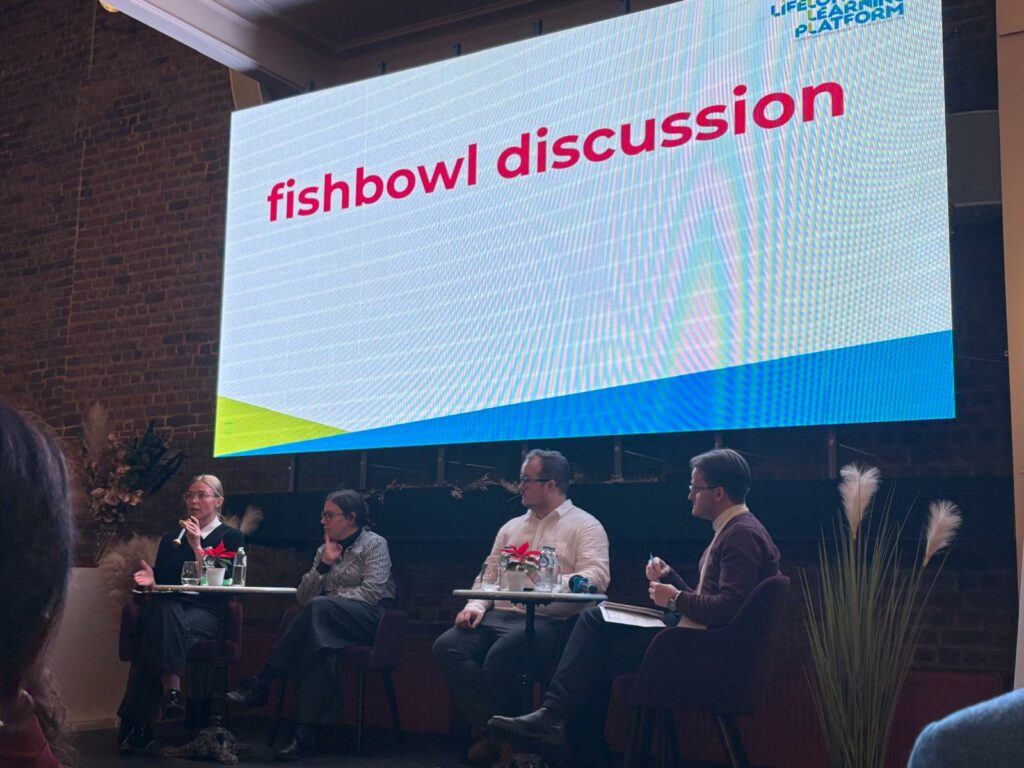
EARLALL’s Olga Chizhevskaya contributed to the fishbowl discussion moderated by Andrei Frank (LLLP), underlining the crucial role of regions in EU education and skills policies. She called for stronger multi-level governance, predictable funding and programmes that are accessible, inclusive and firmly rooted in regional ecosystems.
Equity and Inclusion in Education
On 9 December, EARLALL attended the LLLP Week session “Equity and Inclusion in Education and Training Policies: Insights from 25 Years of Reforms in Europe”, which brought together researchers, EU institutions, and civil society to reflect on progress and remaining gaps in equity across education systems. The session invited the European Commission to engage with European associations and project coordinators.
The event highlighted preliminary findings from the STRIDE project, showcased perspectives from youth, and offered a dedicated focus on early childhood education as a critical lever for reducing inequalities among children facing multiple disadvantages.
Micro-credentials for Inclusion and Skills
Micro-credentials were a strong focus throughout the week. On 9 December, the SALAM Interreg Europe projectcontributed to an EAEA workshop examining how micro-credentials can strengthen transversal competences and basic skills for adult learners, especially those in vulnerable situations. Professor Francesca Torlone, SALAM coordinator, brought forward evidence from partner regions, ensuring that practical territorial insights shaped the debate.
On 10 December, EARLALL joined the hands-on session “From Innovation to Recognition: Micro-credentials in Action”, which offered an overview of EU policy developments and showcased international experiences—from Europe to Africa and the Middle East. The European Commission highlighted Tknika (Basque Country) as a key contributor to peer-learning activities on micro-credentials for the labour market. Discussions stressed the need for quality assurance, robust recognition practices and stronger alignment with labour market needs.


Shaping the New EU VET Strategy
On 11 December, EARLALL attended the session “Building Future-Proof VET Ecosystems” at the European Economic and Social Committee. The debate focused on priorities for the upcoming EU VET Strategy, addressing inclusion, innovation, competitiveness and the challenges of the digital and green transitions. Speakers called for more flexible learning pathways, agile VET systems, stronger guidance services, enhanced work-based learning and improved support for learners and teachers. The European Commission and LLLP also presented the participatory process for shaping the new strategy, with a call for evidence expected in early 2026.
Celebrating 30 Years of EU Adult Learning

EARLALL was also present at the high-level event “EU and Adult Learning – 30 Years of Partnership”, organised by EAEA and GO! (EARLALL member). The celebration reflected on three decades of EU engagement in adult learning—from the Grundtvig programme to today’s Erasmus+ framework—and looked ahead to future priorities for inclusive and resilient adult learning systems. EARLALL ensured that the regional perspective remained visible in this milestone reflection.
Throughout LLLWeek 2025, EARLALL strengthened its commitment to promoting the regional voice in European education and skills policy. By sharing expertise, contributing territorial perspectives and engaging with key partners, the network continues to champion lifelong learning systems that are responsive, inclusive and grounded in regional realities.