

EARLALL explores Construction Sector Skills Challenges and Opportunities across European Regions
27/11/2026
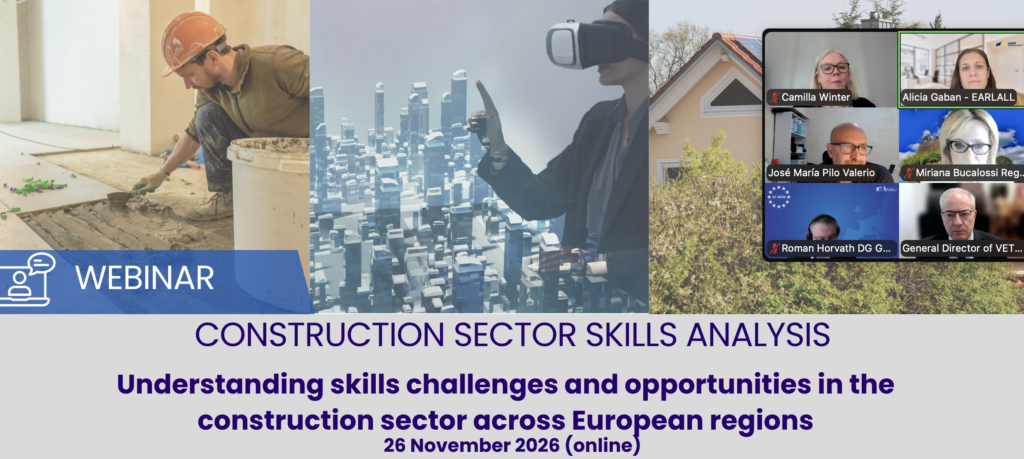
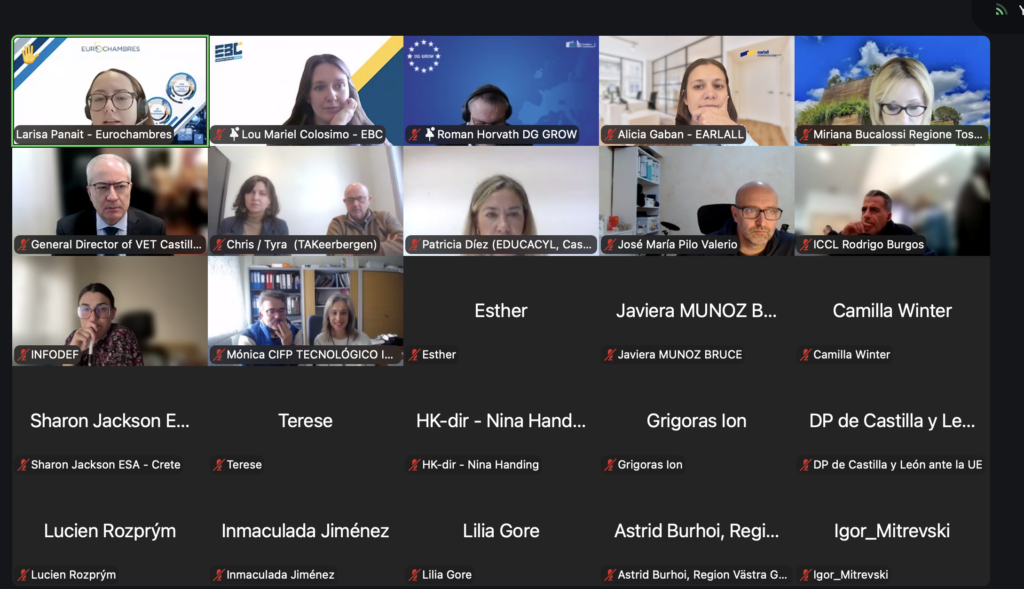
On 26 November 2026, EARLALL hosted the online webinar “Construction Sector Skills Analysis: Understanding Skills Challenges and Opportunities in the Construction Sector across European Regions”, bringing together around 30 participants from regional and local authorities, vocational education and training (VET) providers, businesses, educational institutions and European networks.
The webinar was organised by EARLALL’s Working Group on Skills and Labour Market as part of its ongoing series exploring skills challenges and opportunities across strategic economic sectors in Europe.
Europe’s construction sector is undergoing significant transformation. The green and digital transitions are changing how buildings and infrastructure are designed, built and renovated, creating new demands for competences in areas such as energy efficiency, sustainable materials, circular construction, building information modelling (BIM) and digital technologies. At the same time, labour shortages, an ageing workforce and difficulties in attracting new talent are putting additional pressure on the sector.
The EARLALL webinar aimed to connect the European perspective with the experiences of businesses, regional authorities and VET providers, exploring how different actors can work together to anticipate and address changing skills needs.
European and business perspectives: understanding the transformation of the construction sector
The webinar opened with contributions from the European Commission and the business community, bringing together two complementary perspectives on the transformation of Europe’s construction ecosystem and its implications for skills development.
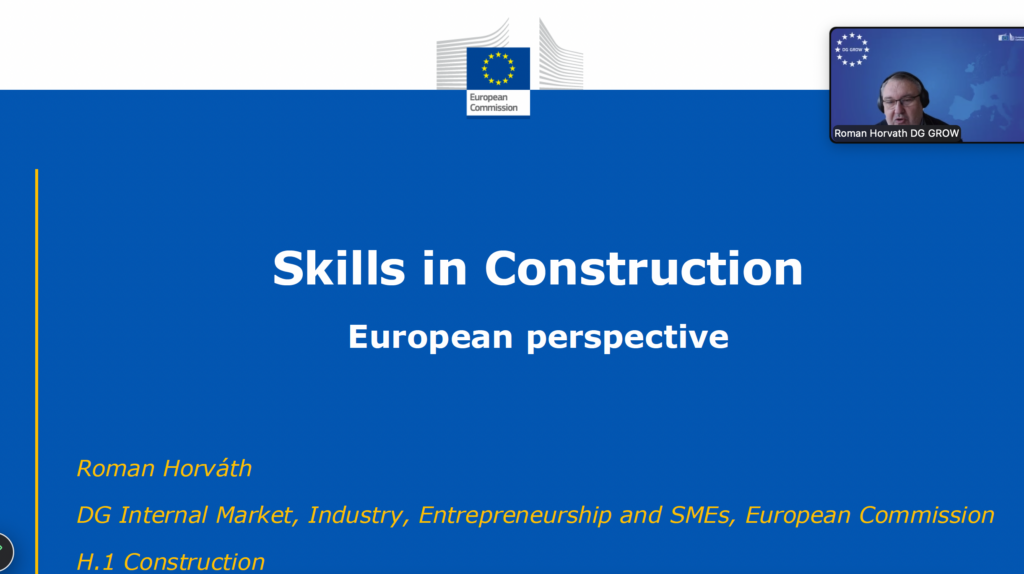
Roman Horváth, Policy Officer at the European Commission’s DG for Internal Market, Industry, Entrepreneurship and SMEs (DG GROW), Construction Unit, provided an overview of the European construction ecosystem and the priorities associated with its transformation. He highlighted structural challenges including labour and skills shortages, an ageing workforce, low productivity and the need to accelerate digitalisation and innovation.
His presentation explored European policy initiatives supporting the sector, including the European Strategy for Housing Construction and the work of the European Construction Observatory. He also highlighted the role of European cooperation and funding instruments in strengthening skills development, including the Blueprint for Sectoral Cooperation on Skills and Centres of Vocational Excellence.
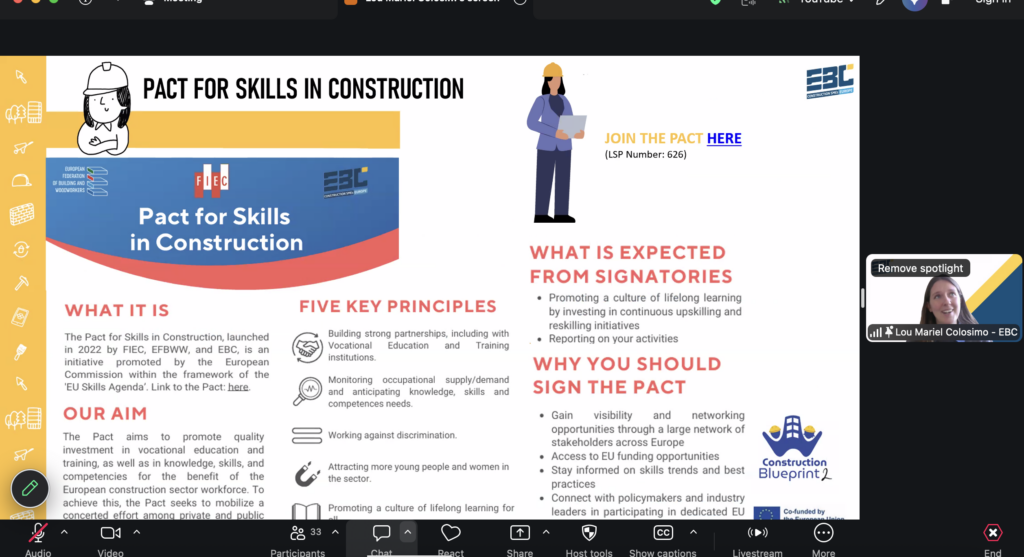
The European perspective was complemented by Lou Mariel Colosimo, Social Affairs Officer at the European Builders Confederation (EBC), who brought the voice of construction businesses into the discussion. This was a new dimension of this edition of the EARLALL sectoral webinar series, allowing participants to explore not only policy priorities but also the practical challenges faced by companies, particularly microenterprises and SMEs, which represent the vast majority of the sector.
Colosimo highlighted difficulties in finding skilled workers and adapting to changing skills requirements, as well as the specific challenges smaller businesses face when investing in innovation and training. Key priorities included better anticipation of skills needs, closer alignment between vocational education and training and company requirements, making construction careers more attractive to young people and women, and ensuring that green and digital innovation is accessible to smaller businesses.
The Pact for Skills in Construction was also highlighted as an important framework for bringing stakeholders together and supporting upskilling and reskilling across the construction ecosystem.
The exchange with participants further explored how European skills priorities can be translated into practical action at regional and local levels, including through European cooperation projects and stronger connections between companies and training providers.
Regional perspectives on construction skills development
The second part of the webinar focused on regional experiences from Castilla y León (Spain), Tuscany (Italy) and Flanders (Belgium), illustrating different approaches to skills anticipation, training provision and cooperation with the construction sector.
Castilla y León: aligning vocational training with labour-market needs
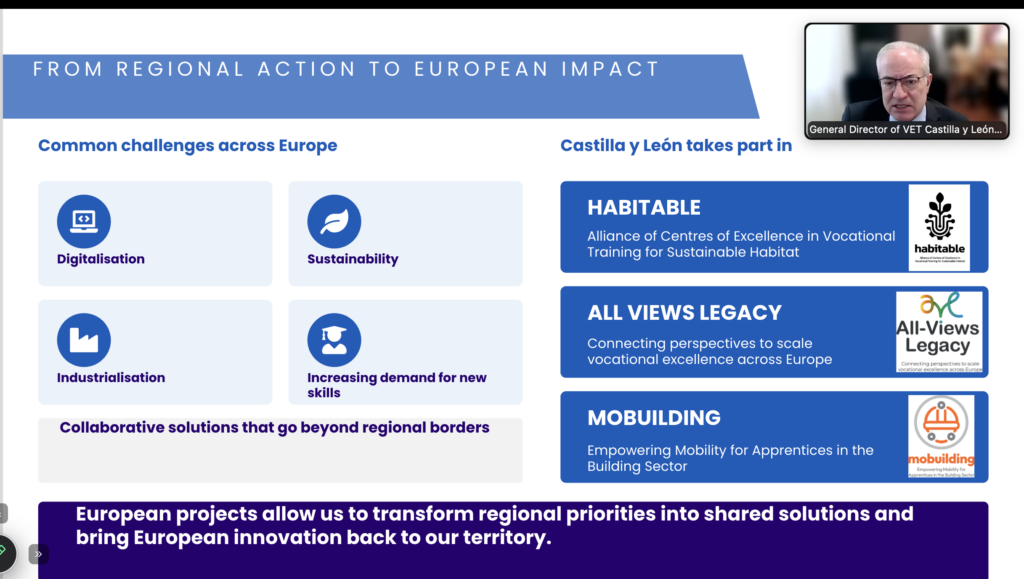
Agustín Francisco Sigüenza Molina, Director-General for Vocational Training in Castilla y León, presented the region’s approach to addressing skills shortages and supporting the transformation of the construction sector.
The region faces challenges linked to an ageing workforce, generational renewal and difficulties in attracting younger workers. At the same time, digitalisation, sustainability and industrialisation are changing occupational profiles and increasing demand for new competences.
Sigüenza presented the region’s dynamic map of training provision, which helps align vocational education and training with evolving labour-market needs. He also highlighted the Habitat sector plan and initiatives supporting cooperation between training providers and industry.
European cooperation plays an important role in this approach. Through initiatives such as HABITABLE, ALLVIEW and MOBUILDING, Castilla y León is working with European partners to strengthen vocational excellence, promote innovation in training and develop skills linked to sustainable and industrialised construction.
Tuscany: strengthening training pathways and social partnerships
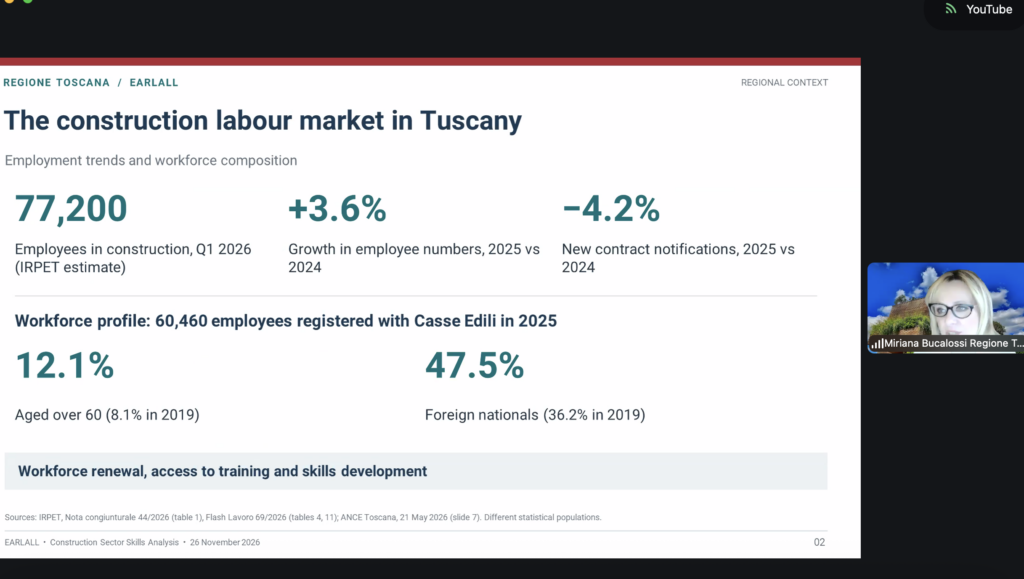
Miriana Bucalossi, Head of Apprenticeship, Work-Based Learning Policies and EU Project Management Unit at the Tuscany Region, presented the regional construction labour market and the training pathways available to respond to its changing needs.
Her presentation highlighted the importance of social partnership and cooperation between regional authorities, employers, training providers and educational institutions in developing relevant learning opportunities.
Tuscany offers several pathways into construction-related professions, ranging from initial vocational education and technical schools to higher technical education and university programmes.
Particular attention was given to the Formedil joint training system and the role of ITS Academy Accademia Tecnologica Edilizia (ATE) in providing specialised higher technical education. Its programmes address emerging skills needs in areas such as advanced and green construction, sustainable design, digital and smart buildings, BIM and artificial intelligence in construction.
These initiatives illustrate how regional training systems can combine different education pathways and work-based learning opportunities to respond to both current recruitment difficulties and longer-term sectoral transformations.
Flanders: dual learning as a bridge between education and the workplace
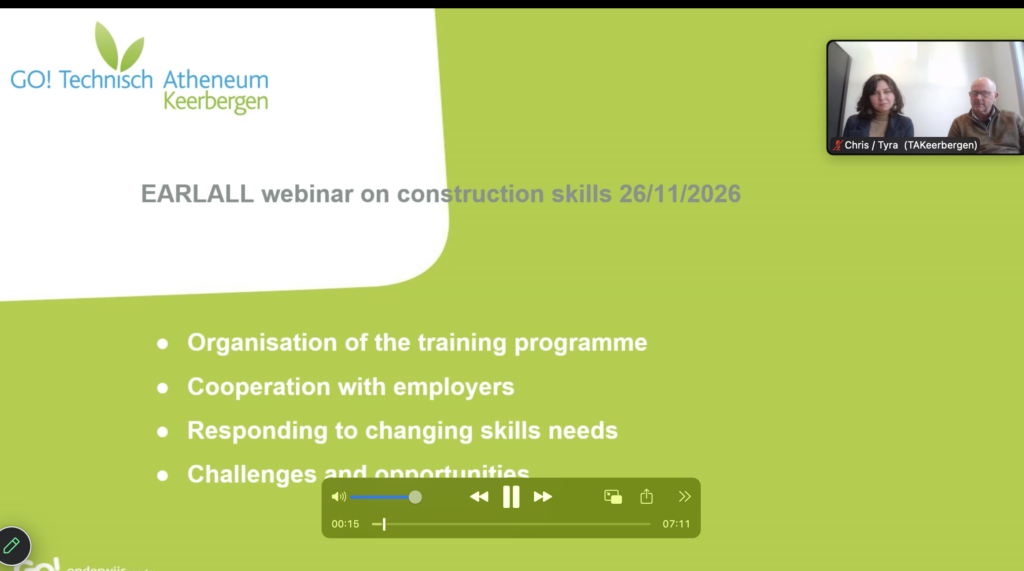
The final regional contribution came from Chris Meeus and Tyra Van Poyer from Technisch Atheneum Keerbergen (TAKeerbergen), who presented their experience with dual learning in construction.
Their presentation focused on how combining school-based education with workplace learning can help students develop practical competences while remaining connected to developments in the construction industry.
The dual learning approach creates a direct link between education and employment, allowing learners to gain experience in real working environments and become familiar with the skills and expectations of the sector.
The presentation highlighted the importance of cooperation between schools and companies in keeping training relevant, supporting student motivation and preparing future workers for a changing construction industry.
The exchange highlighted the importance of connecting different perspectives when addressing construction-sector skills challenges. While regional labour markets and training systems differ, common priorities emerged throughout the discussion: attracting new talent, supporting lifelong learning, strengthening employer–education cooperation and ensuring that training keeps pace with green and digital developments.
The contributions also demonstrated how European, regional and local initiatives can complement each other, from skills intelligence and policy frameworks to practical training programmes and cooperation between schools and businesses.
Through its sectoral webinar series, EARLALL aims to continue facilitating this exchange between its members and stakeholders, helping European regions learn from each other’s experiences and identify opportunities for further cooperation.
Resources
- Speaker’s presentations all in one.
- Watch the recording
- Fact sheet (coming soon)