

EARLALL takes part in the 4th partner meeting of the Interreg Europe project QUEEN in Cork, Ireland
09/11/2026
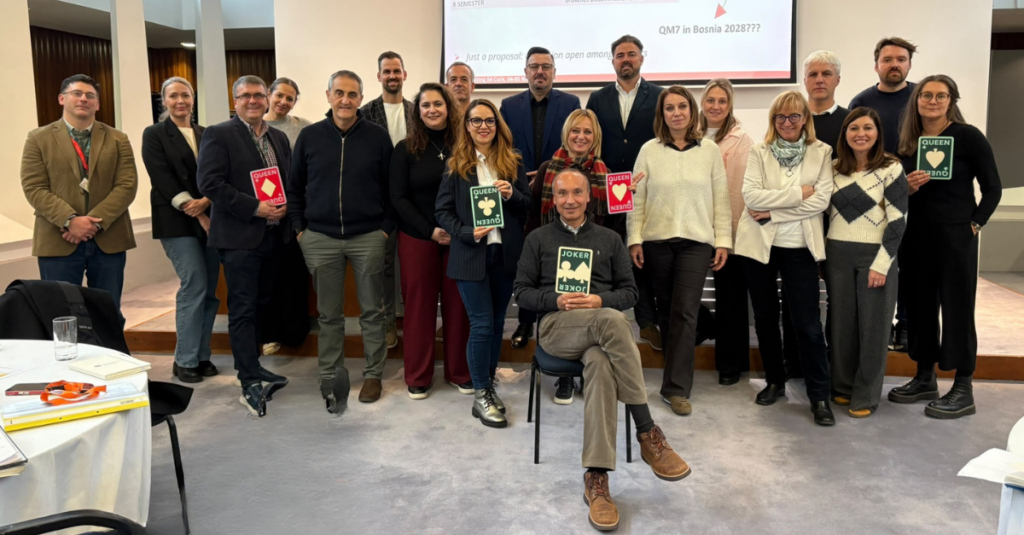
On 4–5 November 2026, EARLALL, advisory partner and communication lead for the Interreg Europe project QUEEN, joined the project’s fourth interregional meeting in Cork, Ireland. Hosted by Cork County Council (CCC), the meeting gave partners an opportunity to hear from apprentices, explore Cork’s approach to skills and entrepreneurship, and identify good practices that could improve apprenticeship policies in their regions.
Exploring Cork’s approach to skills and entrepreneurship
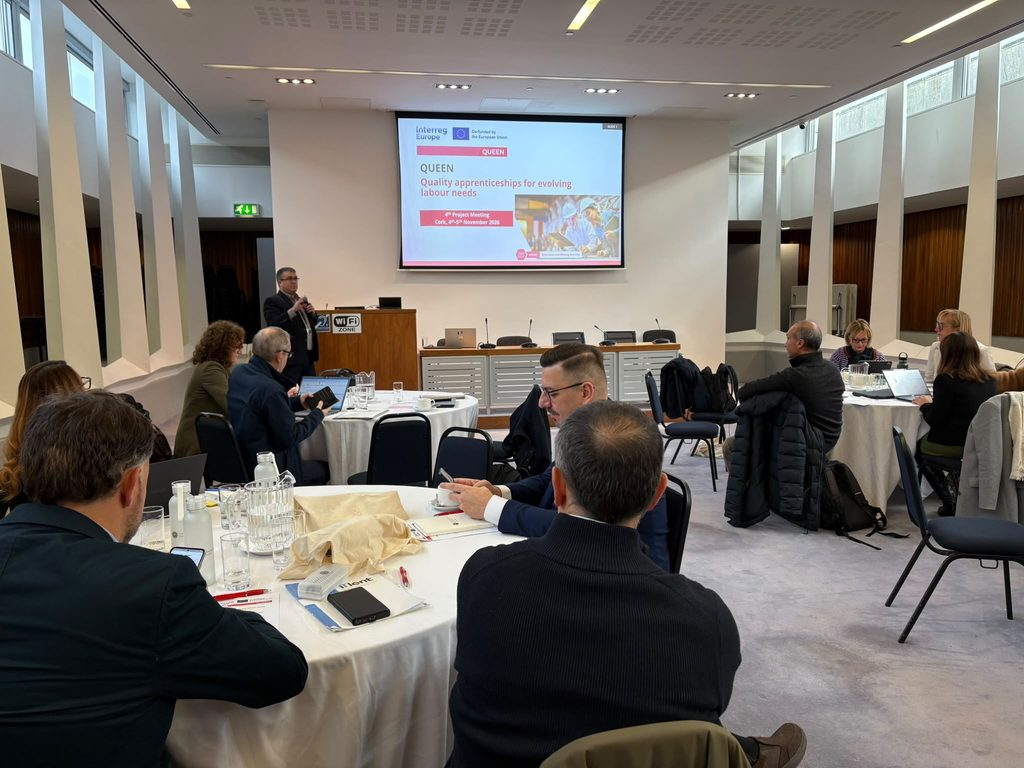
Darragh O’Suilleabhain of CCC welcomed participants, and Lorenzo Sabatini of ASEV, QUEEN’s lead partner, introduced the project to stakeholders joining for the first time. O’Suilleabhain presented the Cork County Local Economic and Community Plan 2024-2030, which draws on local evidence and public consultation to guide investment. Examples of how Cork supports enterprise and lifelong learning included microcredentials and training in leadership and digital skills through Cork Chamber Skillnet.
Marion Guiry of Local Enterprise Office South Cork introduced the Start Your Own Business programme. Veronica Murphy of Discovery Partnership, who has designed and delivered the programme since 2008, explained how mentoring, group exercises and peer networks help craftspeople start a business. Partners discussed what this could mean for careers advice. Showing prospective apprentices how they could one day run a business and employ others could make apprenticeships more attractive.
Sharing good practices from six territories
In a workshop moderated by Miriam Siciliano of Resolvo, the Bucharest-Ilfov regional intermediate body presented a pathway into electronics and automation open to rural learners and school leavers who have not passed the baccalaureate. The Regional Government of Tuscany shared an approach to addressing barriers to dual apprenticeships. Turku University of Applied Sciences presented a qualification unit from Finland’s Raisio Regional Education and Training Consortium that allows apprentices to train abroad as part of their qualification.
South Moravia showed how its Vyber praxe platform helps learners choose practical training placements. Zenica-Doboj Canton explained how grants help small and medium-sized businesses work with schools. The Basque Country presented PEAC, which gives people a way to gain formal recognition for skills acquired at work or through non-formal learning. Partners voted for the practices they most wanted to explore in their regions.
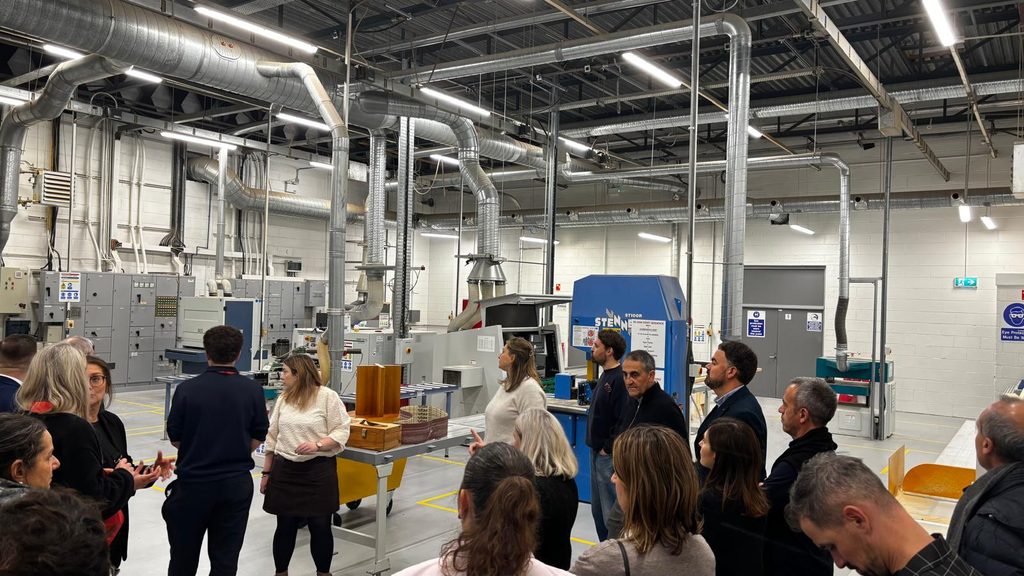
Hearing from training providers and apprentices
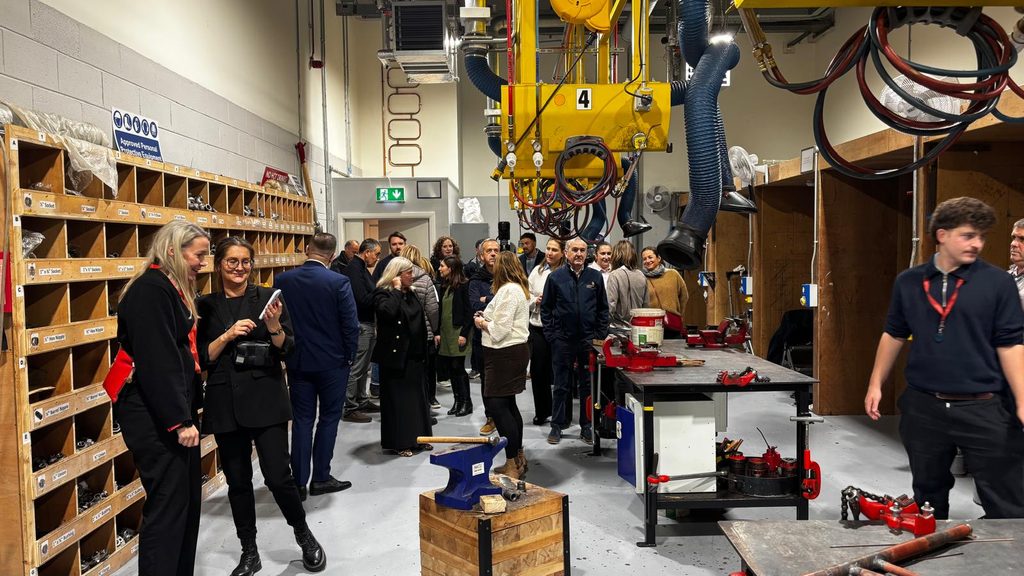
At Munster Technological University, Sean McSweeney, Dean of the Faculty of Engineering, welcomed partners to the craft apprenticeship school. Michael Hourihan explained how apprentices in 12 trades complete two phases of their training at the university. At Cork College of FET, campus manager Valerie Cowman described how Irish apprentices earn while they train and are assessed both at work and at a training centre. Between 2014 and 2023, the number of apprenticeship programmes in Ireland grew from 27 to 73, annual registrations rose from 2,698 to 8,712, and women’s participation increased from below 1% to 8.3%.
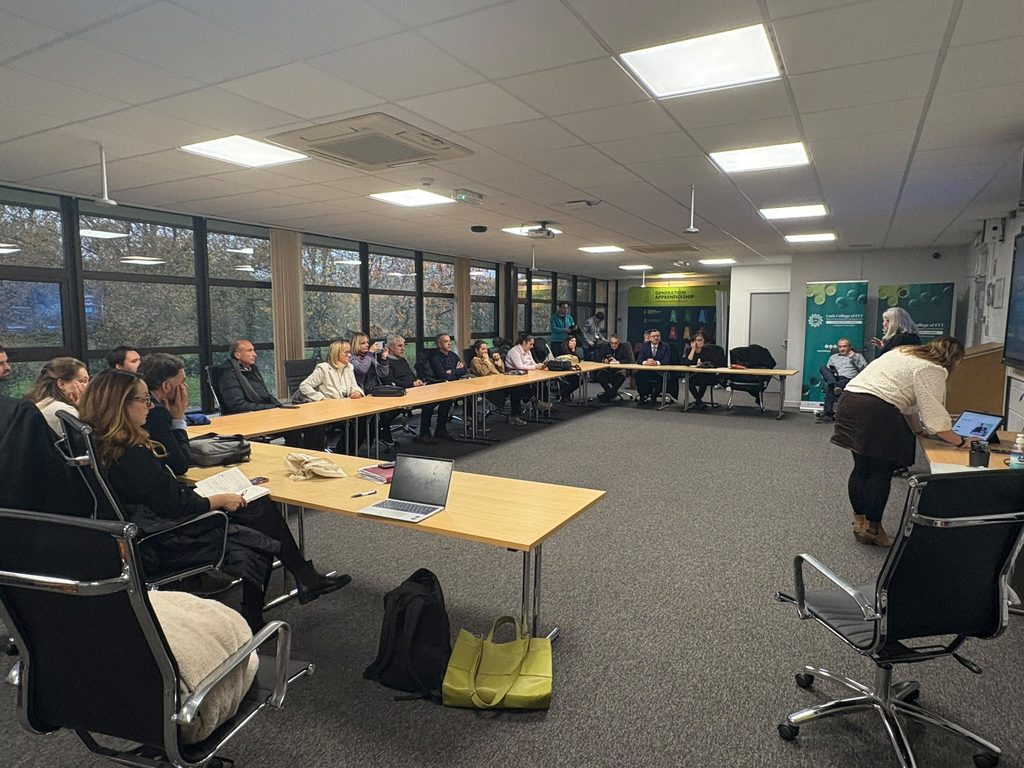
On the second day, CCC civil engineering apprentices Jason Forde and Abby described spending four days a week on site and one studying online. Their mentor, Peter Healy, reviews their reflective journals with them. Jason brought 23 years of experience in drinking water treatment and distribution, while Abby came to engineering from sociology. Electrician Kerrie Anne Fitzgerald spoke about the difficulty of finding her first employer and encouraged partners to make women in the trades more visible and ask apprentices what helps them stay.
EARLALL leads the discussion on the next round of good practices
Building on the previous day’s vote, Olga Nowak of EARLALL led a workshop on priorities for the next round of good practices. Partners identified topics that the practices shared so far had yet to address. Each region could then indicate which proposals met a local need, giving partners a focus for their work with regional stakeholders and helping them identify whom to meet for bilateral exchanges.
In a policy workshop led by Miriam Siciliano, partners discussed the changes they wanted to make in their regions and planned bilateral meetings with partners able to share relevant experience.
The Steering Group reviewed progress and planned the next QUEEN Good Practice Meetings. As communication lead, EARLALL also presented the results of the past semester’s communication and dissemination activities and outlined plans for the next semester.