

EPALE 2026: Connecting Skills, Lifelong Learning and Regional Cooperation Across Europe
23/10/2026
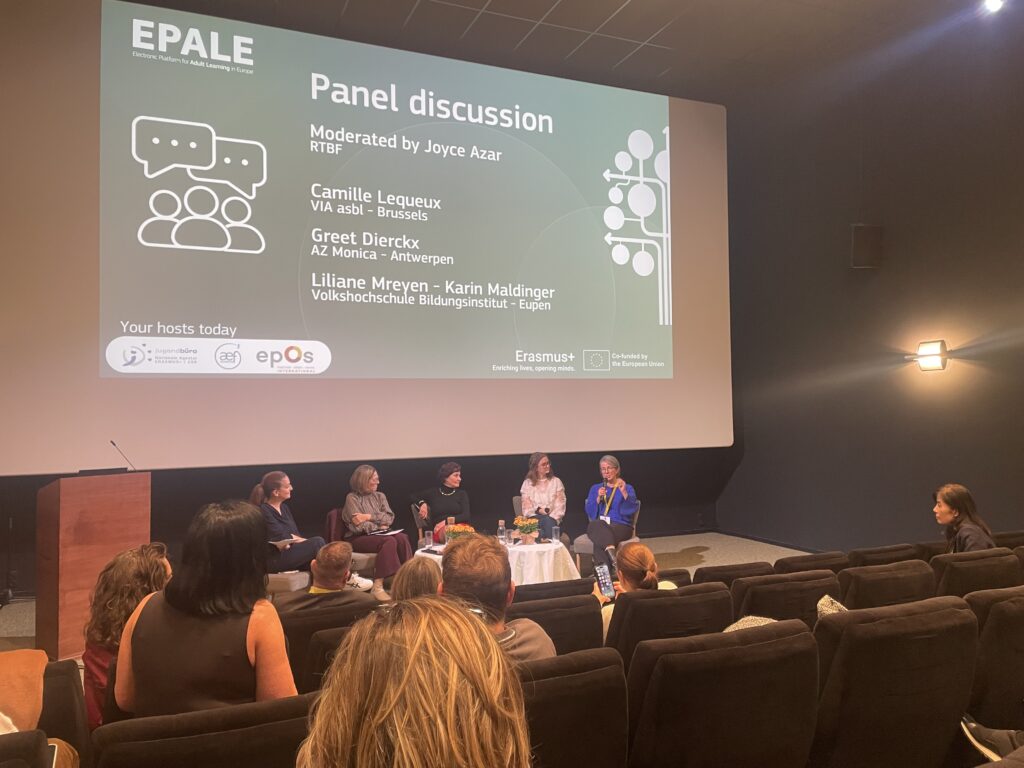
On 21 October, the EPALE Community Conference 2026 brought together adult learning professionals, policymakers, researchers and practitioners to discuss how skills and lifelong learning can contribute to a more inclusive, competitive and resilient Europe. Under the theme Shaping Europe through Skills, the two-day conference explored the role of adult education in supporting quality jobs, equal opportunities and democratic participation.
For EARLALL, these discussions highlight the importance of connecting European skills policies with regional needs and the realities of people, organisations and local communities. Regions play an important role in bringing together education and training providers, public authorities, employers and civil society to develop learning opportunities that respond to changing social and economic contexts.
Recognising skills and supporting fair opportunities
The first day focused on how European skills policies can support competitiveness and inclusion, with particular attention to the recognition and portability of skills across borders, as well as the need to help adults upskill and reskill in response to technological change.
Opening the conference, Sophie Beernaerts of the European Commission highlighted the importance of the EPALE community in bringing together knowledge, experience and practice. Experienced members can support newcomers, while organisations of different sizes and from different geographical contexts can learn from one another. This exchange is essential to making lifelong learning accessible to a wider range of adults.
The discussions also addressed European initiatives supporting basic skills, individual learning opportunities and vocational education and training. Effective guidance, flexible learning pathways and the removal of barriers to participation remain important to ensure that adults can access training that meets their needs.
The panel Skills without Borders – From Recognition to Opportunity examined how European cooperation can improve the recognition of skills and qualifications across countries. Ernesto Villalba-Garcia from Cedefop stressed that skills recognition is closely connected to fair mobility and wider social policies. Although European frameworks provide common reference points, national systems remain fragmented, making continued coordination necessary.
Digital credentials and shared standards offer opportunities to make skills more transparent and portable. However, people also need practical support to use their existing competences when moving between countries or entering new labour markets.
Mariavittoria Garlappi from the European Training Foundation highlighted the importance of cooperation between destination countries and countries of origin to address skills needs while avoiding brain drain. Partnerships involving public institutions, employers and vocational education and training providers can help develop relevant qualifications and create benefits for migrants and the countries involved.
These discussions underline the value of cooperation between European, national and regional actors. Regional skills ecosystems can help connect labour market needs with education and training provision, while ensuring that people have opportunities to build on their existing knowledge and experience.
Artificial intelligence and the need for continuous learning
Another central topic was the impact of artificial intelligence and automation on employment, skills needs and access to reskilling.
During the panel The Automation Paradox: AI, Inequality, and Access to Reskilling, Ada Zakrewska from the OECD highlighted the importance of understanding how workers and employers experience technological change. Research discussed during the session suggested that workers who participate in AI-related training tend to have more positive attitudes towards the technology.
Isaure Delaporte from the International Labour Organisation stressed that the impact of generative AI extends across many occupations. Technical skills remain important, but workers also need complementary competences, including critical thinking, judgement, social and emotional skills, and the ability to combine different forms of knowledge.
The discussion also highlighted the importance of looking beyond employment rates and wages when assessing the impact of skills development. Training should help people access better jobs and working conditions, rather than simply enabling them to adapt to changing demands.
For regions, this raises important questions about how to anticipate skills needs, support workers through labour market transitions and ensure that reskilling opportunities reach those who need them most. Cooperation between employers, training providers, public authorities and research organisations can help develop responses that reflect local circumstances while contributing to wider European objectives.
Erasmus+ and the impact of European cooperation on adult learning
On 22 October, the EPALE Belgium Conference continued the discussion by focusing on the impact of Erasmus+ on adult education and the future of the programme beyond 2027.
The keynote presentation by Marco Cecchinato, coordinator for the EPALE National Support Service Belgium (FR), introduced the RIA network’s shared findings from research examining how accessible and inclusive Erasmus+ is for adult education organisations and learners, as well as the effects of participation on individuals, staff and organisations. The study covered 21 countries and produced national reports and factsheets.
The findings highlighted the diversity of adult education across Europe and the important role of small civil society organisations, which often work directly with people facing barriers to learning and participation. In Belgium, these organisations make a significant contribution to adult education and generate important social impact.
One of the most striking findings was that 89% of the organisations surveyed stated that their project would not have happened without Erasmus+.
This illustrates how European cooperation can enable organisations to develop activities, strengthen their professional capacities and build partnerships that might otherwise be beyond their reach. The benefits extend beyond mobility, supporting organisational development and creating opportunities for personal, professional and civic growth.
The research also identified barriers that can limit participation, particularly for smaller organisations. Simplifying administrative procedures and increasing support for these organisations were among the recommendations discussed.
For regional and local actors, these findings reinforce the importance of ensuring that European programmes are accessible to a diverse range of learning providers. Supporting smaller organisations to participate in international cooperation can help strengthen local learning ecosystems and extend the benefits of European programmes to more learners and communities.
Looking towards the next generation of Erasmus+
The conference also considered the future of Erasmus+ within the wider European policy agenda. Wilhelm Vukovich from the European Commission outlined developments expected in the lead-up to the next programme generation, including work on education and vocational education and training policies and the EU’s long-term budget for 2028–2034.
Adult learning is particularly important for adults with lower qualifications, who face a higher risk of long-term unemployment and social exclusion. Upskilling and reskilling can support competitiveness, but their contribution also extends to social cohesion, democratic participation and active citizenship.
Erasmus+ therefore has a dual role: supporting skills development while giving people opportunities to experience European cooperation and engage with European values. The ambition is to make these experiences available throughout life, whether through school education, vocational training, adult learning, volunteering or further professional development.
The event also included the panel How Did Erasmus+ Change Your Life?, featuring project holders from Belgium’s three language communities. Their experiences brought the discussion closer to the organisations and people whose work is shaped by European cooperation.
These exchanges showed the value of connecting policy discussions with practical experience. For regions, European programmes can provide opportunities to exchange approaches, develop new partnerships and strengthen the capacity of organisations working with learners in different contexts.