

EARLALL joins ETF–DVV International GLAD webinar
22/10/2026
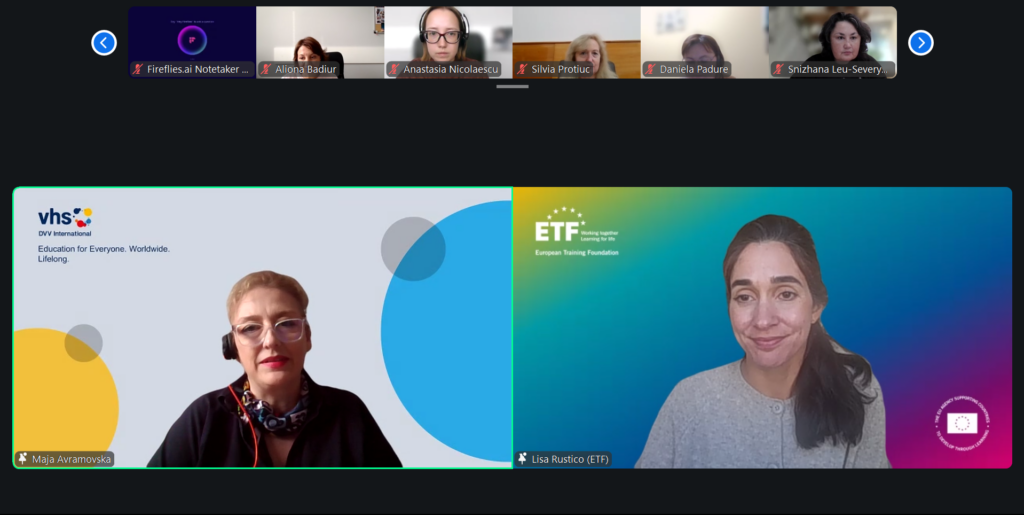
On 22 October 2026, EARLALL joined around 80 participants in the online GLAD webinar, “Local level active role in fostering Adult Learning and Education”, jointly organised by the European Training Foundation (ETF) and DVV International.
Bringing together researchers, policymakers and practitioners, the session explored how local authorities can make adult learning and education (ALE) more accessible, inclusive and responsive to community needs. Presentations combined findings from recent publications with experiences from Moldova, North Macedonia, Ukraine, Kosovo and Albania.
A central message emerged throughout the discussions: local responsibility for adult learning must be accompanied by clear mandates, adequate resources and sustained support from national authorities.
Local authorities as partners in adult learning
Opening the webinar, Siria Taurelli of ETF introduced its focus on participatory governance, skills development and the contribution of local authorities to increasing participation in adult learning.
The first panel, moderated by Maja Avramovska of DVV International, examined research on local governance and provision. Professor Heribert Hinzen, a DVV International expert, presented the 2026 expert paper Adult learning and education as a responsibility of local authorities, co-authored with Bettina Brand and Ruth Sarrazin.
The paper highlights the different roles local authorities can play: enabling provision, supporting institutions, coordinating partners, managing services and advocating for adult learning. Drawing on examples from Cambodia, Ecuador, Moldova, Uganda and Germany’s adult education centres, known as Volkshochschulen, it explores how investment in local learning infrastructure can strengthen communities.
The presentation stressed that municipalities need both the capacity to respond to local needs and supportive national frameworks. Investment in adult learning was presented as a contribution to social cohesion, community resilience and preparedness for future change.
Connecting national policies with local opportunities
Lisa Rustico of ETF presented findings on adult learning systems and governance, highlighting the importance of the local level as the place where people encounter learning opportunities.
The discussion identified recurring challenges: fragmented responsibilities, limited coordination between institutions, unstable financing and unequal access to provision. National strategies do not automatically translate into accessible opportunities, particularly for adults in rural areas, people with low qualifications, older learners and displaced populations.
Participants underlined that decentralisation alone is insufficient. Transferring responsibilities without the necessary funding, staff and support can reinforce inequalities between communities. Effective implementation requires coordination across governance levels, alongside guidance and outreach that help adults find and access suitable learning.
Lessons from local practice
Country presentations illustrated both the potential of local initiatives and the obstacles they face.
In Moldova, the discussion explored practical vocational learning and micro-qualification programmes, including provision in Bălți. Cooperation between education providers, employment services and local businesses was highlighted as a way to connect learning with employment opportunities. Examples also demonstrated the role of training in supporting Ukrainian refugees’ integration.
In Ukraine, Snizhana Leu-Severynenko outlined a diverse adult learning landscape operating amid war and displacement. Pathways include vocational training for unemployed adults, training vouchers, entrepreneurship support, employer-funded upskilling, community adult learning centres and targeted vocational programmes. Short courses and locally organised provision can respond to immediate needs, but regional coverage, coordination, financing and recognition remain uneven.
In Kosovo, Vullnet Gusia presented experience from Peja, where cooperation between the municipality and civil society has helped connect adult learning with wider community development. The discussion highlighted the gap between policy ambitions and the opportunities people can access, alongside the importance of understanding residents’ learning needs.
In North Macedonia, the presentation addressed the validation of non-formal and informal learning and its potential to support adults with low qualifications. Outreach and awareness were identified as essential: establishing a system is only part of the task if potential learners do not know how to benefit from it.
In Albania, participants discussed the constraints facing municipalities, including limited decision-making capacity and funding, and the significant contribution of civil society organisations to adult learning provision.
Sustainable financing and cooperation across levels
Financing emerged as a persistent concern. Participants discussed how reliance on short-term projects can make it difficult to sustain provision, retain expertise and reach underserved groups. ETF also announced a study on suitable financing mechanisms for adult learning, with results expected in the first quarter of 2027.
The exchanges pointed towards an approach combining local initiative with national support for funding, quality and coordination. Partnerships between public authorities, education providers, employers and civil society can help identify needs and organise provision, but require clear responsibilities and continuity.
EARLALL’s perspective
For EARLALL, the discussion reinforced the importance of connecting local, regional, national and European levels. Networks can create opportunities for dialogue and peer learning, helping authorities exchange experience and adapt approaches to their own contexts.
EARLALL highlighted the value of building on existing regional and local lifelong learning partnerships to bring institutions and communities together. Such cooperation can help ensure that local needs inform wider strategies and that policy ambitions translate into meaningful learning opportunities.
The webinar offered a clear reminder: strengthening adult learning depends on giving local actors the resources, relationships and capacity to turn shared objectives into practice.
Read more:
- DVV self-developed instruments, methods and approaches in adult learning and education (ALE) here.
- Adult Learning Systems and their Governance