

No Talent Left Behind: EARLALL and Trøndelag Explore Inclusive Labour Markets at EU Regions Week
15/10/2026
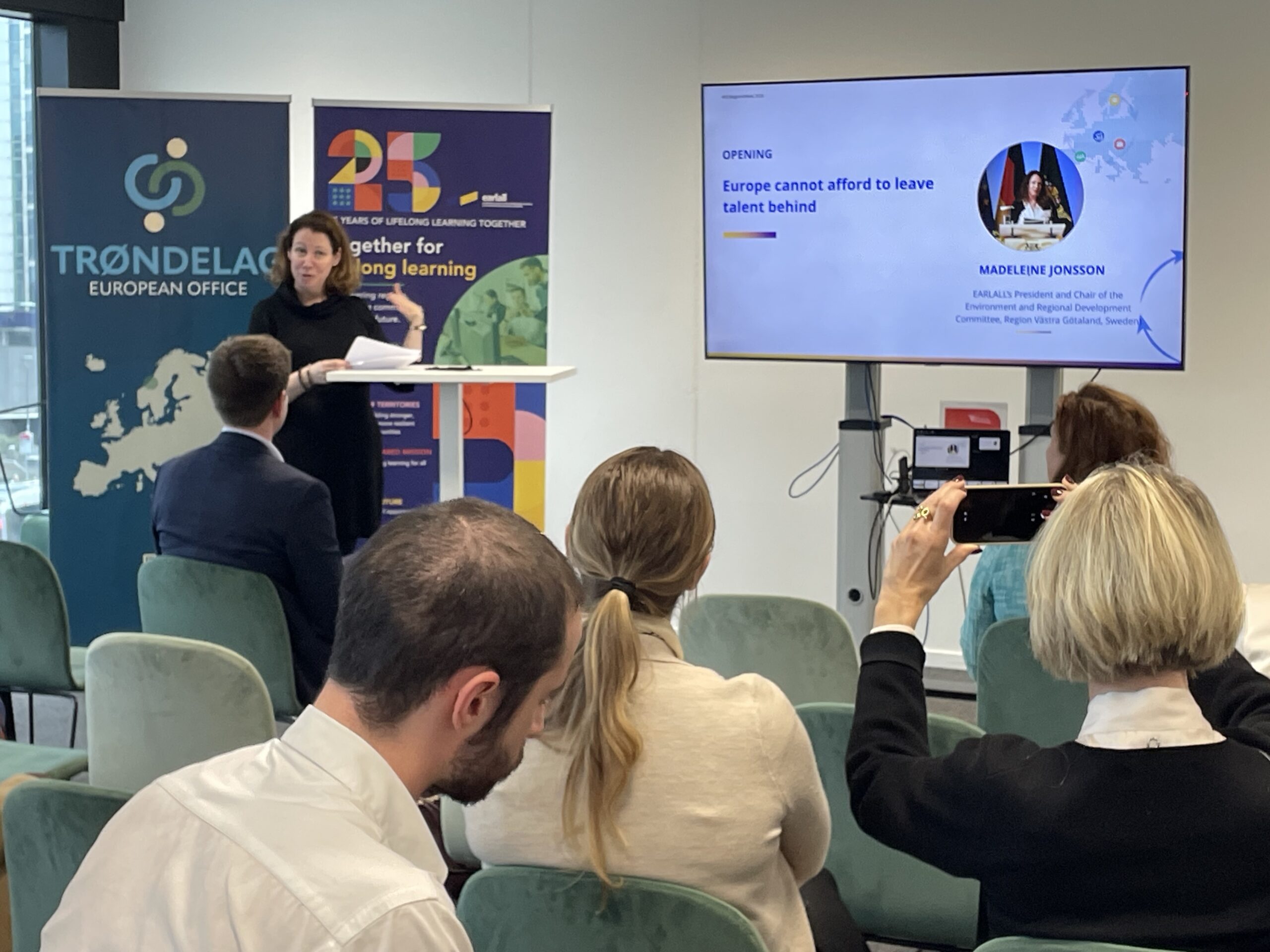
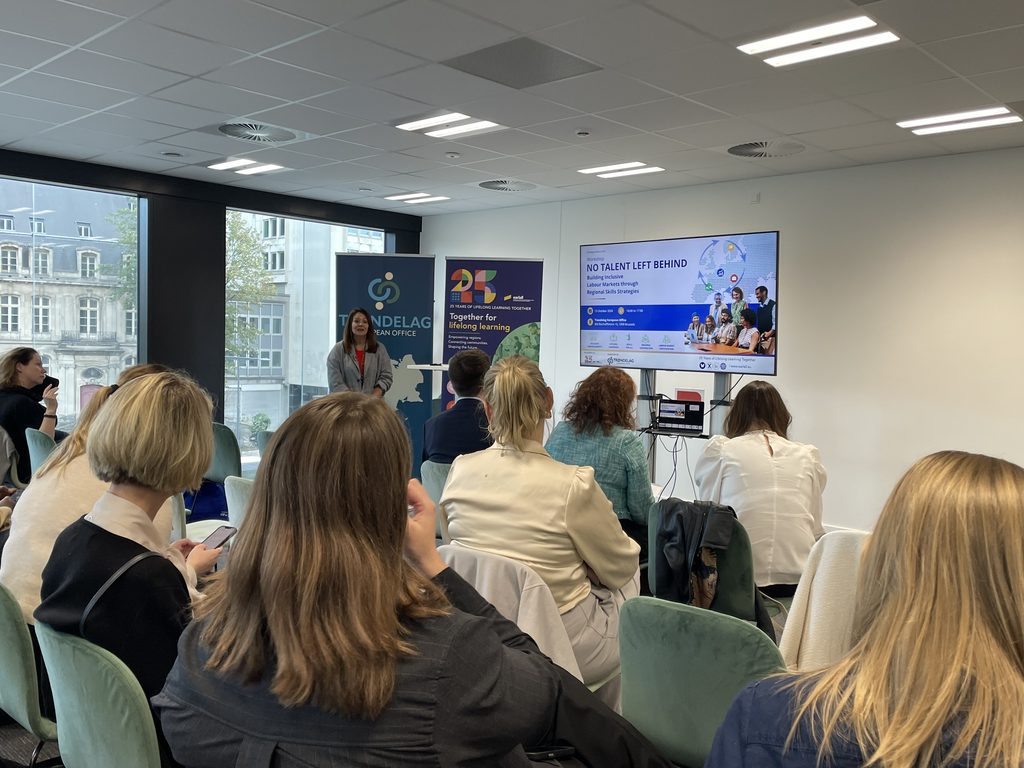
On 13 October 2026, EARLALL and the Trøndelag European Office brought together European policymakers, regional representatives and practitioners in Brussels for “No Talent Left Behind: Building Inclusive Labour Markets through Regional Skills Strategies”, a workshop held as a side event of the European Week of Regions and Cities 2026.
The workshop explored how regions can mobilise untapped talent in response to demographic change, labour shortages and changing skills needs. Discussions considered how lifelong learning and tailored guidance can help people access employment, while addressing the barriers that training alone cannot resolve.
Strong regions need inclusive labour markets
Opening the workshop, Noelia Cantero, Director of EARLALL, connected the event to the European Week’s theme, stressing that strong regional ecosystems must be inclusive and involve all territories. She thanked the Trøndelag European Office for co-organising the discussion.
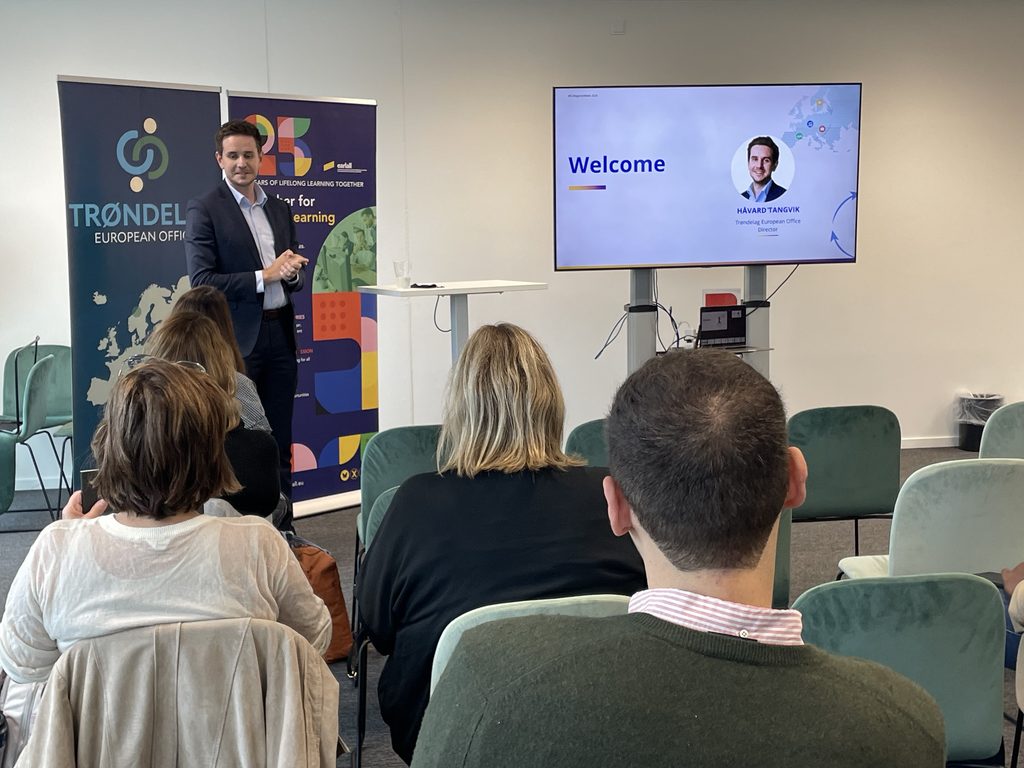
Håvard Tangvik, Director of the Trøndelag European Office, highlighted that both organisations were marking their 25th anniversaries and welcomed Trøndelag’s membership of EARLALL. He emphasised the importance of retaining talent and creating opportunities for everyone to contribute to the labour market.
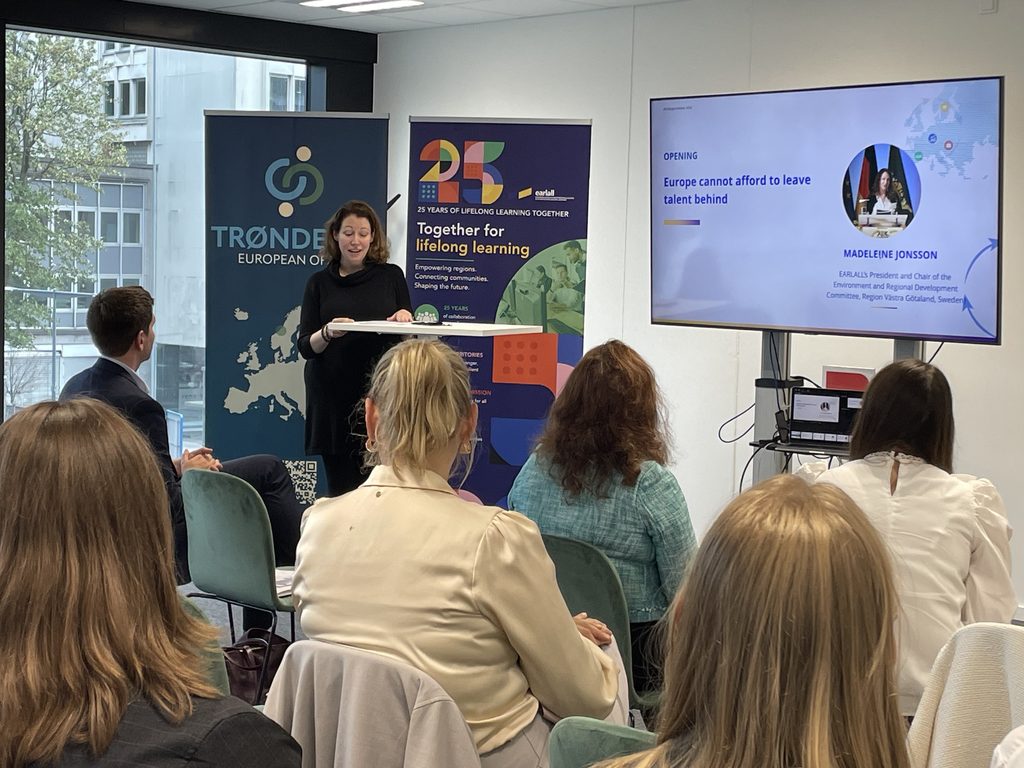
Madeleine Jonsson, EARLALL President and Chair of the Environment and Regional Development Committee in Region Västra Götaland, Sweden, asked how regions could better recognise and mobilise the potential of people currently outside employment. As demographic and technological changes reshape regional economies, successful responses depend on cooperation between public authorities, employers and education providers.
She highlighted the importance of guidance alongside skills development, helping people identify opportunities and overcome the barriers preventing their participation.
A European perspective: making opportunities accessible
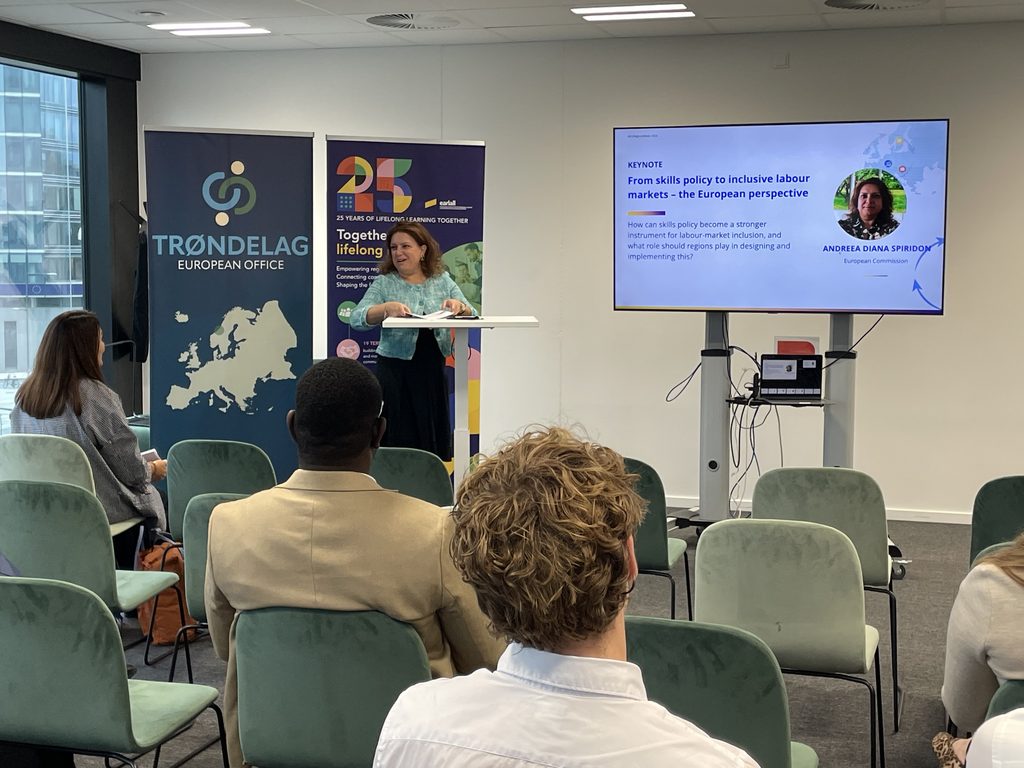
Diana Spiridon, from the European Commission’s DG for Employment, Social Affairs and Inclusion, delivered the keynote, “From skills policy to inclusive labour markets: the European perspective”.
Her contribution emphasised that many people’s talents remain unrecognised. Expanding training provision must go hand in hand with helping people access it, particularly those who lack confidence, face practical obstacles or are unaware of the opportunities available.
Diana connected these challenges to the European Commission’s Union of Skills, which aims to strengthen basic skills, support upskilling and reskilling, and respond to the different needs of people and places. She highlighted the importance of skills intelligence to identify who is missing from the system, alongside Individual Learning Accounts, quality guidance and the validation of skills acquired through formal and non-formal learning.
She also referred to the European Skills Guarantee, which aims to help workers at risk of unemployment move into new jobs through reskilling and upskilling, and highlighted the role of the Pact for Skills and Regional Skills Partnerships in connecting employers, education and training providers, and public authorities. A central message was that effective skills policies must reflect local realities, with regional partnerships helping connect people to learning opportunities and labour-market needs.
The personal experience behind the policy discussion
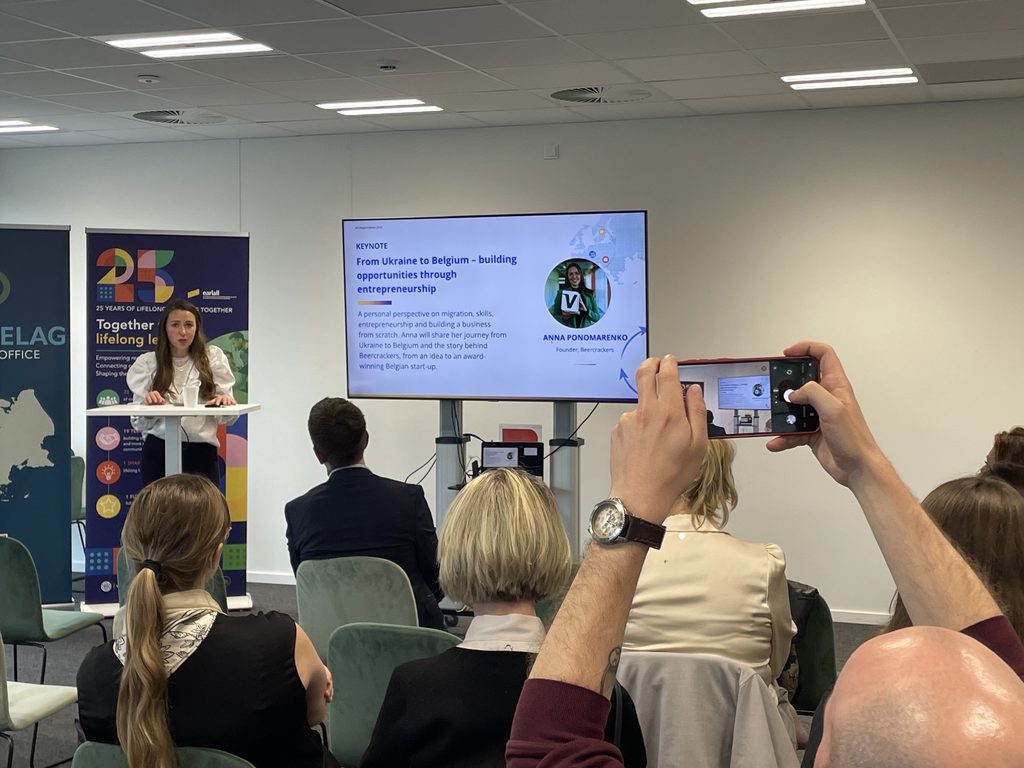
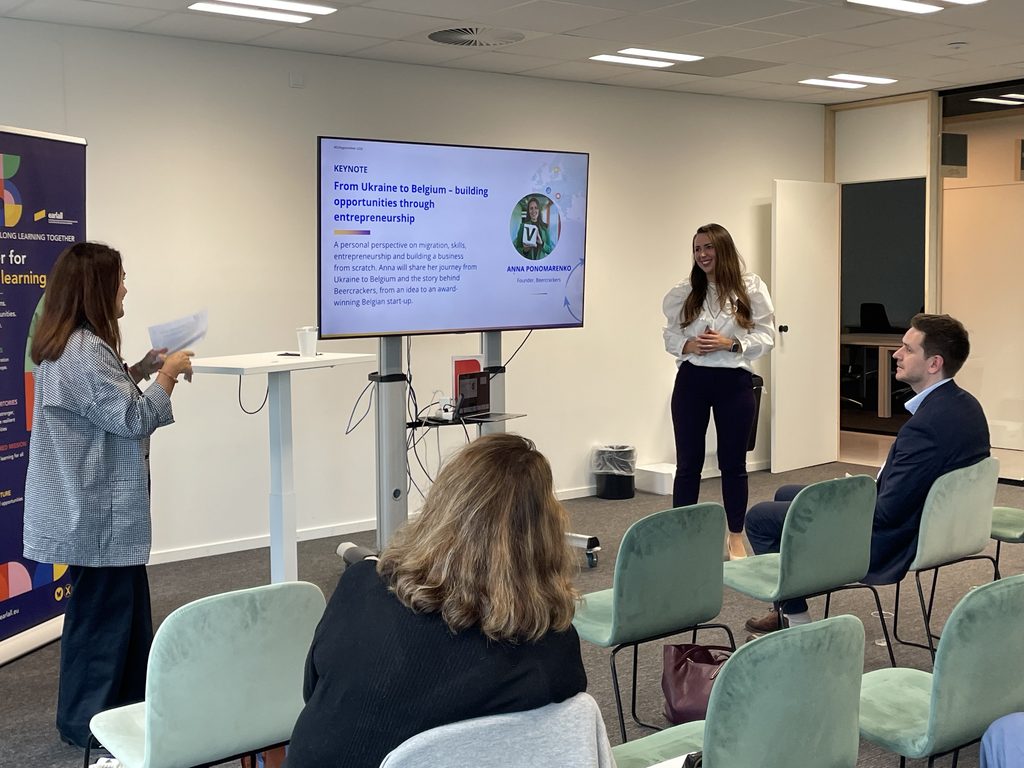
Anna Ponomarenko, founder of Beercrackers, brought a personal perspective to the workshop, sharing her journey from Ukraine to Belgium and her experience of building opportunities through entrepreneurship.
She described the difficulties of finding a place in the labour market, including being considered overqualified for a role after having her qualifications recognised. Her experience illustrated how formal recognition alone may not lead to suitable employment. Her contribution also highlighted the importance of access to advice and supportive professional networks, enabling people with entrepreneurial ideas to understand how to put them into practice.
Regional approaches to skills and inclusion
The session “From Skills to Inclusion: What Does a Regional Strategy Look Like in Practice?” presented approaches from Trøndelag, Schaerbeek and Baden-Württemberg.
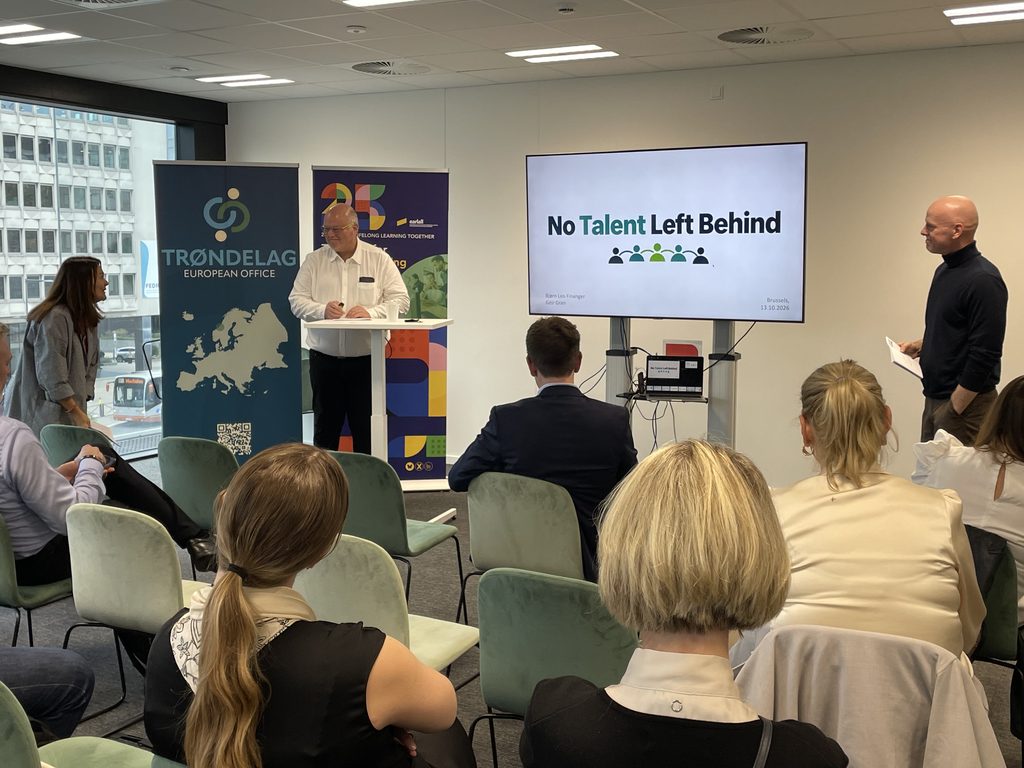
Geir Gran and Bjørn Leo Finanger, Senior Advisers at Trøndelag County Authority, Norway, explained how the region connects employers’ skills needs with opportunities for people outside employment or without completed qualifications.
Their approach brings together employers, NAV—the Norwegian Labour and Welfare Administration—and the county authority. Employers identify workforce needs and provide workplace learning opportunities, while public partners support participants and facilitate education. The aim is to create a pathway towards recognised qualifications and employment.
They also presented a decentralised nursing education initiative involving Nord University and local study centres. This approach responds to healthcare workforce needs while making education more accessible in rural areas.
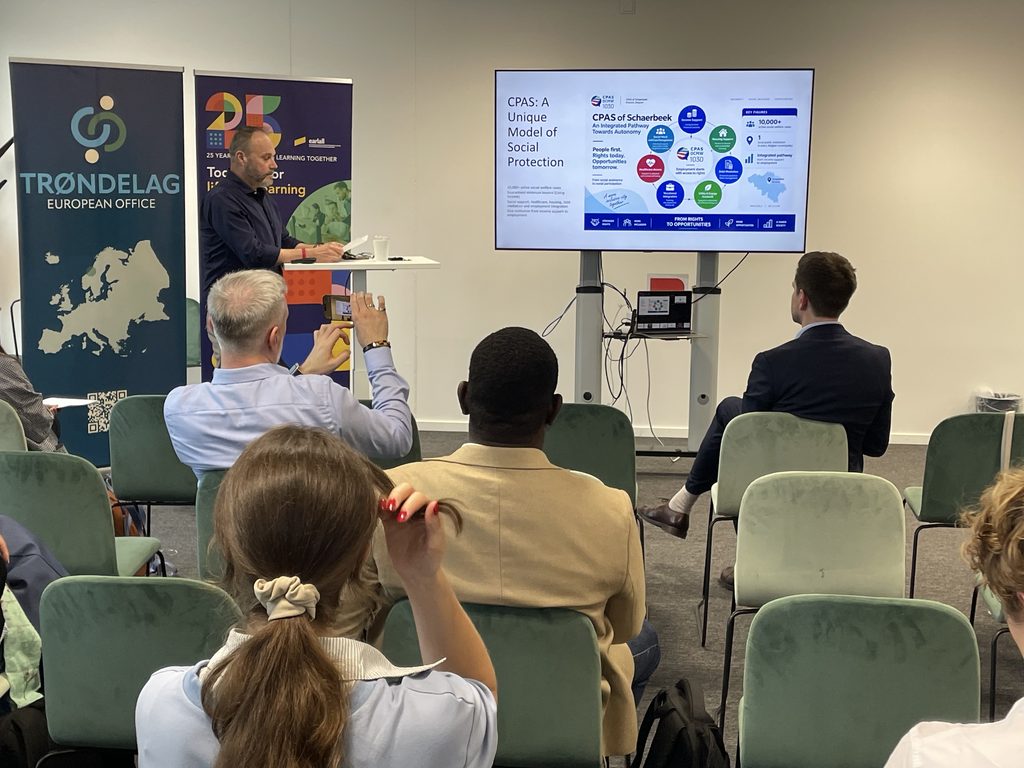
Christophe Marthoz, Senior Adviser for Partnerships and Projects in the Department of Social Emancipation at CPAS de Schaerbeek, Brussels, explained why employment support must begin with an understanding of a person’s wider circumstances.
Housing difficulties, debt and other immediate concerns can prevent people from engaging in training or looking for work. CPAS therefore combines social support with tailored pathways towards vocational integration. Once greater stability is in place, participants can build confidence, define career goals and access training and job-search support.
He also presented employment under Article 60 as a route combining a work contract with coaching and support, helping participants move towards greater independence and further employment.
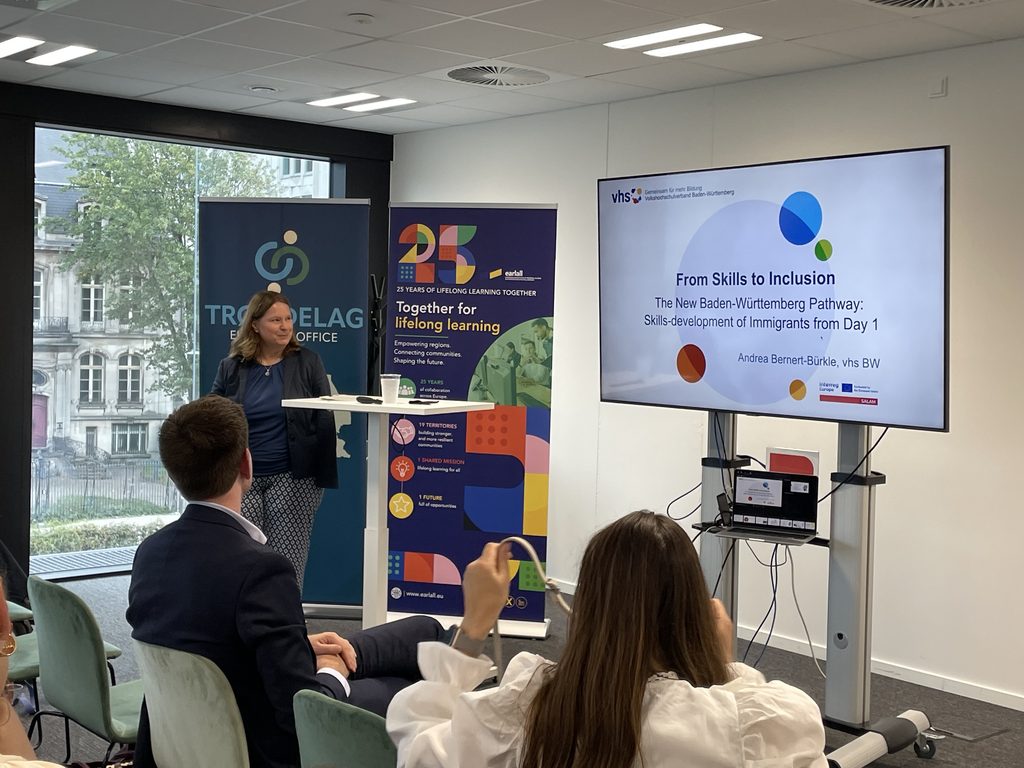
Andrea Bernert-Bürkle, Head of EU Projects at the adult education association Volkshochschulverband Baden-Württemberg, Germany, focused on skills development for people with a migration background.
She described a regional context in which industrial restructuring, particularly in the automotive sector, sits alongside demand for workers in healthcare, education and other occupations. Addressing these needs requires guidance and training that reflect each individual’s experience and ambitions.
Examples included language learning, orientation courses and opportunities to reflect on existing skills, as well as support for recognising overseas qualifications and using AI-assisted skills assessment. Her central message was that skills development is highly individual: effective support must identify what enables each person to progress.
When skills alone are not enough
In the concluding discussion, moderated by Alicia Gaban, Communication and Project Manager at EARLALL, speakers considered the essential elements of an inclusive regional skills strategy.
Motivation and access to the right support emerged as recurring themes. Participants also highlighted pressure on social services and the need for employers to take greater responsibility for developing and retaining their workforce.
The exchange raised a broader question about how to support people who may remain outside employment. Labour-market inclusion must sit alongside wider social inclusion, recognising different circumstances and the changing nature of work.
Entrepreneurship, mobility and accessible training for migrants and refugees were also discussed as ways to widen opportunities. Speakers called for systems that help people navigate available support and take practical steps towards their goals.
Closing the workshop, Alicia brought the discussion back to a shared message: talent and skills are already present, but barriers continue to prevent people from using them. She invited participants to continue exchanging experiences through EARLALL’s regional network.
The 24th European Week of Regions and Cities opened in Brussels on 12 October 2026, bringing together nearly 5,000 participants for three days of discussions under the motto “Strong Regions, Strong Europe”. Organised by the European Commission in partnership with the European Committee of the Regions, the event focuses on the future of cohesion policy, regional competitiveness and people’s opportunities to thrive in the places they call home.
RESOURCES: