

Regions at the heart of Europe’s skills agenda: EARLALL at the launch of RESET
09/10/2026
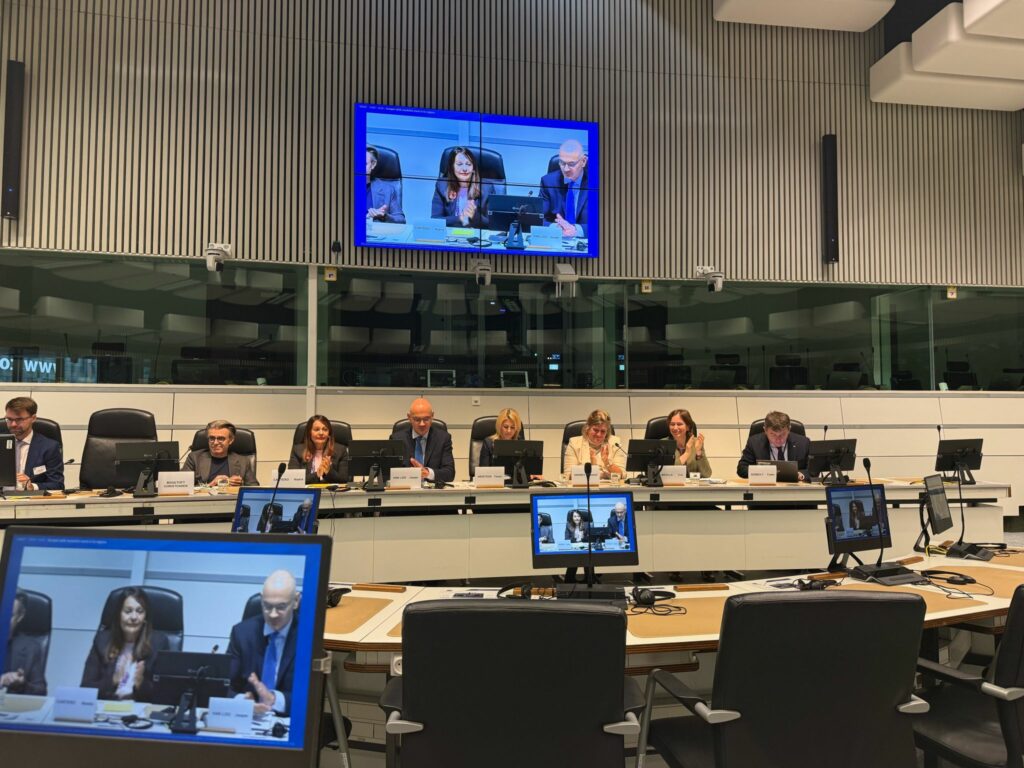
On 8 October, Cedefop launched its Regional Skills Ecosystems Index (RESET) at the European Committee of the Regions in Brussels, during European Skills & VET Week 2026. The event, titled “Europe’s skills revolution starts in its regions”, presented for the first time a new skills intelligence tool covering 244 NUTS2 regions. RESET makes visible what national averages hide: two regions in the same country can face very different skills realities. Cedefop will make it freely available on its website.
EARLALL was glad to take part in the panel debate. We congratulated Cedefop and welcomed RESET, and we were happy to have followed it since its preparatory phase in 2025.
Stronger and more inclusive ecosystems
Our message was simple. Europe needs not only stronger regional skills ecosystems, but also more inclusive ones. The idea is not new: regional skills ecosystems have always been at the core of EARLALL’s work. What matters now is making them work, and making them useful for the people living in all territories, rural and outermost regions included. That is also what a tool like RESET should help regions to do, which is why it must be built with them and connected to the Pact for Skills and Smart Specialisation strategies rather than run alongside them. We also noted that the European Skills High Level Board, which calls for stronger regional and sectoral skills ecosystems (SPARKs), still has no regional representative.
We named five obstacles that hold ecosystems back:
- Fragmentation of skills policy across education, employment, economic development and cohesion.
- Limited capacity and short-term funding, while ecosystems run on trust that takes years to build.
- Different cultures among education, employment and business.
- Weak guidance and anticipation. Adults struggle to find their way through the training offer, and learners are lost at every transition.
- Too few exchanges between regions.
Each of these also affects inclusion. Smaller and rural regions, SMEs and adult learners are the ones most likely to be left without intermediaries, intelligence or guidance. An ecosystem is only strong if they have a seat at the table.
What works, from our network
Our members show the way. Baden-Württemberg’s Alliance for Lifelong Learning has given adults a recognisable point of entry through state-wide guidance and a digital campus. Brittany’s employment-training-inclusion committees let the region and local actors work from the same evidence. In the Basque Country, Tknika’s monitoring nodes bring technology trends into vocational curricula, and between 2018 and 2024 ICT jobs linked to vocational training grew by almost 64%, against about 7% for the whole labour market. Västra Götaland, Trento, Tuscany, Vestland, as well as our partner Fingal County, offer different structures with the same ingredients: a trusted intermediary, employers as real partners, guidance that keeps learners in the system, a link to regional economic priorities and a long enough horizon.
EARLALL’s Regional Skills Partnership for lifelong learning mobility, whose proposal has been approved, will build on this logic. It will offer training and capacity building on EU upskilling and reskilling tools and help partners fine-tune their skills strategies.
Lifelong learning as Europe’s infrastructure
Asked what we hope to see in five years, we said that lifelong learning should be treated not as an education policy but as proper infrastructure for Europe. That means an inclusive skills partnership in every region, rural and outermost ones included, with SMEs and adult learners at the table. It also means accessible career guidance for every adult, regional skills intelligence that quickly informs what training is offered, progress towards the EU target of 60% adult participation in learning each year, and stable multi-annual funding. RESET can be the yardstick if it captures governance and cooperation as well as outputs, shows learner journeys through transitions, and is used by regions in their own planning. Numbers matter, but so does the trust of the people in the ecosystem.
Evolution, not revolution
The event’s title spoke of a revolution. We would like to see a faster evolution: one in which people can follow the change and feel part of it. The revolution Europe needs is in how we cooperate across levels of government. For people, the future of work should not be something to fear. Humans are adaptable and curious, and every talent is needed.