

EARLALL joins European stakeholders in calling for a strong and inclusive Erasmus+ budget
06/10/2026
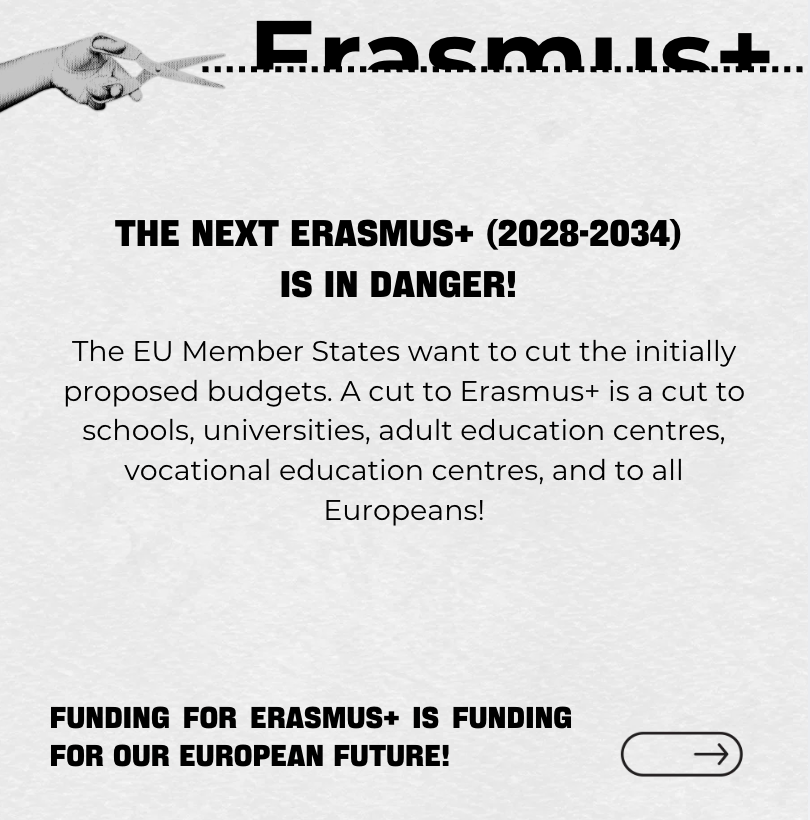
EARLALL has joined European organisations through the Erasmus+ Coalition in highlighting the importance of ensuring a strong Erasmus+ programme in the next EU long-term budget. As negotiations on the next Multiannual Financial Framework progress, the Coalition is calling for Erasmus+ to receive at least €47.4 billion, irrespective of how the future EU budget is ultimately structured. This level of funding would provide the basis for maintaining the programme’s current level of activities and continuing to broaden its reach.
The discussion comes at an important moment for Erasmus+, which will celebrate its 40th anniversary in 2027. The €47.4 billion allocation is also being advocated within the European Parliament, ahead of its final position on the 2028–2034 programme. At the same time, the evolving scope and ambitions of Erasmus+ highlight the importance of ensuring that the programme is adequately resourced to meet future needs.
From EARLALL’s perspective, the strength of Erasmus+ lies not only in the scale of its investment, but also in its ability to reach people and regions across Europe. A future programme should continue to promote inclusion, cooperation and mobility while remaining responsive to the diverse realities of Europe’s regions.
A stronger regional dimension for Erasmus+
Regional and local authorities have an important role to play in the success of Erasmus+. They work closely with citizens, education and training providers, employers and local labour markets, and are therefore well placed to help translate European priorities into meaningful opportunities on the ground.
EARLALL’s position on the future of Erasmus+ highlights the value of involving regional and local authorities as strategic partners in the design, governance and implementation of the programme. Greater consideration of regional contexts can help ensure that Erasmus+ responds effectively to different skills needs and supports cooperation across diverse education and training ecosystems.
This territorial dimension is particularly relevant as regions address digitalisation, the green transition, demographic change and evolving labour-market needs. Regional cooperation can help connect education and training with these developments, while supporting lifelong learning opportunities for people at different stages of their lives.
Making Erasmus+ more inclusive and accessible
EARLALL also underlines the importance of ensuring that the opportunities offered by Erasmus+ remain accessible to a broad range of learners and organisations.
While the programme has become an important part of European cooperation in education, training and youth, some organisations and learners continue to face financial, administrative or capacity-related barriers to participation. This can be particularly relevant for smaller organisations, vocational education and training providers, adult learning organisations and learners with fewer opportunities.
The next generation of Erasmus+ could therefore benefit from continued efforts to simplify access, strengthen organisational capacity and take different regional contexts into account. Such measures would help ensure that European mobility and cooperation opportunities reach an even wider range of people and territories.
Erasmus+ also has an important contribution to make to Europe’s wider skills agenda. Through mobility and transnational cooperation, it enables learners and professionals to develop competences while allowing education and training organisations and regional authorities to exchange experience and respond to changing labour-market needs. Initiatives such as Centres of Vocational Excellence can further strengthen cooperation within regional skills ecosystems.
Investing in Erasmus+ means investing in Europe’s regions and people
EARLALL sees the future development of Erasmus+ as an opportunity to build on what has made the programme successful while adapting it to the changing needs of European citizens and regions.
Adequate resources will be essential to achieve this. The proposed €47.4 billion can be seen as an important minimum basis for maintaining the programme’s current activities, while its future ambitions may require continued consideration of its resources and scope.
At a time when Europe is seeking to strengthen skills, competitiveness, social inclusion and resilience, Erasmus+ remains an important instrument for bringing European cooperation closer to citizens and communities.
For EARLALL, a strong Erasmus+ contributes to stronger skills, more connected regions and a more resilient Europe.
As discussions on the next EU long-term budget continue, EARLALL will continue to support a well-resourced, inclusive and regionally responsive Erasmus+ programme that can contribute to lifelong learning and cooperation across Europe.
Read the full joint statement here.