

EARLALL President visits Tuscany to exchange on skills, employment and lifelong learning
03/09/2026
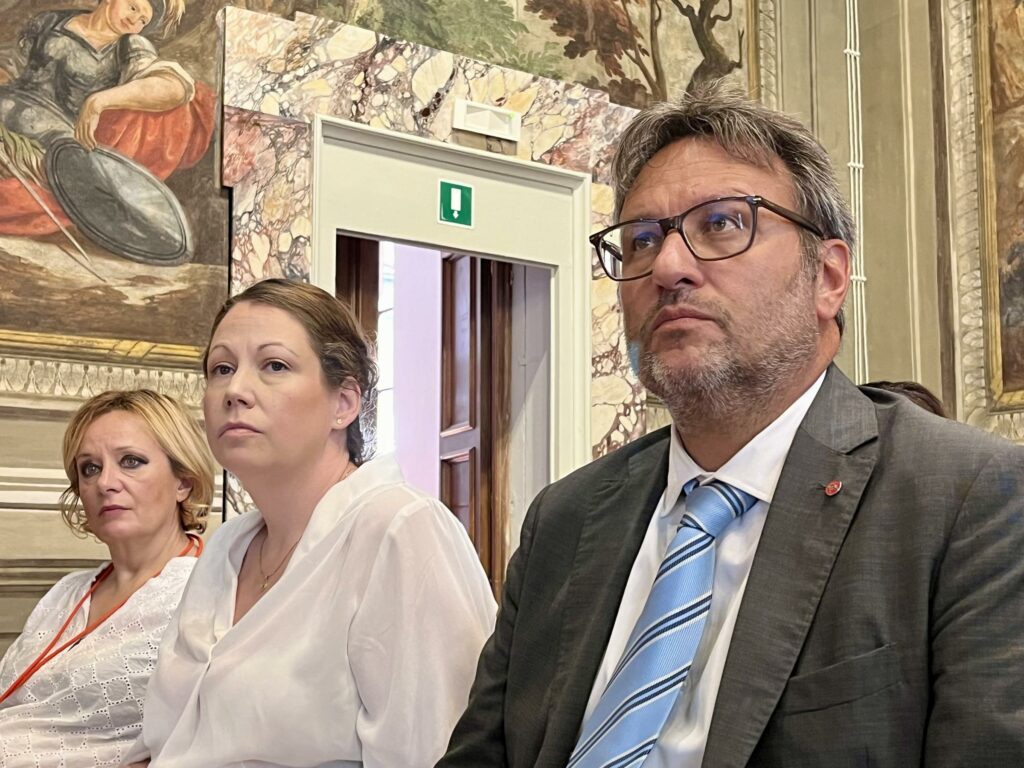
On 31 August, EARLALL President Madeleine Jonsson met with Tuscany Regional Minister Alberto Lenzi at the headquarters of the Region. The institutional meeting provided an opportunity to discuss the region’s main priorities in employment, vocational education and training, skills, technological innovation and labour market transitions.
The meeting also offered an opportunity to explore prospects for strengthening Tuscany’s political presence within the EARLALL network and to exchange views on shared European priorities. Discussions covered lifelong learning, vocational education and training, apprenticeships, skills development and the challenges associated with increasingly complex labour market transitions. Particular attention was also given to the impact of artificial intelligence on education and training systems, as well as on production systems and the future of work.
A key part of the discussion focused on the implementation of the GOL Programme (Guarantee of Employability of Workers) in Tuscany. The region presented its Regional Implementation Plan (PAR Toscana), highlighting the role of employment services, coordination with training provision, and upskilling and reskilling measures designed to support individuals in navigating labour market transitions.
Following the institutional meeting, President Jonsson visited a Public Employment Centre in Florence, part of ARTI, Tuscany’s Regional Agency for Employment. The visit provided an opportunity to gain a direct understanding of how regional public employment services operate and how they support individuals through guidance, personalised pathways and access to training and employment opportunities.
The exchange with ARTI staff focused on the organisation and functioning of regional employment services and their role in connecting active labour market policies, skills needs and training provision. It also highlighted the importance of effective coordination between regional and national measures in supporting people through transitions in the labour market.
The programme continued with a session dedicated to Digital GOL and upskilling and reskilling pathways, with the participation of the GOL Digitale Firenze partnership, led by Cosefi. The discussion explored how employment services, training providers and individual learners can work together to respond to evolving skills needs, particularly in relation to digital competences.
The visit concluded with reflections on possible areas for future cooperation and exchange within the EARLALL network. Tuscany’s experiences offer valuable insights for regions across Europe facing common challenges related to skills shortages, digitalisation, lifelong learning and labour market transitions.
As regions continue to play a central role in connecting education, training, employment and economic development, exchanges such as this one remain essential for mutual learning and cooperation across Europe.