
EARLALL Participated in the 2nd WISE Community of Practice
16/06/2026
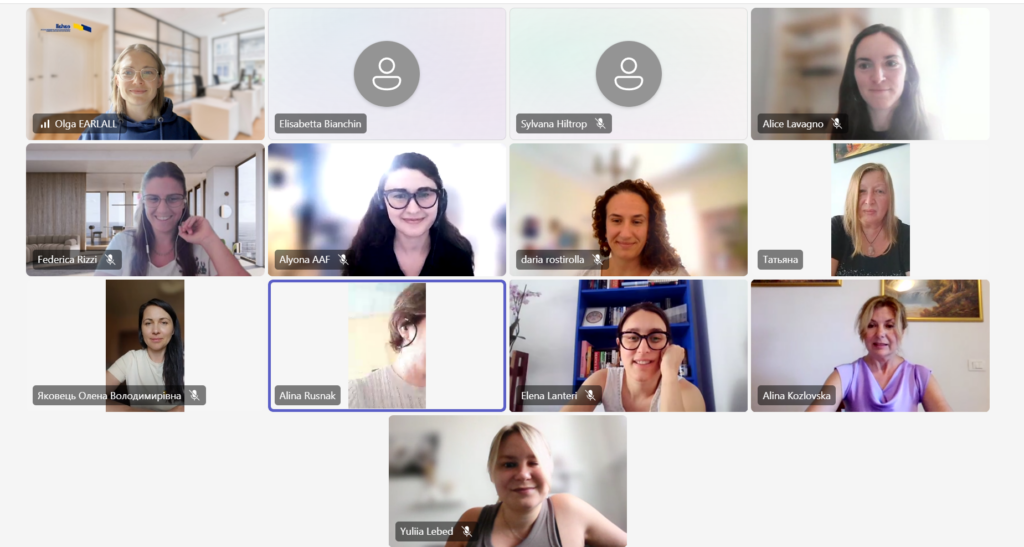
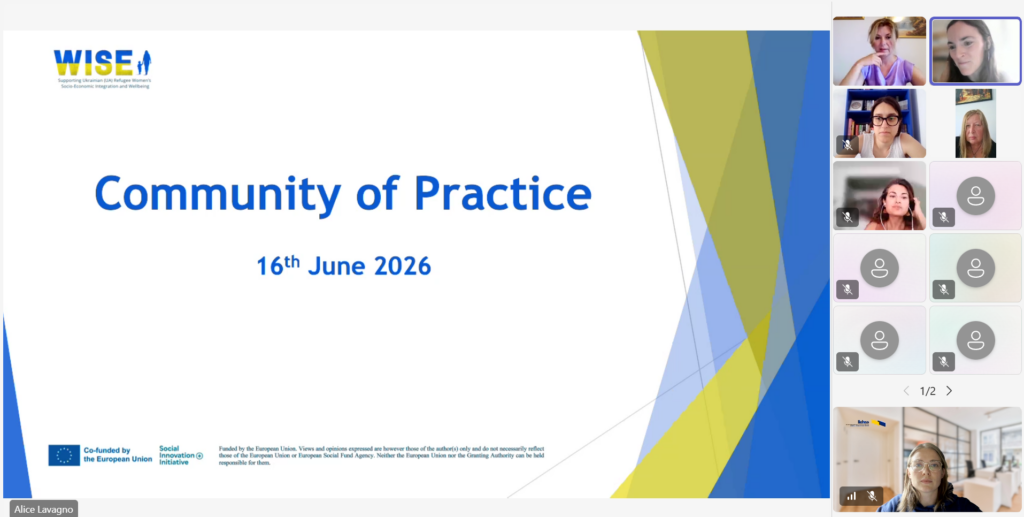
On 16 June 2026, EARLALL participated in the second Community of Practice (CoP) organised within the framework of the ESF+-funded WISE (Supporting Ukrainian Refugee Women’s Socio-Economic Integration and Wellbeing) project. The online session brought together practitioners, integration counsellors, psychologists, social workers, project managers and partners from Italy, Bulgaria, Belgium to exchange experiences and discuss effective approaches to supporting refugee women’s labour market integration.
To facilitate active participation, attendees were divided into English-speaking and Ukrainian-speaking discussion groups. The session provided a safe and informal space for peer learning, reflection and knowledge exchange among professionals working directly with Ukrainian refugee women.
Training and Preparation for Employment
Participants discussed various approaches to preparing refugee women for employment, including language learning, vocational guidance and confidence-building activities. Practical experiences highlighted the importance of providing clear information on certification pathways, flexible training opportunities and step-by-step learning approaches adapted to beneficiaries’ individual circumstances.
The discussion also addressed barriers to participation, particularly for women balancing employment, childcare responsibilities and family commitments. Participants exchanged ideas on how to increase accessibility and engagement through tailored training formats and specialised workshops.
Exploring the SkillLab AI Tool
A significant part of the discussion focused on the SkillLab AI-based tool, which supports skills identification, career guidance and CV development.
Participants shared their experiences of using the platform with beneficiaries, highlighting both its potential and the challenges encountered. Discussions covered issues related to digital access, motivation, language barriers and the relevance of the tool for women at different stages of their integration journey.
The exchange provided valuable insights into how AI-supported skills profiling can complement employment services and help refugee women identify transferable skills and new career opportunities.
Collaboration with Employers and Job Placement
Participants explored different models of cooperation with employers and employment services. Discussions highlighted the importance of strengthening partnerships with local businesses, vocational training providers and career centres to improve access to job opportunities.
Several examples demonstrated how targeted training, employer engagement and sector-specific programmes can support refugee women in entering the labour market and developing sustainable career pathways.
Employment Challenges for Older Women
A key topic of the Community of Practice was the specific employment and integration challenges faced by older refugee women.
Participants reflected on issues such as social isolation, difficulties in adapting professional expectations to local labour market realities, language barriers and the emotional impact of displacement. Through case studies and practical examples, the discussion highlighted the importance of personalised support, psychosocial assistance and realistic career guidance in helping older women rebuild confidence and identify meaningful opportunities for participation and employment.
Learning Through Peer Exchange
The Community of Practice concluded with reflections on the importance of holistic and individualised support, combining employment guidance with psychosocial, legal and social assistance. Participants emphasised the value of continued collaboration between organisations and countries to share knowledge, improve practice and strengthen support services for refugee women.
The WISE Community of Practice serves as an important platform for practitioners to exchange experiences, identify common challenges and develop innovative solutions that contribute to the socio-economic integration and wellbeing of Ukrainian refugee women across Europe. EARLALL is proud to contribute to this collaborative learning process and to support the exchange of knowledge and good practices among organisations working towards more inclusive and effective integration pathways.