

Future Västra Götaland 2026 – Global Challenges, West Swedish Solutions
01/04/2026
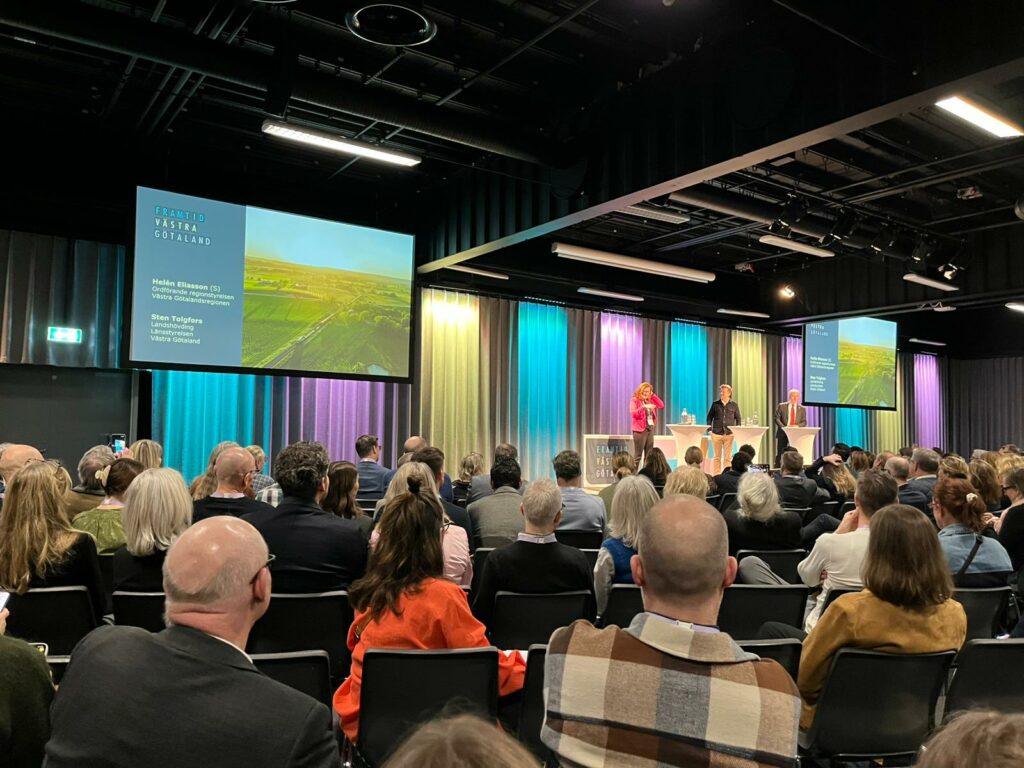
The conference “Future Västra Götaland 2026 – Global Challenges, West Swedish Solutions” opened with a joint session where regional representatives and experts highlighted forward-looking themes such as international competitiveness, the opportunities and challenges of the climate transition, and youth perspectives on the future.
This year’s edition brought together stakeholders from across the region to reflect on how to address today’s societal challenges and shape the future together. Moderator Emanuel Karlsten opened the day with a reminder that major societal problems can be solved—history has shown this. The real question is what choices we make here and now.
Collaboration and inclusion were recurring themes throughout the conference. Madeleine Jonsson, Chair of the Environment and Regional Development Committee, emphasized the importance of recognizing and utilising women’s competencies.
She noted that innovation is often perceived as brilliance, but in practice, it is frequently shaped by more everyday factors: who is considered credible, who has access to capital, who is invited into decision-making spaces, and who is not.
She extended three clear invitations to participants:
- Listen to someone you don’t usually listen to.
- Take an idea more seriously than you normally would.
- Reflect on your own role in opening—or closing—doors for others.
Helena Lundberg Nilsson, Regional Development Director, highlighted the updated regional development strategy for Västra Götaland 2021–2030, with a view to 2045, which framed the themes and discussions of the conference.
She expressed appreciation for the broad engagement during the consultation process, noting that more responses were received than in previous strategy work. This, she explained, reflects a strong regional commitment and a shared willingness to participate in shaping Västra Götaland’s future.
She also described the work as an exercise in joint leadership, emphasizing the importance of acting with confidence in uncertain times, particularly as global conditions continue to evolve rapidly.
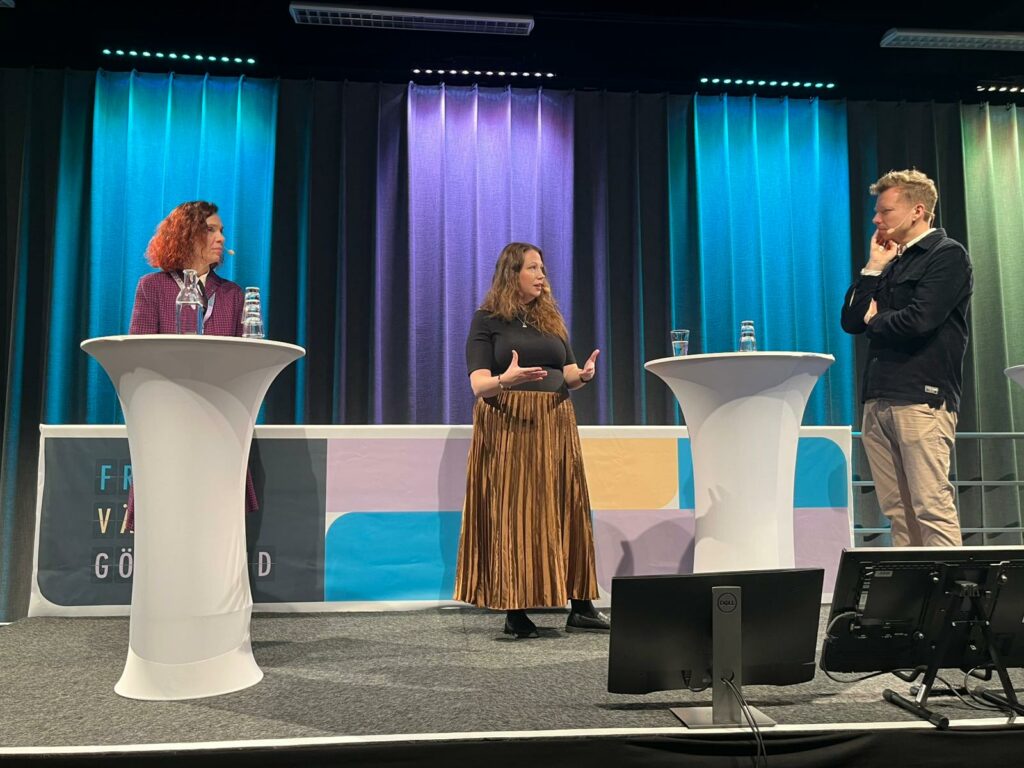
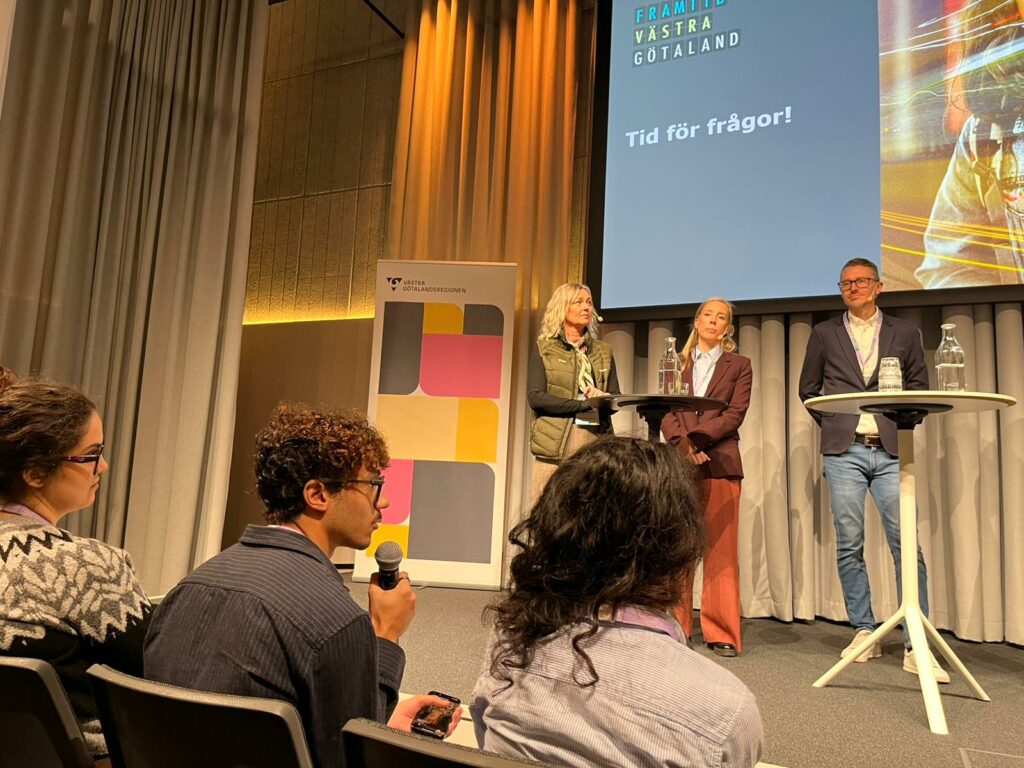
A central part of the conference focused on the role of young people in shaping the future.
Helen Ashtari, youth representative in the EU Youth Dialogue, shared how early involvement in regional structures helped her understand decision-making processes and inspired her continued engagement at both regional and EU levels.
She highlighted a recurring challenge: many young people feel disconnected from decision-making institutions, especially at the EU level. While they may be aware of these structures, they often lack clarity on how decisions affect their daily lives.
She stressed the importance of more concrete communication, continuous engagement, and effective feedback mechanisms to ensure that young people feel their voices are heard and valued.
Kenny Dos Santos, entrepreneur and International Youth Representative for Västra Götaland, described how trust and responsibility played a key role in his development. Being given opportunities before feeling fully ready helped him grow in confidence and capability.
He emphasised that young people should not only be included in discussions but also entrusted with meaningful responsibility. Looking ahead, he pointed to the importance of navigating an increasingly complex information landscape shaped by digitalisation and misinformation, highlighting critical thinking and lifelong learning as essential skills.
In his view, curiosity is one of the most important qualities to preserve in a rapidly changing world. He also advocated for early opportunities for responsibility within the education system, where student influence should be genuinely student-led from an early age.
The conference highlighted a common message: the future is not something we wait for—it is something we actively shape together through the choices we make today.