

Regions at the Heart of Europe’s Skills Debate: EARLALL Seminar at didacta Italia 2026
12/03/2026
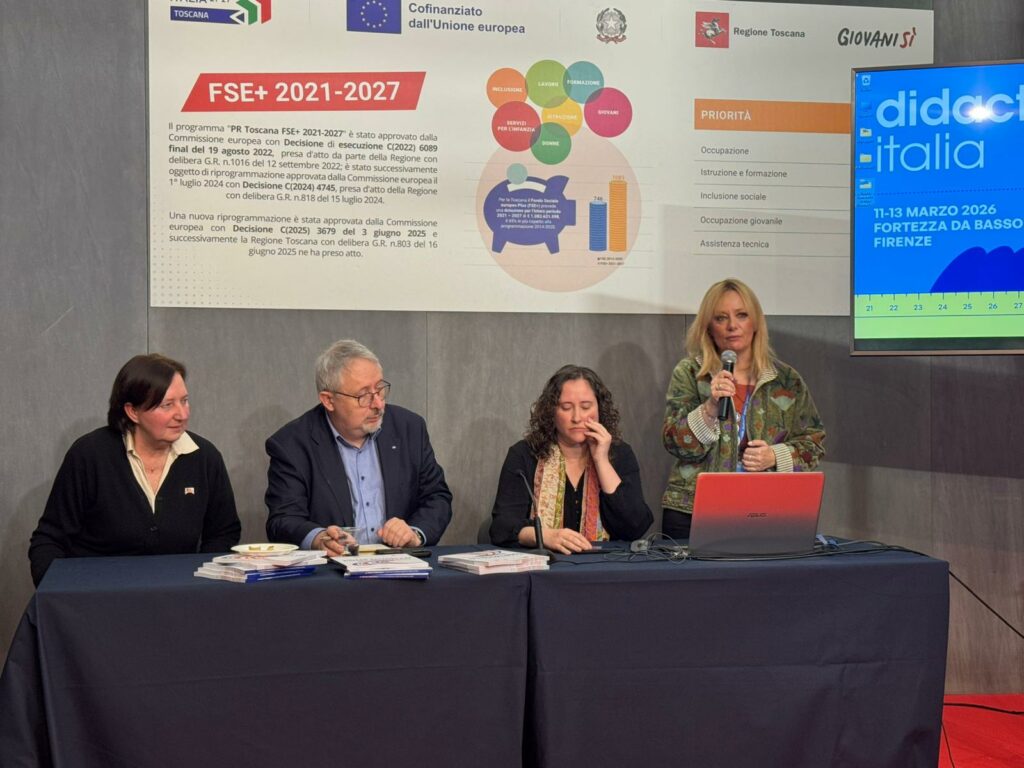
On 11 March 2026, the European Association of Regional and Local Authorities for Lifelong Learning (EARLALL), together with the Tuscany Region, hosted a seminar during the didacta fair Italia 2026 in Florence.
The event brought together regional and European actors to explore a central question for the future of EU policymaking: Do regions still matter in the new EU policy cycle? The seminar took place in the context of EARLALL’s 25th anniversary, combining celebration with reflection on how regions contribute to the governance of European cohesion policy. The main anniversary event will be held on 11 June in Brussels.
Reflecting on the Future of Cohesion Governance
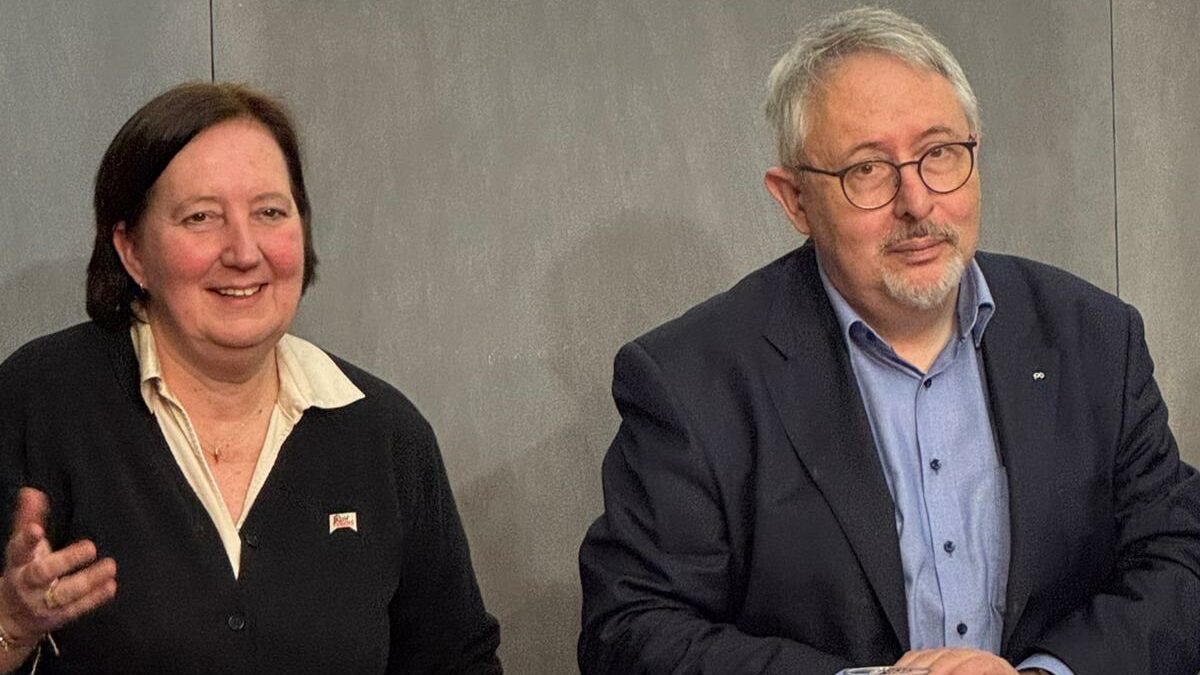
The seminar opened with a political framing by Miriana Bucalossi (Tuscany Region, Vice President of EARLALL). Miriana highlighted current debates on cohesion governance for 2028–2034, noting risks of increased centralisation and stressing the importance of recognising regions as strategic governance actors, rather than mere administrative layers. From a European perspective, Miriam Castillo (Ministry of Education and Vocational Training of Catalonia, Vice President of EARLALL) outlined the role of EARLALL as a network connecting regional and local authorities in lifelong learning and skills development. She emphasised how regional cooperation networks foster policy learning, exchange of good practices, and capacity-building, particularly as European governance structures evolve. Jens Vermeersch (GO! Education of the Flemish Community) contributed insights from the Flemish regional perspective, highlighting where regions still make a structural difference in EU policies. He addressed what could be lost under a more centralised cohesion model and explained how regional autonomy strengthens VET governance.
Regional Cooperation in Practice
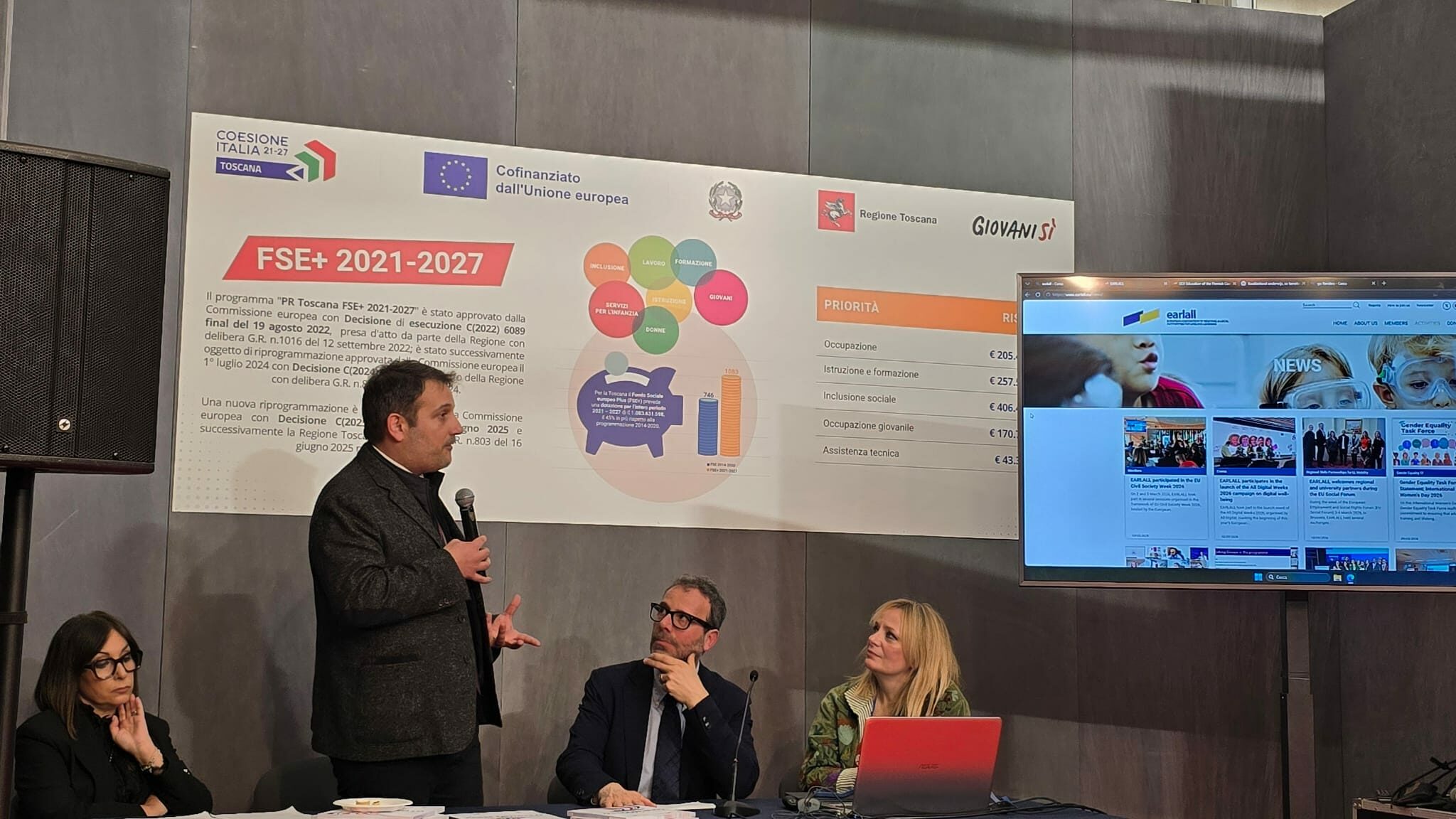
The seminar showcased concrete examples of regional cooperation. Marleen Mast (GO! Education of the Flemish Community and CVO Crescendo) presented a case study demonstrating how collaboration between regions and institutions can strengthen education and training systems. She highlighted the Regional Skills Partnership facilitated by EARLALL, which has enabled peer-knowledge exchanges across multiple territories and reinforced long-term capacity-building. Italian regions also presented practical experiences illustrating multi-level governance, including the implementation of the Garanzia di Occupabilità dei Lavoratori (GOL) Programme. These examples demonstrated the pivotal role of regional actors in translating European objectives into local policies for employment, lifelong learning, and social inclusion.
Future Governance Perspectives
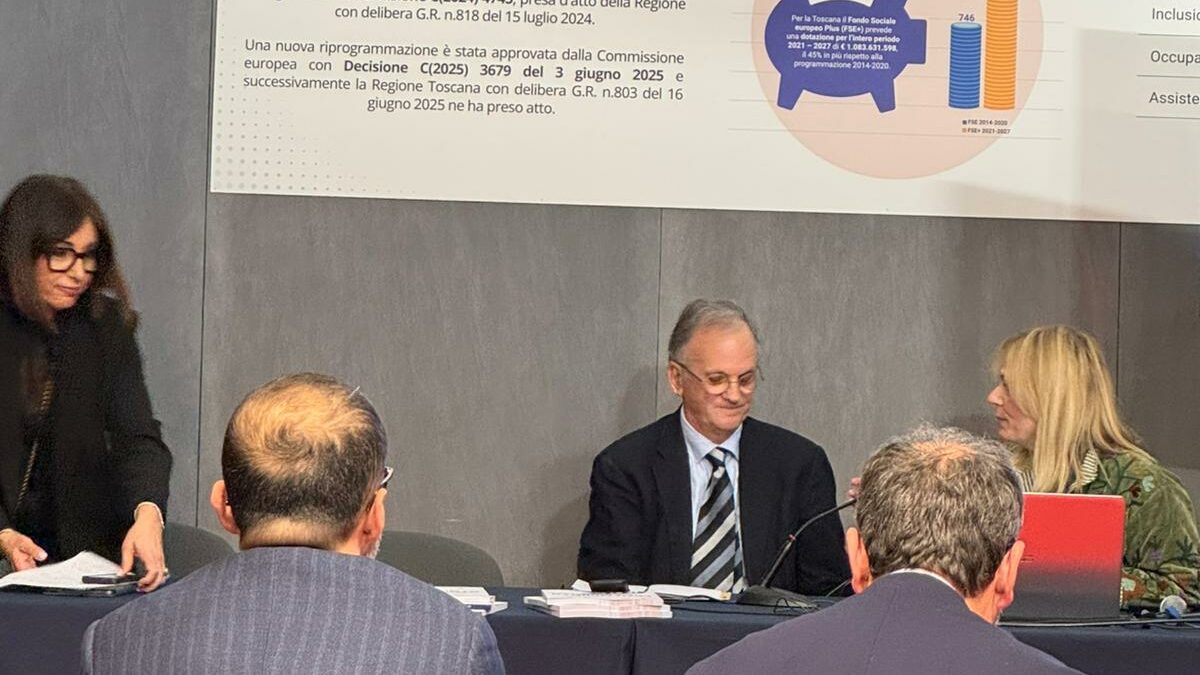
Paolo Federighi (Hon. Prof at University of Florence) discussed emerging governance geometries, including the role of cities in lifelong learning, and identified both risks and opportunities for territorial cohesion in the coming EU policy cycle.
The seminar concluded with a synthesis reinforcing that cohesion governance is not institutionally neutral: regions are key actors in implementation, and cooperation across territories builds public capacity and drives policy innovation.