

EARLALL at the EPRS Annual Meeting on Policy Priorities for 2026
11/12/2025
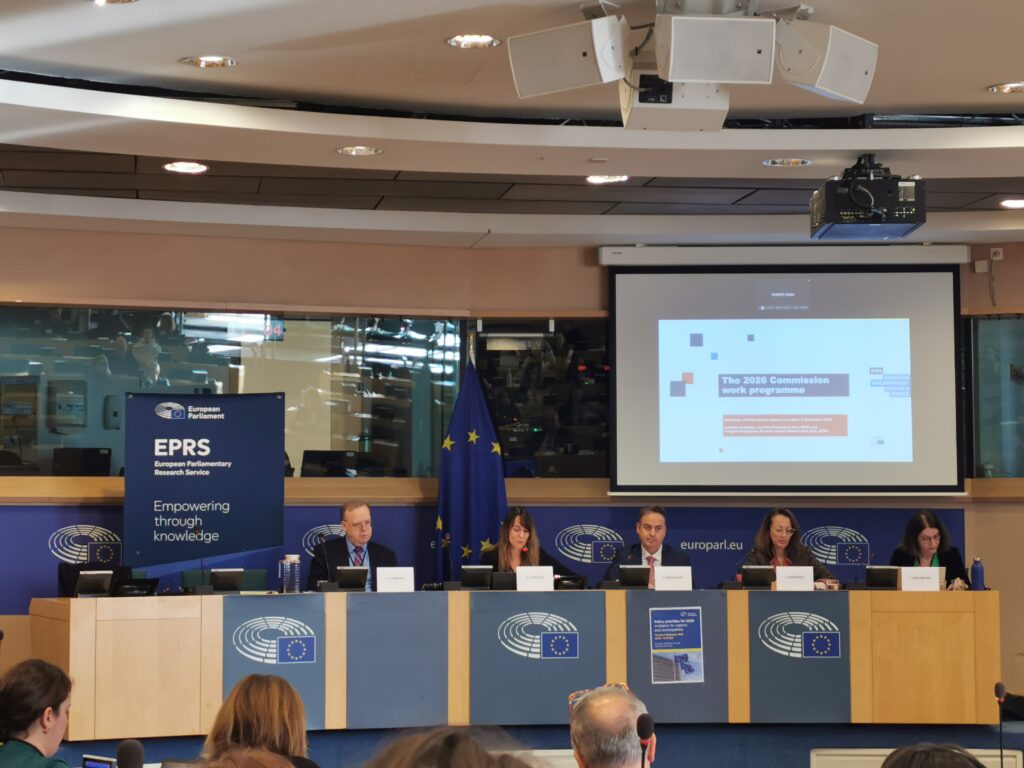
On 9 December 2025, the European Parliamentary Research Service (EPRS) hosted their annual meeting, gathering regional and city administrations from across Europe to discuss the EU’s policy priorities for 2026. EARLALL took part in the conference to discuss the future of funding and to ensure that the regional and multi-level governance perspective remains central in shaping the upcoming policy cycle.
Strengthening Evidence-Based Policymaking
The meeting opened with remarks from Annamaria Forgacs, Head of the Strategy, Coordination and Outreach Unit at EPRS. She underlined EPRS’ core mission: to provide expert, evidence-based support to policymakers through informed decision-making. Forgacs highlighted ongoing efforts to integrate AI into research processes and expand digital tools to deepen structural collaboration with academia — essential steps in strengthening analytical capacity and driving the digital transition.
The floor was then passed to Aidan Christie, Head of the Publications Management and Editorial Unit at EPRS. Christie presented upcoming priority publication projects, focused on anticipating policy debates before legislative proposals are finalised. He emphasised the need to reinforce Parliament’s pre-legislative capabilities, and efforts to modernise editorial and research processes.
Insights on Structural Policies and the Future MFF
Vasilis Margaras, Policy Analyst at EPRS, continued with an overview of current work on structural policies. He noted that “a lot of focus is on the future of the MFF”, reflecting growing concerns regarding budgetary priorities and cohesion. Margaras also referred to the new Culture Compass and stressed the importance of recognising the role of regions and cities in implementing EU priorities. He further addressed the need to include people with fewer opportunities, rural communities and people with disabilities. Concluding his intervention, he encouraged participants to share their own priority areas during the conference.
European Commission Work Programme 2026
Policy Analysts Irmgard Anglmayer and Isabelle Ioannides from the Directorate for Impact Assessment and Foresight at EPRS, jointly presented an overview of the programme, focusing on the European Commission’s Annual Work Programme for 2026 (CWP).
Ioannides outlined the Commission’s main areas of focus for 2026, including:
- Competitiveness and economic resilience,
- Environmental sustainability,
- Security and defence,
- Simplification, implementation and enforcement.
She highlighted that the 2026 agenda contains 70 new flagship policy initiatives, structured around the seven political priorities for 2024–2029, signaling an ambitious agenda for 2026.
Anglmayer built upon her colleague’s statement by emphasising the Commission’s renewed push for simplification of EU legislation. She described new tools such as stress testing of opportunities for simplification, improved implementation dialogues, and forthcoming Omnibus packages on energy productivity, taxation, citizens’ rights and more. She also noted the ongoing debate among stakeholders, some of whom fear that simplification may lead to deregulation in critical policy areas.
Regional Priorities: The Importance of Multi-Level Governance
The meeting concluded with an open exchange on regional and urban priorities for 2026. Participants stressed:
- The need for stronger links between local, regional and national authorities,
- The importance of territorial strategies aligned with the evolving MFF negotiations,
- Clarity on the role of regions and cities in shaping and implementing future EU funding mechanisms.
Discussions also reflected broader concerns about ensuring that the upcoming MFF supports cohesion, long-term investment and the right to stay in regions facing demographic and economic challenges.
EARLALL will continue to follow the development of the 2026 Commission Work Programme and the MFF negotiations closely. By actively engaging in forums such as the EPRS annual meeting, EARLALL ensures that the voices of its member regions remain heard in EU policymaking, shaping policies that promote inclusion, skills development, innovation and the strengthening of multi-level governance across Europe.