
3rd WISE Webinar on Voices from the field: case studies, and learnings from Sofia, Turin, Milan and Rome
09/06/2026
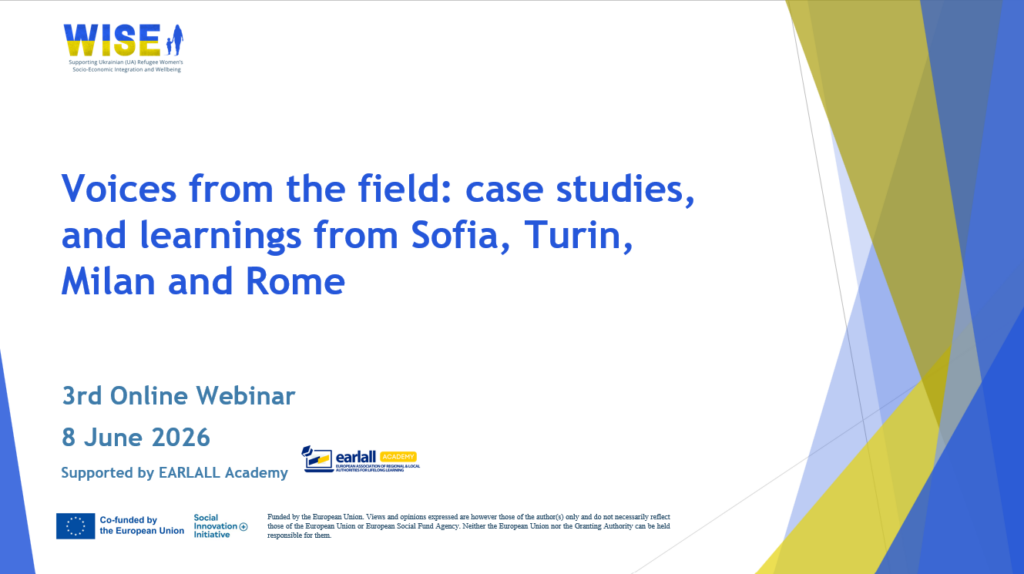
On 8 June 2026, EARLALL hosted the third webinar of the WISE (Supporting Ukrainian Refugee Women’s Socio-Economic Integration and Wellbeing) Webinar Series, bringing together practitioners and stakeholders from across Europe to explore practical experiences from the implementation of the WISE Holistic Support Centre (HSC) model.
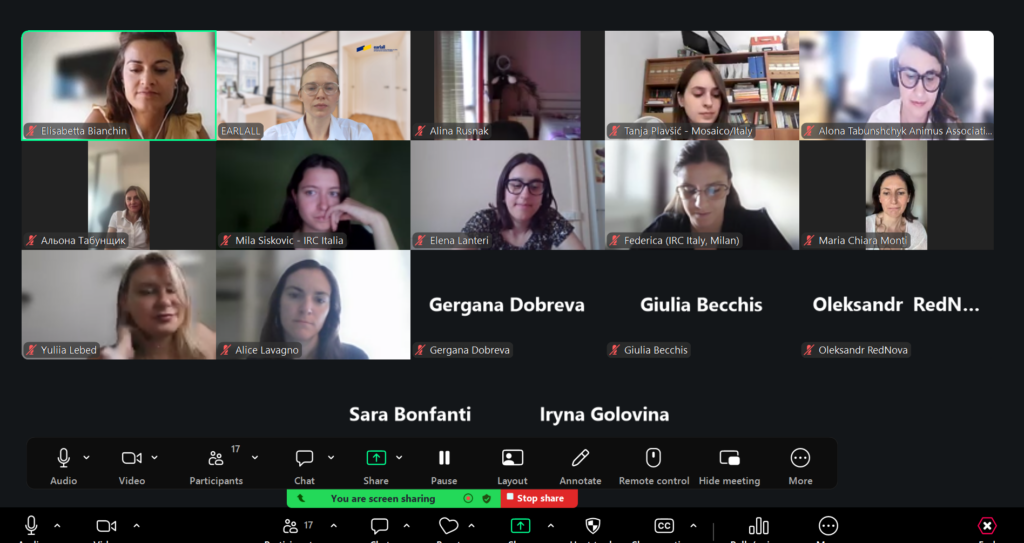
The webinar featured contributions from practitioners directly involved in the delivery of WISE services, including Federica Rizzi, Yuliia Lebed, Alice Lavagno, Elena Lanteri, Mila Siskovic and Elisabetta Bianchin from the International Rescue Committee (IRC) in Italy, as well as Alyona Tabunshchyk from Animus Association Foundation in Bulgaria.
Supporting Integration through a Holistic Approach
The session opened with an overview of the WISE project and its Holistic Support Centre model. Designed as a one-stop-shop approach, the HSC combines mental health and psychosocial support with employment services, cultural orientation and individual case management. The model responds to the multiple and interconnected challenges faced by refugee women, including labour market integration, access to public services, social isolation and psychological wellbeing.
Participants learned about the wide range of activities delivered through the HSCs, including job-readiness training, language learning, job fairs, mock interviews, cultural orientation workshops, speaking clubs, arts and crafts activities, theatre, dance, yoga, cooking sessions and the Women Rise programme.
Local Adaptations and Lessons Learned
Speakers highlighted how local needs differ across implementation sites and how the HSC model has been adapted accordingly.
In Italy, practitioners observed an increasing number of recent arrivals from Ukraine, alongside growing needs related to housing, psychological wellbeing and employment stability. Many women were working in short-term or part-time jobs while also carrying significant care responsibilities, limiting their ability to engage in long-term planning. Speakers emphasised the importance of cultural mediation, practical workshops and participant-led activities in building trust and engagement.
In Sofia, childcare and access to schools and kindergartens remained major barriers to employment for young mothers, while older women frequently experienced social isolation. Alyona Tabunshchyk highlighted the importance of practical support in navigating administrative systems and the value of native-speaking field workers in building trust and facilitating access to services. Creative and hands-on group activities were identified as particularly effective in engaging participants and supporting emotional wellbeing.
Voices from the Field
A key part of the webinar focused on real-life case studies and beneficiary testimonials from Sofia, Turin, Milan and Rome, illustrating how the Holistic Support Centre (HSC) model is implemented in practice. Through a combination of case management, employment support, psychosocial activities, cultural orientation and referrals to specialised services, the WISE project supports refugee women in overcoming barriers to integration and building sustainable pathways towards social and economic inclusion.
The experiences shared during the session demonstrated the value of a holistic and person-centred approach in addressing interconnected challenges related to employment, access to services, wellbeing, housing, education and legal procedures. Beneficiary stories highlighted how tailored support can strengthen confidence, foster autonomy, expand social networks and facilitate long-term integration.
Measuring Outcomes and Learning for Future Replication
The final part of the webinar focused on monitoring, evaluation and learning. Mila Siskovic presented the WISE monitoring framework, explaining how the project measures progress in areas such as psychosocial wellbeing, employment readiness and socio-economic inclusion.
Participants learned how the project combines case management monitoring, outcome tracking, pre- and post-assessments, and external evaluation to assess the effectiveness of the HSC model. The evidence generated through these activities will support the future replication and scale-up of the model across Europe.
Participants were invited to continue the discussion during the final webinar of the WISE Webinar Series, which will focus on the replication of gender-sensitive and holistic approaches to refugee women’s integration, and at the WISE Final Conference taking place on 16 September 2026 in Brussels.
Learn more about the 3rd Webinar: presentation