

2nd WISE Webinar on Supporting Employment Pathways: Skill-Based Guidance with the SkillLab AI Tool
26/05/2026
Today, on 26 May 2026, EARLALL, as the communication, dissemination and scale-up leader of the WISE project, hosted and coordinated the second WISE webinar on Supporting Employment Pathways: Skill-Based Guidance with the SkillLab AI Tool, bringing together around 20 participants from across Europe to discuss innovative approaches supporting the socio-economic integration of Ukrainian refugee women.
The webinar is organised within the framework of the WISE – Supporting Ukrainian Refugee Women’s Socio-Economic Integration and Wellbeing project, funded under the ESF+ programme. The initiative aims to present the Holistic Support Centre (HSC) model, share experiences from implementation sites in Turin, Milan, Rome and Sofia, showcase practical lessons learned from the WISE project, and encourage the replication of this integrated support approach in different European contexts.
The second session focused on labour market integration, skills profiling and the role of AI-powered tools in supporting refugee women’s employment pathways.
Sara Bonfanti from the International Rescue Committee (IRC) Italy opened the thematic presentations with an overview of job readiness and labour market integration within the WISE project. She highlighted how the Holistic Support Centres combine employment counselling, psychosocial support, digital literacy, language learning and community-based activities to provide tailored and gender-sensitive support for refugee women. Particular attention was given to barriers such as recognition of qualifications, language challenges, workplace integration and the importance of trauma-informed approaches.
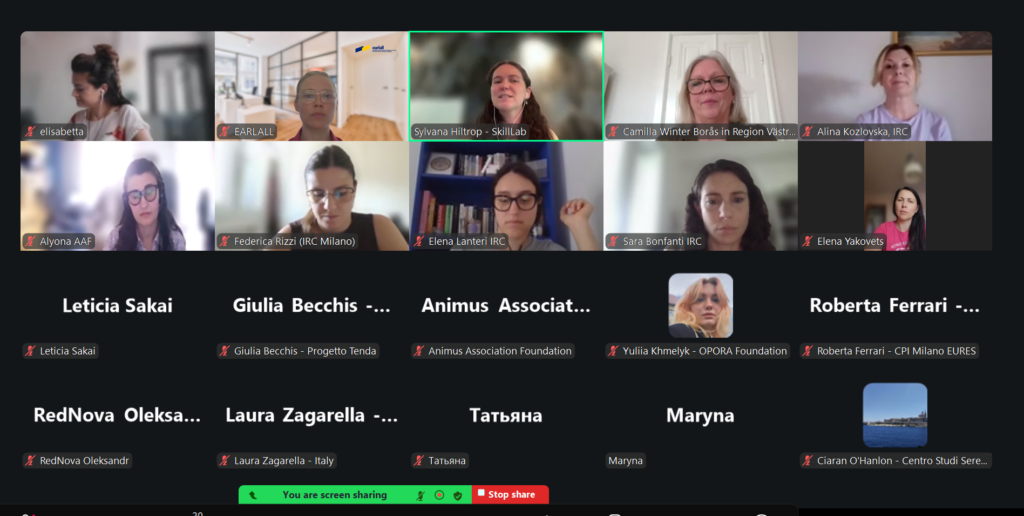
Sylvana Hiltrop from SkillLab presented the concept of skills profiling and demonstrated the AI-based SkillLab tool used within the project. The session explored how skills-based approaches can help refugee women identify transferable competences gained through professional, educational and life experiences, while increasing confidence and supporting career transitions. The presentation also showed how the platform assists both jobseekers and counsellors by creating more personalised and skills-oriented employment pathways.
The webinar also featured practical insights from the field through case studies presented by Sara Bonfanti (IRC Italy) and Alyona Tabunshchyk from Animus Association Foundation in Bulgaria. Speakers shared reflections on the implementation of the SkillLab tool across Italy and Bulgaria, highlighting both opportunities and challenges. While the tool proved valuable in helping women recognise their competences and explore new career paths, the discussions also stressed the importance of individual counselling, psychological support and language learning as key preconditions for successful labour market integration. Real-life examples illustrated how some beneficiaries found employment, explored career changes or regained professional confidence through the holistic support model.
The webinar concluded with a European policy update delivered by EARLALL. The presentation connected the WISE project to broader EU developments, including the newly launched Union of Skills strategy, the upcoming Skills Portability Initiative and the future EU Talent Pool platform. The session highlighted how these initiatives can support fair labour mobility, improve recognition of qualifications and skills, and create new employment opportunities for refugee women and other third-country nationals across Europe.
2st Webinar: presentation